Style of Worship

Nova

3 comments Written on December 28th, 2012     
Filed under: Culture, Liturgy, Style of Worship

Today’s post is written by Chris Logan, Pastor of Worship Arts at Community Covenant Church in Lenexa, KS.

“And the one sitting on the throne said, ‘Look, I am making everything new!’ And then he said to me, ‘Write this down, for what I tell you is trustworthy and true.’“ [Revelation 21:5]

Tradition and Novelty have, at best, a tenuous relationship in the Church, especially at Christmas (yes, it’s still Christmas, liturgically speaking). It’s a stress point for many creative-types, myself included. The sentimentality of “what we’ve always done” (a stark contrast to the rest of the year in our culture, by the way) tends to dominate our lives for at least the four-ish weeks of Advent; we are judged by the way we can keep to the traditions of the season, and if we lament this at all, we’re called a “scrooge.” While some of the traditions have lost any meaning for us beyond sentimentality (insert the one that annoys you most), some of these traditions continue to inspire most of us towards worship of the Creator (even the most “scrooge-ish” person will have a hard time arguing with candles in a dark room singing … well, anything, really).

It’s a matter of perspective.

Most years, I’m the guy who can’t wait for Christmas to be over; I couldn’t stand the same music in the same way, couldn’t stand the extra work, and couldn’t stand the materialism, consumerism, all the ‘isms. Bah humbug for me. This year, however, I decided at the beginning to try and experience it in a way that might lead me to grow. It changed a lot; many of the songs still annoyed me (though I did change a few chord progressions to make them more interesting), but I found that going into it with the question, “Where is Jesus here?” brought new meaning to things that had, in my mind, become zombies. “O Holy Night,” for example, suddenly came alive, when before, all I could hear was a terrible recording I heard in college of a guy who couldn’t hit the high G.

One of the traditions of our church at Advent is to have a new(er) church family light the candle for us, read the scripture for the week, and share some of their own family traditions with the church. This year, the guide I created for one particular Sunday asked the question, “Share with us: what are you doing this Christmas that’s new? Have there been changes in your family that have prompted a new approach to an otherwise familiar holiday? Have these been easy or difficult to adopt?” The family’s response has stuck with me the last few weeks and, though this is a clumsy paraphrase, I thought I’d share it.

They described how one little trip they didn’t usually take took the whole season and threw all of their traditions off, and yet, in the midst of all the change, they discovered through their kids that this might not have been a bad thing. Instead of relying on their family traditions to get them “into the spirit of the season,” they had to focus instead on the story itself – the Savior Himself. Over time, the traditions had clouded that for them. But the kids got it; for them, Jesus was still the center of the story. Jen said,

“I realized that this is what we are constantly trying to teach our children, and through the hurriedness of life, I was the one who had lost perspective. I simply needed to see Christmas through the eyes of my children. So when you ask, ‘What are you doing new this season,’ our answer is ‘Everything, and maybe that’s just what we needed.’”

What do we really need?

God is a God of faithfulness to His promises, to His traditions as it were. He is true to His character, and works within the flesh of a culture to make Himself known. But so too, God is a God of creativity – He is the Creator; He makes everything new.

With God, there are but constant beginnings, even for tradition.

With God, the old is given new life, every time.

With God, the ancient of days becomes a newborn baby.

With God, even death gives way to resurrection.

What are you doing new this year?


Reorient and Engage: More Like Worshippers, Less Like Critics

3 comments Written on November 30th, 2012     
Filed under: Arts, Church History, Church Year, Culture, Formation, Leadership, Music, Style of Worship, Visual Arts

Today’s post is written by Jeff Olson, Pastor of Worship Arts at Christ Church in East Greenwich, RI, where he has served for over six years.

In Advent a strong theme of waiting exists, but here is why you should almost never wait to engage in the arts in your church.

“Next to the Word of God, music deserves the highest praise. The gift of language combined with the gift of song was given to man that he should proclaim the Word of God through Music.” Martin Luther penned this bold assertion nearly half a millennium ago but I would argue these words of wisdom from this reformer should still be taken seriously today.

In Luther’s day, many were illiterate, and until the invention of the printing press, seeing, holding and touching a Bible was about as common as my Minnesota Vikings putting together a quality Super Bowl caliber team. In fact, a whole town would be fortunate if they owned and had access to one copy of the Word of God, let alone if most of them could even read it. Scripture was, therefore, almost exclusively read in the presence of others. If you could not take your Bible home and study it, how did brothers and sisters of the faith grow and remember particular stories and teachings from the Word of God?

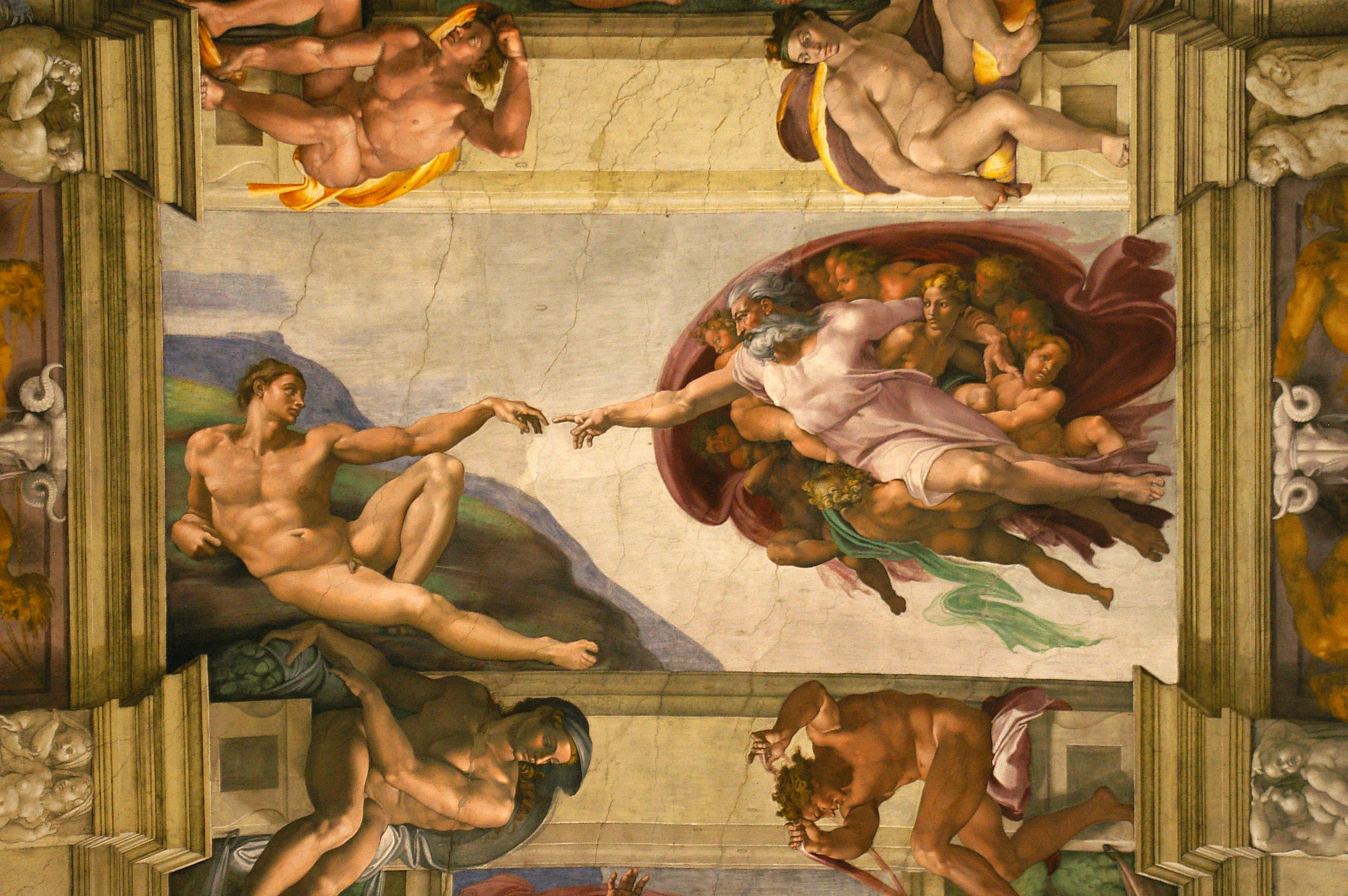
This is where the Arts come in. Many of the great paintings of antiquity, plays and poems, and the great time-tested hymns of the faith were often used in the absence of a Bible (or iPad app) as a tool to teach about faith, tell the great stories of the Bible and to teach solid theology. Think about it: All of the best art was Church art. Michelangelo’s greatest gig was painting the inside of a church (the Sistine Chapel); Bach was one of the prominent worship leaders/pastors of his day. Great art and Church were almost synonymous for much of the last 2000 years of European history. Art often played a pivotal role in educating the Church about who God was and in the role of participation with one another in faith.

Fast forward a few centuries and we are in a different world in some respects. One of the greatest inventions to promote art in a variety of forms may also, if we are not careful, help to destroy it. For nearly all of human history it was a big deal to hear live music or see a painting, even if it was so-so in terms of quality. Why? Because we had no device to capture a recording and we had no digital camera to make Van Gogh’s Starry Night our latest screen saver. In some ways, this proliferation of art has meant that we now have exposure to so many great works of art, which is a wonderful thing. However, the sometimes sinister shadow of this blessing is that perhaps we have become so over saturated with the ability to see and hear whatever we want when we want, that we have become more like critics and less like worshippers.

What do I mean by this bold claim? Well, when we come across a song that is not exactly what we are in the mood for or a painting that is in a style we do not like, rather than just being thankful for the gift that the art is or seek to see what we can learn about God or hear from Him, we evaluate it and often determine if we will or will not engage based, not on its truth or how it can help us grow, but whether we “like it” or “not” according to our tastes.

Now let me say this directly: It’s OK to have preferences, but when our preferences become our gauge of whether or not to engage in worshipping God or joining with our brothers and sisters, that does present a problem. Think for a moment. If we knowingly applied this same hermeneutic to reading the Bible, we would likely not have much left to read!

So how do we go about moving more towards worshippers and less toward critics? Two words, reorient and engage.

What is the purpose of art? Asking this question reorients us in the right direction. Good art in our churches, like scripture, is not necessarily about being happy (though joy is a major factor in the Christian faith), but about helping us become holy. Good art is not necessarily always supposed to please or even entertain you but rather to move you closer to God and His mission. In fact, like the Word of God, art should at times be “hard to swallow” because it should not only encourage, uplift and educate, but also convict, shed light on dark areas of our lives and help to painstakingly and beautifully develop our faith walk just as it was used in Luther’s day.

But it will only help us grow if we choose to engage. I have mentioned in worship services that singing (or any art for that matter) is sacred work for both the artist and observer alike. Like any other action or discipline, we cannot grow without intentionally engaging and participating (work). Now engagement looks different for different people, but what engagement does not look like is treating any art as we treat our screen saver background or a song on the radio. Good art, if made with care and attention, is speaking about God and to God and prompting us to engage with God and others; and this is not something we should ever miss the opportunity to engage in. A bold question I often ask myself is if I am not in a period of mourning and I know the words of a song and they are true, does not engaging seem like a viable option? Engagement does not mean we ourselves have to be world-class painters or soloists, but rather we are engaged with one another in using this tool to grow and connect together with God and his mission.

Are we using art to engage in worship or as an item to be critiqued? Perhaps for all of us, regardless of the quality of the art, the better question is: How can I not sing and engage in praising God and reminding those around me who He is at any and every opportunity I can get?

Art can often make us happy, and that can be a beautiful thing, but good art can also be more than that – it can help in making us holy.

So this Advent, as we again revisit the texts of the promised Messiah and that holy idea of waiting, let us never wait or hold back in engaging in our worship of Him in any and every form, circumstance and style (including art) that is humanly possible.


Our Churches: Bethany Covenant Church – Mount Vernon, Washington

We continue our series of posts here on the Worship Connect blog profiling individual Covenant churches. Our purpose is to celebrate God’s work in and through us, to demonstrate the diversity of approaches to worship in the ECC, and to prompt prayer for one another. We are better together.

Our latest post comes to us from Randall Wilkens Associate Pastor of Worship and the Arts at Bethany Covenant Church in Mount Vernon, WA.

About 30 years ago, the congregation of Bethany Covenant Church decided it was time to move out of their small neighborhood church building. They had outgrown it—maybe not so much in numbers as in vision—and they wanted to ramp-up their outreach and visibility in the community. So this church of about 250 members bought five acres in a developing area of town and made plans to build. The first phase of the multi-phase project would include a sanctuary with a capacity of 780, about three times the church’s membership! It would seem this little church didn’t plan to stay little!

When the new sanctuary was completed in 1987, it was immediately the premiere performance space in the Mount Vernon area, and remained so until 2005 when McIntyre Hall was built on the campus of Skagit Valley College. The sanctuary’s sloped wooden ceiling and curved sheetrock walls were designed in consultation with an acoustic engineer, with ever-pleasing results. The room has often been used by school bands, community choirs, and other concert groups. It continues to be the venue for our church’s annual Christmas Musical—drawing an audience of 1,200 over two nights—and for other concert outreaches the church undertakes throughout the year. And of course it is used for worship multiple times each week—both for our own traditional and contemporary services, and for multiple services of a Russian congregation that rents the building.

A lot can change in 25 years. When Bethany’s sanctuary was built, contemporary worship was not yet common in evangelical churches. So despite the fact the sanctuary platform is almost 80 feet wide from the baptistry on one end to the choir loft on the other, it never seems to have quite the right space for a worship band. And while the forward-thinking congregation made sure a projection screen was installed, they never envisioned it would be used every Sunday, so it was designed to disappear into the floor most of the time. When raised it was about two stories high, so the unused bottom half eventually had to be concealed to prevent it from dominating the room like a huge white monolith. When that screen accidentally tore five years ago, its demise provided us an opportunity for a welcome upgrade!

Other changes have been made over the years and still others are planned. All the major components of the sound system have been replaced over the past ten years. As recently as last summer a new production booth was completed—housing new Mac computers and video equipment donated by a member of the congregation. Plans are underway to replace the mauve carpet with something more up-to-date, and to modify the platform to better serve current worship needs. Those worship needs continue to be those of a multi-generational congregation which values traditional and contemporary worship equally, supporting both with just about equal attendance.

On the contemporary side, Bethany Covenant struggled in the past to find its voice. In planting a church several years ago, we were depleted of many of our best contemporary worship musicians. Yet we have not given up on the conviction that contemporary worship is needed for an effective outreach and to give expression to younger generations of worshipers. We have persevered, and that perseverance has paid off, as we are now blessed with an influx of young worship musicians whose leadership has brought more vitality to our contemporary worship service.On the traditional side, Bethany Covenant has a long-standing heritage of choral music, and still has a fine 35-voice adult choir, along with successful youth, children’s, and bell choirs. We are blessed to have a 9-foot Steinway concert grand that’s used for everything from classical piano pieces to accompaniment for our resident gospel quartet. And this weekend we will dedicate a brand new, 3-manual custom Allen organ. This instrument is unique; there is not another like it anywhere in the world. Everything from the individually-selected stops on its French terraced console to the 34-channel audio system, promises years of beautiful music devoted the glory and majesty of our God. The organ even features a MIDI module that will make it a useful instrument for contemporary worship.

There is always a concern that when a church has two unique services it will just end up as two congregations meeting in the same building. That doesn’t seem to have happened at Bethany Covenant. A Christian formation hour between the services gives the whole congregation a chance to grow in their faith together. Fellowship dinners on Wednesday nights provide opportunities for the whole church family to sit down to a meal together. “Festival services” several times a year bring everyone together in one gathering where traditional and contemporary styles are integrated. These gatherings happen around some of the most important times in the life of our church: our fall Ministry Fair, Christmas, Easter, and Confirmation Sunday. In the opinion of our church’s worship pastor (the writer of this article!) gathering like this as one body to worship our Lord is like a little taste of heaven!


Redeeming Performance or Performing Redemption?

3 comments Written on May 6th, 2012     
Filed under: Formation, Leadership, Resources for Worship, Style of Worship, Theology

Today’s post comes to us from Zanne Dailey, a credentialed Covenant pastor, attending Marin Covenant Church in San Rafael, California. She’s also the founder of Triunity Worship Consulting.

How often have you heard or been involved in this  discussion?

“Worship isn’t about performance, it’s about participation. We need to craft a service where our people can actively participate, not one where they passively sit and watch our leaders up front perform.” Continue Reading »


Innovation vs. Comfort

3 comments Written on March 30th, 2012     
Filed under: Intergenerational, Leadership, Music, Style of Worship

Today’s post comes to us from Kim Aliczi, a worship leader and member at Trinity Covenant Church in Manchester, CT.

Ten years ago, during the adoption of our youngest son, my husband and I ended up spending Easter in Russia – without our other two children, away from our church, our family, our friends – but with a young Baptist missionary couple. We had been in the country for over 2 weeks, I was homesick and heartsick, and thankfully they invited us to worship in their small apartment that Easter morning. Surprisingly, or perhaps not so surprisingly, the music I wanted to sing was not Darlene Zschech or Chris Tomlin – or whoever else was “cool” in worship circles at that time. All I wanted to hear played, all I wanted to sing at the top of my lungs were the old hymns – and as I tearfully choked my way through “Christ the Lord is Risen Today,” which was accompanied on their little, out of tune spinet, I experienced one of the most beautiful and memorable Easter Sunday services I’ve ever been a part of. Continue Reading »


Contemporary Traditional

9 comments Written on February 18th, 2012     
Filed under: Better Together, Music, Style of Worship

Today’s post is written by Jo Anne Taylor, Director of Music and Worship at Bethlehem Covenant Church in Minneapolis, MN.

My church took a leap of faith and launched a new worship opportunity this week. Worship is a big deal at Bethlehem Covenant. We take seriously the charge to “worship the Lord in the beauty of holiness” (Ps 29:2). The choir sings and the organ resounds, and the congregation responds with gusto. We greet one another with the peace of Christ, we sing hymns loudly, and we respond “Thanks be to God!” when we hear the Word of the Lord.

Many years ago, when the church was growing rapidly, it considered adding a worship service to accommodate its growth, but decided to stay with one service for the sake of unity. Now we are in a new growing season, and adding The Gathering, a more-or-less contemporary approach to worship, has “seemed good to the Holy Spirit and to us” (Acts 15:28) as the next step in our growth. This addition has required a sacrificial commitment of time and energy for some of our members, but God has graciously placed in our midst a core group of talented and dedicated volunteer musicians and leaders who have eagerly taken up the challenge of creating a worship environment that honors God in a new way for our church.

When someone in the Better Together group was asked this week, “Do you think we could attract more young people to our church with better quality, more contemporary music?” I thought of the 80-somethings who worshipped in The Gathering on Sunday. I also considered the young couples who skipped The Gathering because they love our traditional worship. Clearly, age had little to do with these choices. Continue Reading »


Make a Joyful … What?

3 comments Written on November 18th, 2011     
Filed under: Better Together, Music, Style of Worship
Tags: ,

Today’s post is written by Jo Anne Taylor, Director of Music and Worship at Bethlehem Covenant Church in Minneapolis, MN.

It doesn’t take much to get a bunch of musicians arguing about decibel levels. Just post a picture of some earplugs and wait for the responses to start flooding in. This week, in the Better Together group, I made the confession that I wear earplugs during worship at the Midwinter Conference. To some, my admission was an open door to acknowledge that, for a variety of good reasons, some of us often find electronically amplified music to be … well, too loud. Others were quick to defend the value of volume as artistic expression, especially for an instrument such as the electric guitar, which uses an amplifier to create specific tonal colors. The discussion quickly moved from “these amps go up to eleven” (no one actually quoted Spinal Tap, but it kept coming to mind as the week progressed), to the implications of music volume for worship.

Continue Reading »


What’s in a Name?

1 Comment » Written on October 21st, 2011     
Filed under: Better Together, Style of Worship

Today’s post is written by Jo Anne Taylor, Director of Music and Worship at Bethlehem Covenant Church in Minneapolis, MN.

I love teaching children that the word “Hallelujah” means “Praise the Lord!” When they learn that the last syllable represents God’s name, they begin to say “Hallelujah” with a sense of awe, and that final syllable takes on new meaning for them. Throughout the Bible, we are reminded that a name is more than just a label for someone. A name is a descriptive identity marker. Calling on God’s Name means calling on God’s complete identity, on the entirety of God’s Three-Person fullness. God’s name tells us who God is.

This week, the Better Together group bantered on the topic of naming a newly formed worship service (or worship gathering). We struggled to find exactly the right word to describe what people could expect when they walk in the door. Should the style of music be emphasized? How do you name worship that includes an eclectic mix of musical styles? One worship leader wrote, “I think labeling them will always fall short and even if it ‘nails’ it for a time, the label’s shelf life will be short.”  Another added that names might not be as important as content: “You don’t need to reinvent the wheel…just concentrate on making a really good wheel.”  And when the term “informal” came up, one person observed, “’informal’ compared to what? It’s about being NOT something, not being SOMETHING.”

‘Being something’ is what Christ calls us to do, and that ‘something’ is Christ’s church: making disciples, baptizing them in the name of the Father and the Son and the Holy Spirit, and teaching them to obey Christ’s commands to love God and neighbor. As we fulfill that calling, the name we use to identify ourselves and our worship can tell the world who we are. What name describes your worship to the neighbors around you? How does that name identify your worship time in all its fullness? Many of us are eager to learn what you call your particular style(s) of worship, as we shape new worship opportunities for our congregations.  Care to share?


The Worship Choir

3 comments Written on August 5th, 2011     
Filed under: Architecture, Choral, Leadership, Local Church, Music, Style of Worship

Guest post by Jessica Perez, Worship Arts Director at Crossroads Church in Loveland, CO.

Crossroads Church is relatively young. We started in January of 1996, and I came on staff in July of 2001. We were in need of a well-crafted audition process for choosing band and singers. As I developed our audition process, while raising the bar of quality, I noticed the need to also have a choir that was open to anyone. I often say, “If you love singing, have passion for worship and love having fun, then I’d love to have you in our choir.” And as a former middle school music educator, I’m sensitive to people’s fears about singing alone, and I tell them so. I never put anyone on the spot by asking them to sing alone. I like to help these adults to open up, risk and sing better than ever before. Continue Reading »


Sacrifice

This week on the ECC Worship forum we welcomed several new members, discussed practicalities such as presentation software (Pro Presenter was the overwhelming consensus), and even discussed (at some length) the complexities of music and its relationship to taste; much like garage sales, it seems that what may be one person’s ear ache is another’s inspiration.

It was a strong reminder that music is an intensely cultural commodity, and while there is not a single culture on earth that does NOT have music, its form varies quite a bit from culture to culture. From the drums of Africa to the sitars of India to the organs of Europe to the guitars of America and Australia, music takes on many, many forms, and even within cultures one may find a plethora of styles and tastes. As our world shrinks, these styles collide with one another, with near-infinite possibilities and combinations. Continue Reading »