Music

Speak Life

Post a Comment » Written on June 8th, 2013     
Filed under: Arts, Culture, Dance, Drama, Local Church, Missional, Music, Visual Arts

Today’s post is written by Matt Nightingale, Director of Worship Ministries at Redeemer Covenant Church in Tulsa, OK.

Some days life feels perfect. Other days it just ain’t workin’. The good, the bad, the right, the wrong and everything in between. It’s crazy amazing… We can turn a heart with the words we say. Mountains crumble with every syllable, hope can live or die.

So speak life, speak life to the deadest, darkest night. Speak life, speak life when the sun won’t shine and you don’t know why. Look into the eyes of the brokenhearted, watch them come alive as soon as you speak hope, you speak love, you speak life.

tobyMac “Speak Life” – Written by Jamie Moore, Ryan Stevenson & Toby McKeehan, © 2012

2013-06-07 10.44.22-2This past week I had the privilege of serving with Redeemer Covenant Church in our fourth annual Dreambuilders Rhythm & Arts Camp at Mark Twain Elementary School. We’ve been partnering with this school (located in a very underprivileged community  in West Tulsa) for the past 4-5 years in tutoring, science enrichment, grounds and maintenance, teacher support and arts education. And every June, we run an arts camp featuring visual arts, dance, drumming/rap/body percussion, design/architecture and – my part – choir. Our theme this year was “Speak Life,” inspired by the tobyMac song of the same name. Even though our curriculum can’t be explicitly religious, our carefully-chosen words still have the God-ordained ability to “speak life” into these beautiful, vulnerable children. The songs I choose every year are pop songs with positive messages, reminding the kids that they are valuable and loved. Think “Firework” by Katy Perry, “Perfect” by P!nk or “Home” by Phillip Phillips. This year we had over 100 kids from kindergarten through 6th grade, and in five short days they learned how to really make a joyful noise. Check out Dreambuilders 2013 on Vimeo.

Many other Covenant churches have learned the power of unleashing the arts in their local communities. In fact, Kent Covenant Church has been reaching out to the community through the arts ever since its founding in 1967. Richard Carlson, known in longtime Covenant churches through the children’s video series “Mr. Quigley,”  developed his creative bent by writing, composing music and producing puppet shows that toured the area. The stage was set for Kent Covenant to add more community arts programming. In 1995, the church began its Dessert Theatre ministry when a gym was built and outfitted with a stage, front curtain, light battens and a sound system.

cotton

Directed by Pastor of Worship and Arts Dan Schuttler and his wife Kelly (both college theatre majors), Dessert Theatre is designed as a “bridge event.” Dan writes:

The idea is to a produce high-quality plays or musicals with family-appropriate and life-affirming themes. Seating is around tables, and a dessert is served at intermission. Prices are kept low and church members are encouraged to buy many tickets to invite friends, neighbors, co-workers or schoolmates for a fun and relaxing evening at the church with no preaching and no pressure. By giving the gift of a great experience and hospitality, KCC hopes to establish a relationship with people in the community who might not have a church home, those who are spiritually seeking, or those who have needs we may be able to address with other church programming. Attendees are always warmly greeted and encouraged to take any literature that is available to them, to take note of upcoming church events listed in the program or to ask questions of any staff member or waitperson after the show.

A typical two-weekend run of a musical will be attended by 1200-1500 people. The ministry is also self-funded – making no demands on the church budget. Dessert Theatre also minsters to the community by opening up the casting to people beyond the KCC family. During the 18 year of its existence, shows have included “The Music Man,” “Fiddler on the Roof,” “The Sound of Music,” “Anne of Green Gables,” “Cotton Patch Gospel” and “Godspell.”

KCC Summer Music CampIn addition, KCC also hosts a one week music/theatre camp in the summer for children grades 3-7. Anywhere from 35-65 kids attend, and 40-60% of those are from outside the KCC community. It runs from 9-noon each day and by Friday a fully staged and choreographed musical is presented for friends and families. The summer camp is more evangelistic than Dessert Theatre, as the musicals have biblical or theological themes and a devotion during snack time that helps reinforce truths the campers are discovering in the script.

Other church in the area have begun the same experience, and a goal for us is to combine forces for more opportunities to reach out into our city. Exciting times!

Is your church using the arts to reach out into your community? Share your stories, joys, frustrations, questions or comments below…


The Power of a Song

Post a Comment » Written on March 16th, 2013     
Filed under: Covenant History, Music, Songwriting

Andrew Thompson (M.Div) is the founding and lead pastor of Columbia Grove Covenant Church in Wenatchee, Washington, a church known for the creative arts. His songs are sung by churches around the US and Canada and have been featured at the Evangelical Covenant Church’s Midwinter Conference.

Most everyone can complete this phrase. “Jesus loves me, this I know, for the ________.” Why? Because of a song.

Songs have a unique and powerful way of lodging ideas and emotions in our minds and hearts. We are influenced and shaped by our songs. If you are at all like me, you probably have powerful memories and emotions attached to the songs that were popular back when you were in high school. Probably also the songs that were a part of the time when you first came to Christ.

The Covenant Church, like all revival movements, was shaped by its songwriting. One of the reasons our faith forefathers and foremothers were drawn into Philipp Spener’s version of pietism was that this movement produced good songs. Their songs expressed the joy they experienced in conventical groups as they studied God’s Word together and sought to apply it to their lives in mission. Their songs shaped them. Those songs are a powerful part of why the Covenant Church is what it is today.

Like those who have gone before us, we continue to write songs that express who we are and what God is doing in our midst. We need to do it frequently, carefully and well. After all, our songs continue to shape us. We become what we sing.

I am so grateful to see the recent renewal of songwriting awareness in the Covenant church. Projects like last Midwinter’s song sampler “Louder Than Words” remind us that we are still a songwriting revival movement.

I’m excited to be a part of North Park Seminary’s new songwriting course “Songwriting for Christian Worship.” (If you are in the Chicagoland area, there’s an affordable one-day workshop option for this course too.)

Just like we invest in our pastors through training and formation, we’re investing in our songwriters. We’re going to be shaped by songs. Let’s write the best songs we can. And let’s share the best of them with each other. Why not have some of the songs that shape our movement now be our own?

What do you think? How have songs shaped you and your congregation? Are you excited by these renewed efforts to develop Covenant songwriters and songs?


Kingdom Work

Today’s post is written by Jo Anne Taylor, Worship Pastor at Bethlehem Covenant Church, Minneapolis, MN.

It started off innocently enough. Someone mentioned enjoying a particular Christian artist’s latest CD, and wondered which tracks others might be using in their own worship contexts. After a dozen or so responses, an issue was raised that turned the discussion in a new direction. Describing the inclusion of a prominent hip-hop artist on one track of the recording, the commenter wrote: “This song, though catchy and well-written within its genre, is another example of a person in power representing a dominant culture unintentionally sending the message that the only way for outsiders to get respect and recognition from that dominant culture is to acquiesce to and subsume one’s self within it.”

Nearly  - oops – Over a hundred comments later, covering a number of tangential topics, that early comment about the messages outsiders get from the dominant culture still convicts me, and I ponder the part I play in perpetuating a system that excludes more than it embraces.

Jelani Greenidge explains, “Because when it comes to Christian music, if you want into the upper echelon of recognition and stardom, people of color MUST learn to do the kind of music that White people appreciate, but White musicians are NOT required to do the same.” Jelani sees this as “blatant indication of the injustice inherent in the power structures that support Christian music, and it’s difficult for me to watch others support that success without also attacking the inequity of those structures. It is passive acquiescence of racism that allows it to continue to perpetuate.”

Some time ago, Jelani joined me on this blog to initiate a discussion about multicultural worship, and what that might look like. It was a polite exchange, and comments supported such a discussion – but they didn’t really engage in it.  This past week, the discussion has gone deep, and I want to share a few anonymous excerpts to get you thinking about what it means to be part of the Body of Christ, to honor and celebrate the many cultures that contribute to our corporate worship, and what it means to stand up to a music industry that marginalizes many of our most talented brothers and sisters because they aren’t white, aren’t male, or aren’t younger than 35. Ponder these thoughts prayerfully. Consider the part you play in this unjust system, and also consider what you might do to become part of that system’s redemption. Because this is Kingdom work. Continue Reading »


Dorris the Worshipper

Post a Comment » Written on February 1st, 2013     
Filed under: Guest Post, Intergenerational, Music, Stories

Today’s post was written by Nathan Albert. It was originally published in two parts (here and here) on his blog, it seems to me… Nathan is the Pastor of Student Ministries at Christ Church in East Greenwich, Rhode Island. Previously, he was the collegelife coordinator with University Ministries at North Park University in Chicago, IL and has also worked as the Director of Pastoral Care with The Marin Foundation. Nathan earned his Master of Divinity from North Park Theological Seminary where he focused his thesis on the biblical scholarship pertaining to homosexuality. He is a licensed minister in the Evangelical Covenant Church, an avid thumb wrestler, and excited to spend the rest of his life with his lovely fiancee Kate. Follow him on Twitter at @nathanalbert.

Last spring, I attended a church on the East Coast. It was a beautiful, sunny morning, and I arrived to the church service a little late. It’s inside a school, and there were hundreds of people singing along to songs as I entered.

The church service was by no means a Pentecostal service, but people occasionally clapped, raised their arms, and swayed to the tunes. It’s a place where you felt safe and welcomed.

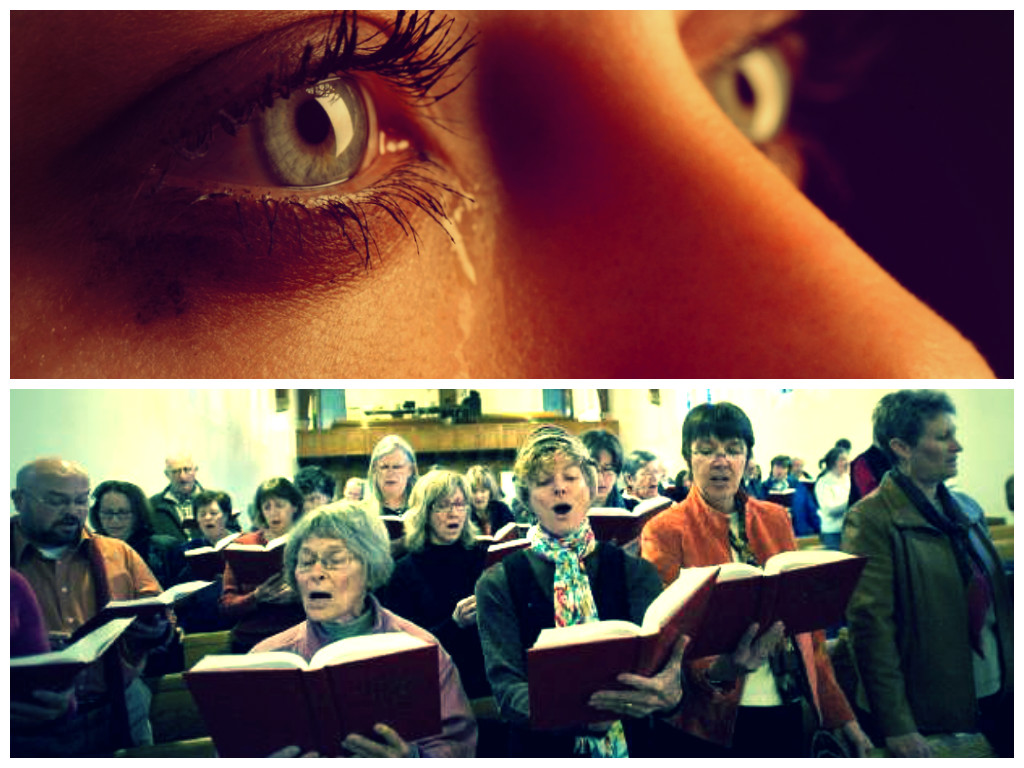
In the front row was an elderly woman. (If you don’t know, I have an affinity to cute old people. They warm my heart.) I later learned her name was Dorris, and she was a survivor of the Holocaust. She was dressed to the nines in a red dress. Next to her was her cane and, on each side of her, a friend.

As the final song was being sung, Dorris happened to catch my eye. There was her cane leaning on the chair next to her. Dorris was standing with arms raised completely above her head in worship. And around Dorris’ waist was her friend’s arm, willingly holding her up to worship.

It brought me to tears.

Here was an elderly woman so in love with God that she risked falling in order that she could worship the God that saved her. In that moment, nothing else mattered to her but worshiping her God. And there was a woman next to her who loved Dorris so much that she would do anything so that her friend Dorris might be able to worship the God who saved her. In that moment, nothing else mattered but holding her friend up so she might worship.

It was beautiful. And a blog post may not adequately explain what I saw in that moment. But it was beautiful. I promise.

I hope I become a person who will do whatever it takes so that my loved ones can freely worship God. And I hope that I will have people in my life that will do whatever it takes so that I can freely worship God. Even if that means holding me up so I can worship like Dorris.

Recently, I was fortunate to have a short conversation with Dorris the Worshiper. Although brief, it was packed with wisdom. Although introductory, it was full of experience. And although a conversation in passing, it was one I shall not forget.

After simple greetings, I asked her how long she had been a part of the church and how long she had been a Christian. Through her accent, she reminisced about how her parents raised her Catholic and allowed her to partake in the Eucharist as a child. She went on to mention how she attended this particular church and had been hooked from day one. She comes to worship and always sits in the front rows because she loves the music.

With a smile upon her face, she concluded the conversation by saying that she comes to church in order “to see my Jesus.”

“I want to see my Jesus,” said Dorris.

As I stood in the back of the sanctuary, I watched Dorris the Worshiper in the front row enjoy the music.

I watched Dorris the Worshiper as she saw her Jesus.

In that moment, I think I saw Jesus too.  And it was pretty cool.


Reorient and Engage: More Like Worshippers, Less Like Critics

3 comments Written on November 30th, 2012     
Filed under: Arts, Church History, Church Year, Culture, Formation, Leadership, Music, Style of Worship, Visual Arts

Today’s post is written by Jeff Olson, Pastor of Worship Arts at Christ Church in East Greenwich, RI, where he has served for over six years.

In Advent a strong theme of waiting exists, but here is why you should almost never wait to engage in the arts in your church.

“Next to the Word of God, music deserves the highest praise. The gift of language combined with the gift of song was given to man that he should proclaim the Word of God through Music.” Martin Luther penned this bold assertion nearly half a millennium ago but I would argue these words of wisdom from this reformer should still be taken seriously today.

In Luther’s day, many were illiterate, and until the invention of the printing press, seeing, holding and touching a Bible was about as common as my Minnesota Vikings putting together a quality Super Bowl caliber team. In fact, a whole town would be fortunate if they owned and had access to one copy of the Word of God, let alone if most of them could even read it. Scripture was, therefore, almost exclusively read in the presence of others. If you could not take your Bible home and study it, how did brothers and sisters of the faith grow and remember particular stories and teachings from the Word of God?

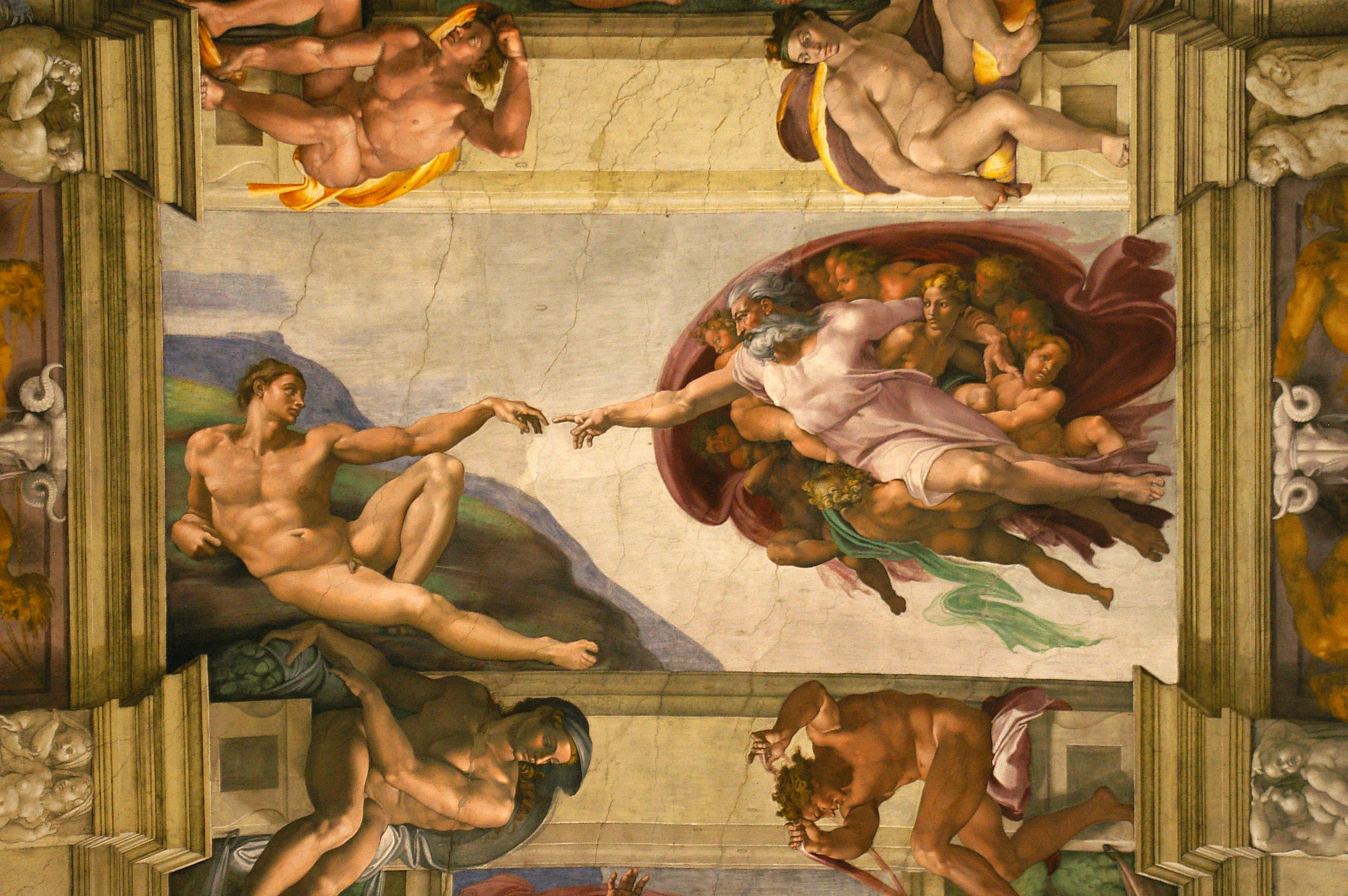
This is where the Arts come in. Many of the great paintings of antiquity, plays and poems, and the great time-tested hymns of the faith were often used in the absence of a Bible (or iPad app) as a tool to teach about faith, tell the great stories of the Bible and to teach solid theology. Think about it: All of the best art was Church art. Michelangelo’s greatest gig was painting the inside of a church (the Sistine Chapel); Bach was one of the prominent worship leaders/pastors of his day. Great art and Church were almost synonymous for much of the last 2000 years of European history. Art often played a pivotal role in educating the Church about who God was and in the role of participation with one another in faith.

Fast forward a few centuries and we are in a different world in some respects. One of the greatest inventions to promote art in a variety of forms may also, if we are not careful, help to destroy it. For nearly all of human history it was a big deal to hear live music or see a painting, even if it was so-so in terms of quality. Why? Because we had no device to capture a recording and we had no digital camera to make Van Gogh’s Starry Night our latest screen saver. In some ways, this proliferation of art has meant that we now have exposure to so many great works of art, which is a wonderful thing. However, the sometimes sinister shadow of this blessing is that perhaps we have become so over saturated with the ability to see and hear whatever we want when we want, that we have become more like critics and less like worshippers.

What do I mean by this bold claim? Well, when we come across a song that is not exactly what we are in the mood for or a painting that is in a style we do not like, rather than just being thankful for the gift that the art is or seek to see what we can learn about God or hear from Him, we evaluate it and often determine if we will or will not engage based, not on its truth or how it can help us grow, but whether we “like it” or “not” according to our tastes.

Now let me say this directly: It’s OK to have preferences, but when our preferences become our gauge of whether or not to engage in worshipping God or joining with our brothers and sisters, that does present a problem. Think for a moment. If we knowingly applied this same hermeneutic to reading the Bible, we would likely not have much left to read!

So how do we go about moving more towards worshippers and less toward critics? Two words, reorient and engage.

What is the purpose of art? Asking this question reorients us in the right direction. Good art in our churches, like scripture, is not necessarily about being happy (though joy is a major factor in the Christian faith), but about helping us become holy. Good art is not necessarily always supposed to please or even entertain you but rather to move you closer to God and His mission. In fact, like the Word of God, art should at times be “hard to swallow” because it should not only encourage, uplift and educate, but also convict, shed light on dark areas of our lives and help to painstakingly and beautifully develop our faith walk just as it was used in Luther’s day.

But it will only help us grow if we choose to engage. I have mentioned in worship services that singing (or any art for that matter) is sacred work for both the artist and observer alike. Like any other action or discipline, we cannot grow without intentionally engaging and participating (work). Now engagement looks different for different people, but what engagement does not look like is treating any art as we treat our screen saver background or a song on the radio. Good art, if made with care and attention, is speaking about God and to God and prompting us to engage with God and others; and this is not something we should ever miss the opportunity to engage in. A bold question I often ask myself is if I am not in a period of mourning and I know the words of a song and they are true, does not engaging seem like a viable option? Engagement does not mean we ourselves have to be world-class painters or soloists, but rather we are engaged with one another in using this tool to grow and connect together with God and his mission.

Are we using art to engage in worship or as an item to be critiqued? Perhaps for all of us, regardless of the quality of the art, the better question is: How can I not sing and engage in praising God and reminding those around me who He is at any and every opportunity I can get?

Art can often make us happy, and that can be a beautiful thing, but good art can also be more than that – it can help in making us holy.

So this Advent, as we again revisit the texts of the promised Messiah and that holy idea of waiting, let us never wait or hold back in engaging in our worship of Him in any and every form, circumstance and style (including art) that is humanly possible.


Leftovers

3 comments Written on November 16th, 2012     
Filed under: Culture, Leadership, Liturgy, Local Church, Music, Order of Worship

Today’s post is written by Jo Anne Taylor, Director of Music and Worship at Bethlehem Covenant Church in Minneapolis, MN.

During our weekly staff meeting, the senior pastor always asks, “What’s left over from last Sunday?”

He asks this question every week, so it really shouldn’t take me by surprise, but it almost always does. My attention is already so focused on what needs to happen before next Sunday that I struggle to remember what happened last Sunday. My wise senior pastor reminds me that we must always have a sense of the past in order to move into the future. Our roots support our branches. “What’s left over from last Sunday?” might be the most important question we discuss as a staff.

Remembering last Sunday is, in itself, an act of worship. We honor God by reflecting on the congregation’s response to a particular song, an idea from the sermon, or the way all the elements fit together in a whole that was greater than the sum of their parts. We also honor God when we take the time to examine what didn’t work in worship: the song that was in an impossible key, or the elements that distracted more than they glorified. Maybe it was an anonymous critical note left by a disgruntled worshipper, or a suspicion that we crossed the line between staying relevant and selling out to the culture around us. Maybe we were so busy minding the details, we failed to see God’s big picture, and we missed out on the transformative work of God in our own lives.

As we savor the leftovers, we identify four components of worship that move us through that transformation God promises his people. Adoration brings us into the presence of God with praise and thanksgiving. Praise and thanksgiving are inextricably linked throughout the psalms. Our adoration reminds us of the vast gulf between God’s goodness and our sinfulness, which brings us to Confession. “If we confess our sins, he is faithful and just to forgive us our sins, and to cleanse us from all unrighteousness” (1 John 1:9), and so we move immediately to Forgiveness. As God’s forgiven people, we are then Commissioned to go out and share the Good News, making disciples and baptizing them in the name of the Father, Son and Holy Spirit, and teaching them Christ’s commands (Matthew 28:19-20).

Adoration
Confession
Forgiveness
Commissioning

As you prepare for this week’s worship, what’s left over from last Sunday?
Taste the sweet and the bitter in the leftovers.
Savor the goodness of the Lord.
Let us prepare to worship God.


Dangerous

3 comments Written on September 28th, 2012     
Filed under: Core Values, Culture, Dangerous Worship, Missional, Music, Vocation and Call

Today’s post is written by Chris Logan, Pastor of Worship Arts at Community Covenant Church in Lenexa, KS.

Let me tell you a little bit about myself.

I am a third-culture child, born to the daughter of Swiss immigrants and a Californian. In high school I was the one most expected to end up doing research in a biology lab somewhere, despite my second aptitude for music. In college, I changed my major about six times before landing on a degree focusing on the psychology of religious music in the postmodern paradigm (a fancy title for “I like music but don’t want to be a performance major”). Then I got all disillusioned with that dream, but excited about missions, and moved to Australia to help plant a church, where I also started work in the FORGE missions program. Then I went to seminary in Kentucky and got my MA in missiology. I have done mission work in Switzerland, Haiti, Australia, India, and Mexico. I’m an Aquarius.

And I became a worship pastor.

… why?

I get this question a lot, especially when people find out I didn’t do my MA in worship ministry. Why put myself through all that work to study missions and discipleship to then end up planning music sets and service orders? Music and missiology, after all, doesn’t really go together. Right?

This weekend, here in Kansas City, is the second annual FORGE: America national conference called “Sentralized.” In the very first session, Michael Frost, a founding member of FORGE: Australia and author of numerous missional textbooks, talked about being the church in a post-Christian culture. There were four things that he says ought to help us maintain our identity: 1. (re)telling our dangerous story, 2. making dangerous promises to bless our host culture, 3. making dangerous critiques of culture and suggesting the way of Jesus as a solution, and 4. singing dangerous songs.

I am a worship pastor because, as Mike put it, “every revolution was sung into existence.”

As I’ve said before, we are what we sing. And if we sing dangerous songs, songs of freedom, songs of a world in which Jesus reigns, where justice is won, where captives and prisoners are set free, where communities serve each other, where God – not government – gets the last word … songs about the Kingdom of God. As we sing those songs, people catch the vision that is already percolating in the cracks of the pavement. To sing dangerous stories of the Kingdom is to countermand our culture’s drive to stay safe, to take care of themselves only. I am a pastor of worship because it is my honor and responsibility to cast that vision through the medium that gets stuck in your head better than spoken word.

But I have to choose songs that say something worth singing.

So today, be encouraged: you are here for more than just arguments over acoustic panels, drum cages, hymn arrangements, and volume levels. You are here to usher in a revolution through song, to fan into flame the Imago Dei that is already at work in our nation and our communities.

Sing of the world for which we yearn.


Innovation vs. Comfort

3 comments Written on March 30th, 2012     
Filed under: Intergenerational, Leadership, Music, Style of Worship

Today’s post comes to us from Kim Aliczi, a worship leader and member at Trinity Covenant Church in Manchester, CT.

Ten years ago, during the adoption of our youngest son, my husband and I ended up spending Easter in Russia – without our other two children, away from our church, our family, our friends – but with a young Baptist missionary couple. We had been in the country for over 2 weeks, I was homesick and heartsick, and thankfully they invited us to worship in their small apartment that Easter morning. Surprisingly, or perhaps not so surprisingly, the music I wanted to sing was not Darlene Zschech or Chris Tomlin – or whoever else was “cool” in worship circles at that time. All I wanted to hear played, all I wanted to sing at the top of my lungs were the old hymns – and as I tearfully choked my way through “Christ the Lord is Risen Today,” which was accompanied on their little, out of tune spinet, I experienced one of the most beautiful and memorable Easter Sunday services I’ve ever been a part of. Continue Reading »


Contemporary Traditional

9 comments Written on February 18th, 2012     
Filed under: Better Together, Music, Style of Worship

Today’s post is written by Jo Anne Taylor, Director of Music and Worship at Bethlehem Covenant Church in Minneapolis, MN.

My church took a leap of faith and launched a new worship opportunity this week. Worship is a big deal at Bethlehem Covenant. We take seriously the charge to “worship the Lord in the beauty of holiness” (Ps 29:2). The choir sings and the organ resounds, and the congregation responds with gusto. We greet one another with the peace of Christ, we sing hymns loudly, and we respond “Thanks be to God!” when we hear the Word of the Lord.

Many years ago, when the church was growing rapidly, it considered adding a worship service to accommodate its growth, but decided to stay with one service for the sake of unity. Now we are in a new growing season, and adding The Gathering, a more-or-less contemporary approach to worship, has “seemed good to the Holy Spirit and to us” (Acts 15:28) as the next step in our growth. This addition has required a sacrificial commitment of time and energy for some of our members, but God has graciously placed in our midst a core group of talented and dedicated volunteer musicians and leaders who have eagerly taken up the challenge of creating a worship environment that honors God in a new way for our church.

When someone in the Better Together group was asked this week, “Do you think we could attract more young people to our church with better quality, more contemporary music?” I thought of the 80-somethings who worshipped in The Gathering on Sunday. I also considered the young couples who skipped The Gathering because they love our traditional worship. Clearly, age had little to do with these choices. Continue Reading »


Make a Joyful … What?

3 comments Written on November 18th, 2011     
Filed under: Better Together, Music, Style of Worship
Tags: ,

Today’s post is written by Jo Anne Taylor, Director of Music and Worship at Bethlehem Covenant Church in Minneapolis, MN.

It doesn’t take much to get a bunch of musicians arguing about decibel levels. Just post a picture of some earplugs and wait for the responses to start flooding in. This week, in the Better Together group, I made the confession that I wear earplugs during worship at the Midwinter Conference. To some, my admission was an open door to acknowledge that, for a variety of good reasons, some of us often find electronically amplified music to be … well, too loud. Others were quick to defend the value of volume as artistic expression, especially for an instrument such as the electric guitar, which uses an amplifier to create specific tonal colors. The discussion quickly moved from “these amps go up to eleven” (no one actually quoted Spinal Tap, but it kept coming to mind as the week progressed), to the implications of music volume for worship.

Continue Reading »