Church History

Reorient and Engage: More Like Worshippers, Less Like Critics

3 comments Written on November 30th, 2012     
Filed under: Arts, Church History, Church Year, Culture, Formation, Leadership, Music, Style of Worship, Visual Arts

Today’s post is written by Jeff Olson, Pastor of Worship Arts at Christ Church in East Greenwich, RI, where he has served for over six years.

In Advent a strong theme of waiting exists, but here is why you should almost never wait to engage in the arts in your church.

“Next to the Word of God, music deserves the highest praise. The gift of language combined with the gift of song was given to man that he should proclaim the Word of God through Music.” Martin Luther penned this bold assertion nearly half a millennium ago but I would argue these words of wisdom from this reformer should still be taken seriously today.

In Luther’s day, many were illiterate, and until the invention of the printing press, seeing, holding and touching a Bible was about as common as my Minnesota Vikings putting together a quality Super Bowl caliber team. In fact, a whole town would be fortunate if they owned and had access to one copy of the Word of God, let alone if most of them could even read it. Scripture was, therefore, almost exclusively read in the presence of others. If you could not take your Bible home and study it, how did brothers and sisters of the faith grow and remember particular stories and teachings from the Word of God?

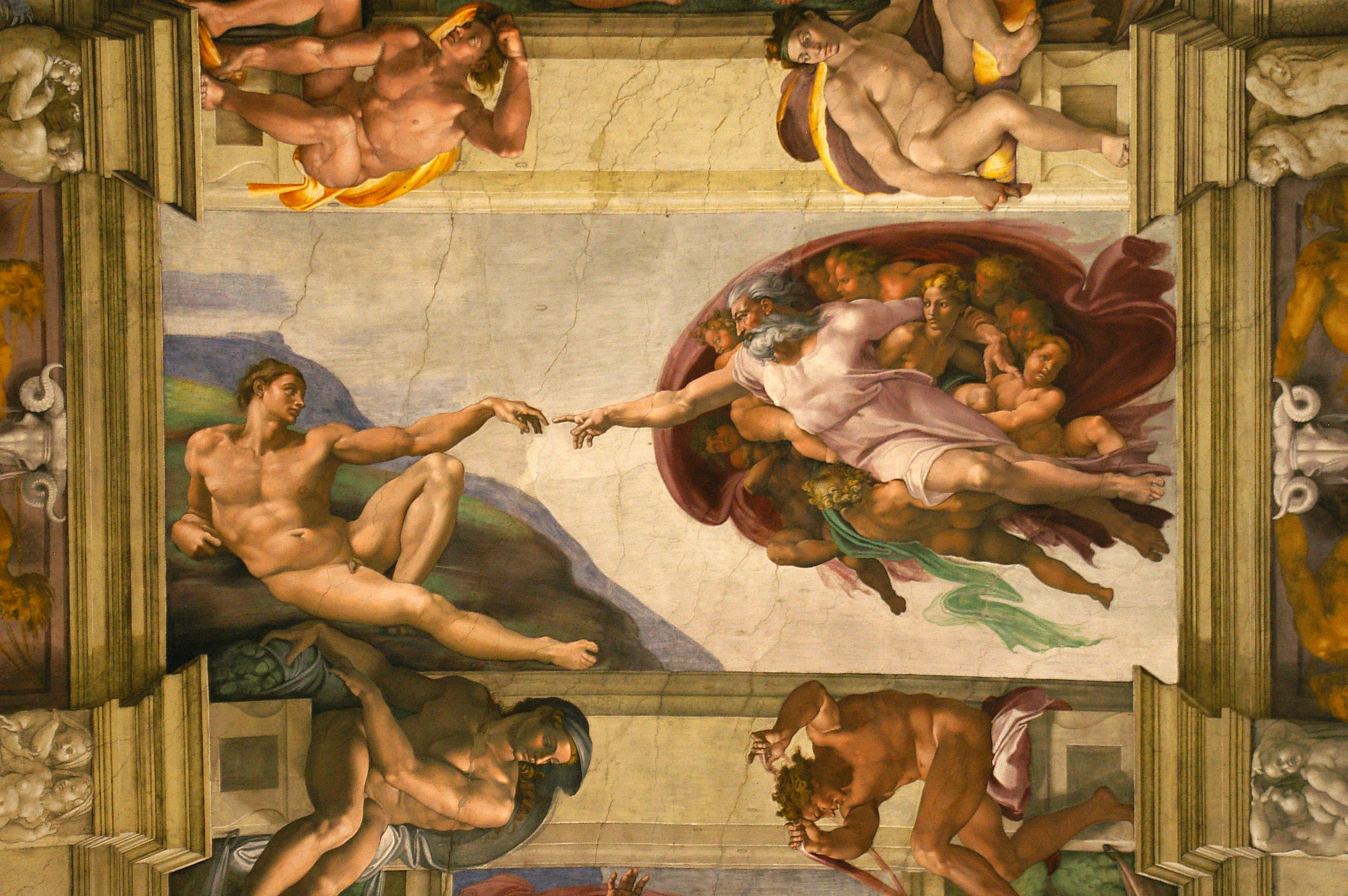
This is where the Arts come in. Many of the great paintings of antiquity, plays and poems, and the great time-tested hymns of the faith were often used in the absence of a Bible (or iPad app) as a tool to teach about faith, tell the great stories of the Bible and to teach solid theology. Think about it: All of the best art was Church art. Michelangelo’s greatest gig was painting the inside of a church (the Sistine Chapel); Bach was one of the prominent worship leaders/pastors of his day. Great art and Church were almost synonymous for much of the last 2000 years of European history. Art often played a pivotal role in educating the Church about who God was and in the role of participation with one another in faith.

Fast forward a few centuries and we are in a different world in some respects. One of the greatest inventions to promote art in a variety of forms may also, if we are not careful, help to destroy it. For nearly all of human history it was a big deal to hear live music or see a painting, even if it was so-so in terms of quality. Why? Because we had no device to capture a recording and we had no digital camera to make Van Gogh’s Starry Night our latest screen saver. In some ways, this proliferation of art has meant that we now have exposure to so many great works of art, which is a wonderful thing. However, the sometimes sinister shadow of this blessing is that perhaps we have become so over saturated with the ability to see and hear whatever we want when we want, that we have become more like critics and less like worshippers.

What do I mean by this bold claim? Well, when we come across a song that is not exactly what we are in the mood for or a painting that is in a style we do not like, rather than just being thankful for the gift that the art is or seek to see what we can learn about God or hear from Him, we evaluate it and often determine if we will or will not engage based, not on its truth or how it can help us grow, but whether we “like it” or “not” according to our tastes.

Now let me say this directly: It’s OK to have preferences, but when our preferences become our gauge of whether or not to engage in worshipping God or joining with our brothers and sisters, that does present a problem. Think for a moment. If we knowingly applied this same hermeneutic to reading the Bible, we would likely not have much left to read!

So how do we go about moving more towards worshippers and less toward critics? Two words, reorient and engage.

What is the purpose of art? Asking this question reorients us in the right direction. Good art in our churches, like scripture, is not necessarily about being happy (though joy is a major factor in the Christian faith), but about helping us become holy. Good art is not necessarily always supposed to please or even entertain you but rather to move you closer to God and His mission. In fact, like the Word of God, art should at times be “hard to swallow” because it should not only encourage, uplift and educate, but also convict, shed light on dark areas of our lives and help to painstakingly and beautifully develop our faith walk just as it was used in Luther’s day.

But it will only help us grow if we choose to engage. I have mentioned in worship services that singing (or any art for that matter) is sacred work for both the artist and observer alike. Like any other action or discipline, we cannot grow without intentionally engaging and participating (work). Now engagement looks different for different people, but what engagement does not look like is treating any art as we treat our screen saver background or a song on the radio. Good art, if made with care and attention, is speaking about God and to God and prompting us to engage with God and others; and this is not something we should ever miss the opportunity to engage in. A bold question I often ask myself is if I am not in a period of mourning and I know the words of a song and they are true, does not engaging seem like a viable option? Engagement does not mean we ourselves have to be world-class painters or soloists, but rather we are engaged with one another in using this tool to grow and connect together with God and his mission.

Are we using art to engage in worship or as an item to be critiqued? Perhaps for all of us, regardless of the quality of the art, the better question is: How can I not sing and engage in praising God and reminding those around me who He is at any and every opportunity I can get?

Art can often make us happy, and that can be a beautiful thing, but good art can also be more than that – it can help in making us holy.

So this Advent, as we again revisit the texts of the promised Messiah and that holy idea of waiting, let us never wait or hold back in engaging in our worship of Him in any and every form, circumstance and style (including art) that is humanly possible.


Our Churches: Community Covenant Church – Lenexa, Kansas

We continue our series of posts here on the Worship Connect blog profiling individual Covenant churches. Our purpose is to celebrate God’s work in and through us, to demonstrate the diversity of approaches to worship in the ECC, and to prompt prayer for one another. We are better together.

Our latest post comes to us from Chris Logan, Pastor of Worship Arts at Community Covenant Church in Lenexa, KS.

It’s kind of like trying to pour a concrete foundation in the middle of an earthquake.

Culture in the West is changing; the new realities are that 50% of the congregation attend 50% of the time, 25% attend 25% of the time, and a faithful 25% attend 75% of the time or more. The culture in the Kansas City Metro Area is no different, and it’s a challenge for our community. AsBaby Boomers transition into a new era of taking care of aging parents, as Gen-Xers are confronted with the increasing demands of sports for their kids on Sunday, and as college-aged and young adults migrate away from the Church in droves, we can’t help but notice that the earthquake is not being kind. Given that our entire pastoral staff has changed in the last five years, and given our rather large building, you’d think the deck was stacked against us.

Think again.

The people of Community Covenant Church of Lenexa, KS, are learning how to be cultural architects in these new realities. As the missional conversation has taken ahold of us, we have been well-positioned to become missionaries to our local contexts because we already think of ourselves as a big family: our (rather talented) choir is the biggest small group in our church; our pastoral team, while all new to the Covenant (and all in orientation at the same time this last year), have become good friends with a deep respect for the diverse gifts the others bring to the table; most of our volunteer base is, while busy, very dedicated to each other and the community they serve.

It’s a good place in which to be.

While there are the inevitable cultural conflicts, we recognize that these are what come in the midst of such a diverse community. Ethnically we are fairly homogenous (though this does tend to reflect our context), but in so many other ways we reflect a wide variety of ages, socioeconomic statuses, political affiliations, family backgrounds, and of course, artistic preferences.

We hold two different worship gatherings on Sunday morning that sandwich a Christian Formation hour (the new fancy term for “Sunday School”). The traditional gathering at 8:45 incorporates hymnody (led by voice, choir, organ and piano), liturgy, and tends towards a more conservative, reserved, formal flavor. Many of the regular attenders here reflect the heritage of our church family, families (now grandparents, parents, and children) who have been attending since the very beginning of our charter. The modern gathering at 11:00 is in many ways opposite in flavor; the music is generally upbeat, led by a band (that changes weekly; sometimes by a single guitar and voice, but more often by a full team with electric, acoustic, bass, multiple keyboards, drums, violin, and flute).

The sanctuary itself was built eight years ago with the traditional gathering in mind, incorporating stained glass, pews, and a full choir loft. Modular lighting is very valuable to us, as it gives us the ability to create a more colorful environment for our modern gathering, but maintain the traditional look of the sanctuary for the early gathering. It also gives us more flexibility when the space is used by many outside groups, but also by the preschool we run and by the College Prep school that utilizes our building all five days of the work week.

Through all of this, what has been most valuable has been our processing through Reggie Joiner’s book Think Orange with our staff and many in our council. To sum it up, when the light of the gospel in the Church (yellow) is combined with the loving hearts of families (red) we get an orange partnership. This has led us to retask one of our pastors to Family Ministry, to renovate our children’s wing to better reflect the culture and needs of the children themselves, and to regularly incorporate the full family of Jesus into our worship gatherings (“Orange Sundays”  or “Family Sundays” ) and into events throughout the year such as our “Illuminate” event at Christmas, our “Fall Light Festival” at Halloween, and our Tenebrae and Easter Gatherings. Both incorporate all generations – the full family – in diverse ways, such as fellowship, worship through song, games, artistic presentations, and of course, food.

Lots and lots of food.

We are still learning. Our pastors have weekly meetings to discuss the ongoing project of casting (and re-casting) the compelling vision God is slowly revealing to us; we’re experimenting with meeting schedules, new ministry formats, and church leadership models; we’re reading – a lot – and we’ve joined a cohort of other pastors in the KC Metro area who are in the same boat as we are. I’m often overwhelmed thinking about the enormity of the task before us.

But as I’ve written before, God is doing a mighty work among us.

And I, for one, am thrilled to be a part of it.


Paschal Greeting

1 Comment » Written on April 8th, 2012     
Filed under: Better Together, Church History, Church Year, Holy Week, Liturgy, Writing and blogging

Today’s post is written by Matt Nightingale, Director of Worship Ministries at Redeemer Covenant Church in Tulsa, OK.

It’s my turn to write the Better Together blog post. I didn’t get to it on Friday because I was neck-deep in Good Friday prep. So here I sit. It’s all over, this huge weekend we worship folks anticipate for months… What should I write about?

I could write about the camaraderie I experience as part of the Better Together group on Facebook. These busy seasons tend to draw us worship leaders even closer together as we navigate the highs and lows of ministry life. Continue Reading »


Remembering Who Our Friends Are (Unsung Song Themes)

Here’s a harder one. But it’s a question that’s been haunting me:

What are some of the important, but relatively distinctive, theological ideas that form the core of who we are as a Covenant church? And how, if at all, are those ideas expressed in song?

I’m not talking about the “we love God” stuff that ever Christian church wholeheartedly affirms – though I know we would affirm that too. Rather, what are the things that together make us distinctly “Covenant?” And are these ideas that express our character, flavor and approach ideas that we ever sing about? Are there songs that, even in part, express these ideas?

Let’s make a list. I’ll start with what I’ve got. You add your ideas to it.

Two rules:
1) Any song you list must be a song your church has actually sung within the last year. Don’t just raid the hymnal index.
2) If you feel you must disagree with someone’s post….please say so nicely.

The Idea:                                 A Song The Expresses That Idea:

Holistic Mission       -     We Are One in the Spirit, Let You Glory Fall, Christ Our Hope Is Here, Lord Give Us Eyes

Priesthood of all Believers    – ??…I’m drawing blanks…ideas??

Freedom in Christ    -     ??? Please, there’s got to be a song… right????

Evangelical but not exclusive      -

Biblical but not doctrinaire – “Ancient Words”

Congregational but not Independent -

Traditional but not Rigid -

I’m surprised by how hard this list is to fill.  Where are the songs that reflect our values? I’ll keep working on my list and developing this idea over the next few weeks. Will you help?

Rooting for you,
Andrew


John and Charles Wesley

Post a Comment » Written on March 3rd, 2009     
Filed under: Church History, Formation, Lent

March 3, the Church recognizes and remembers the work of John and Charles Wesley.

I first encountered Charles Wesley while delivering newspapers when I was 12. It was a cold winter morning, still dark. I was out, alone, crunching through snowy drifts, tossing the Reporter Herald on neighborhood porches. The solitude, snow and break of day inspired me with thoughts of Christmas and Jesus. I started to sing Hark the Herald Angels Sing. Somehow I surprised myself by remembering all the words to the first three verses. Over and over I sang the song and noticed the poetry and profundity and illusion to scripture. 

The song and moment led me into deep reflection about the coming, the emptying, the holiness and the work of Jesus. In particular I noticed the references to Jesus as revealed by John– born to give us second birth.

The experience was all at once a catechism, lectio divina and worship in song. The teacher and worship leader was obviously, and only, the Holy Spirit of God; and the text, as donated by Charles Wesley, was the tool the Spirit used for revelation.

We humans are, at once, both insignificant and indispensable to the work of God. Thanks be to God for the work of John and Charles Wesley. For Charles who penned the glorious hymns and for John who offers us the theological distinctive: The necessity of new birth.

Continue Reading »


The Great Emergence

Post a Comment » Written on February 16th, 2009     
Filed under: Church History, Culture, Events

Eugene Cho interviewed Phyllis Tickle at Midwinter Conference. What do you think? Are we in the ‘Great Emergence?’ Are you glad? Or sad? Why so?

You can order Phyllis’ entire Midwinter talk.


interview with Phyllis Tickle from Eugene Cho on Vimeo.


More on The Turn

7 comments Written on September 25th, 2008     
Filed under: Church History, Church Year, Culture, Style of Worship
Tags: , ,

This morning, Scot McKnight suggests we respond to the liturgical turn among low church evangelicals, and he offers some particulars in his third post on this topic

Scot thinks, as do I, that this trend is not an invitation to return to the prayers and hymnody of the 20th Century. It’s more complicated than that. He mentions some teaching and preaching approaches that could move us toward a reasoned response to the trend. These take work, thought and creative synthesis. There is no “book” that contains tidy scripts for us to follow. He writes:

Continue Reading »


Liturgical Turn?

5 comments Written on September 22nd, 2008     
Filed under: Church History, Church Year, Liturgy, Style of Worship, Theology
Tags:

Are churches becoming more liturgical? Check out these reports.

Today, Scot McKnight is talking about college students converting from evangelicalism to other traditions. He asks:

What is going on? There is a rise, a burgeoning rise, of young college students converting from low church evangelicalism, with its anemic, unhistorical ecclesiology, to the great liturgical traditions: Eastern Orthodoxy and Roman Catholicism. Three students this semester have already told me they are considering converting.

I know people who have converted for this reason. I also know evangelical pastors and worship leaders who use all manner of traditional worship resources for two reasons: 1.) They have a personal affinity for high church language and 2.) They are students of culture, who notice our growing interest in the words and symbols of historic Christianity.

Scot ends his post with a charge:

The conversion of young low church evangelicals to liturgical traditions should hardly surprise us. What we should be doing is correcting our weaknesses by listening to those converting.

Any thoughts?