Vocation and Call

Commencement

Today’s post is written by Jo Anne Taylor, Worship Pastor at Bethlehem Covenant Church in Minneapolis, MN.

It’s that time of year again: time to get out the academic regalia and line up for the procession, as the faculty leads the senior class to the strains of Elgar’s  Pomp and Circumstance March No. 1. You know the tune. It’s played at nearly every high school graduation ceremony in America.bethelgradprocession

It’s that time of year again: time to congratulate confirmands in their white robes, as they recite the Apostles’ Creed and present their statements of personal faith to smiling congregations. We sing How Firm a Foundation or some other appropriate hymn, snap pictures, and eat cake, hoping the baker spelled everyone’s name correctly this year.

It’s that time of year again: time to pack up the boxes and load the moving van with furniture, setting out for new homes, new ministry settings, new lives. We grieve as we leave people we love, the people who have made us what we are, and we anxiously anticipate meeting the people who will welcome us into their communities of faith as new worship pastors, youth pastors, or lead pastors.

Many a Commencement speaker has reminded the senior class that the word commencement means beginning, not end. We remind each Confirmation class that wearing a white robe and eating cake does not constitute graduating from church, but rather the beginning of a personal commitment to engage more fully in the life of the congregation. Every pastor who has ever moved from one church to another knows, as Rev. D. Darrell Griffin reminds us, that “Change is situational. Transition is psychological.” Change is an event, often one over which we have no control, but transition is the way we respond to that event.

It’s that time of year again: time to celebrate and reflect on what has been, time to anticipate what is to come, time to embrace change and begin the transition that will, by the grace of God, bring us each closer to becoming the transformed children of God we were created to be. Cue the music. Here we go.


Transitioning Well

Post a Comment » Written on May 3rd, 2013     
Filed under: Ethics, Health, Leadership, Local Church, Vocation and Call

transition-101-bannerToday’s post is written by Matt Nightingale, Director of Worship Ministries at Redeemer Covenant Church in Tulsa, OK.

What does it mean to transition gracefully? As pastors and worship leaders, transition – sometimes radical transition – is often an “occupational hazard.” I’ve been serving in worship ministry at Redeemer now for 3-1/2 years, but last month I announced a transition. In July, I’ll start a new call at Redwood Covenant in Santa Rosa, California.

Transition may be a fairly common thing for those of us in full-time ministry, but it is never easy. I find myself in such a strange place… truly sad to leave the wonderful people of Redeemer, yet so excited to join the wonderful people of Redwood. From one RCC to another. It’s like I’m living in two very different realities, deeply desiring to serve faithfully and finish strong in Tulsa while at the same time looking forward to the new experiences God is calling me into and making plans for my first few months in Santa Rosa.

My question today: What are YOUR stories of transition? What was it like for you, your family and your churches? Share your advice and experiences… How can we follow God’s call with grace, blessing the congregations we’re leaving while embracing the new congregations to which we’re called?


Mundane Ministry

mundaneToday’s post is written by Jo Anne Taylor, Worship Pastor at Bethlehem Covenant Church, Minneapolis, MN.

It’s been a crazy week around the Covenant. Weather weirdness throughout the North American continent, one heart-breaking tragedy after another, the deaths of iconic artists, and major life transitions among friends and colleagues make me want to pause – if only just long enough to catch my breath. Emotions run from horror to glee in an instant. Concern for those I love, and for the world God calls me to love, grows into a nagging sense of urgency to do something.

Meanwhile, sermons get written, songs get rehearsed, bulletins get printed, and agendas for meetings get developed. Coffee gets poured and cookies get baked, bandages get rolled and Sunday School lessons get prepped. The work of the church goes on, and we are all called – and blessed – to be part of that work.

As that work continues, however, the nagging sense of urgency to do something continues to tug at the edges of my consciousness. Matters of great impact are happening all around me, and day-to-day ministry seems so … mundane. Just as I become convinced that nothing I do can ever be enough to meet the needs of this hurting world, and everything I do has fallen into a formulaic routine of drudgery,  the Apostle Paul speaks to me through his letter to Thessaloniki:

 Now concerning brotherly love you have no need for anyone to write to you, for you yourselves have been taught by God to love one another, for that indeed is what you are doing to all the brothers and sisters throughout Macedonia. But we urge you, brothers and sisters, to do this more and more, and to aspire to live quietly, and to mind your own affairs, and to work with your hands, as we instructed you, so that you may walk properly before outsiders and be dependent on no one. – I Thessalonians 4:9-12 (ESV)

Then I remember that ministry is both/and, not either/or. More and more, more and more.

How do the scriptures speak to you in the midst of crisis? How do you balance the ongoing ministry of your church with the desire to meet immediate, critical needs when catastrophe strikes? How are you, and your congregation, loving one another more and more?


Our Churches: Bethany Covenant Church – Mount Vernon, Washington

We continue our series of posts here on the Worship Connect blog profiling individual Covenant churches. Our purpose is to celebrate God’s work in and through us, to demonstrate the diversity of approaches to worship in the ECC, and to prompt prayer for one another. We are better together.

Our latest post comes to us from Randall Wilkens Associate Pastor of Worship and the Arts at Bethany Covenant Church in Mount Vernon, WA.

About 30 years ago, the congregation of Bethany Covenant Church decided it was time to move out of their small neighborhood church building. They had outgrown it—maybe not so much in numbers as in vision—and they wanted to ramp-up their outreach and visibility in the community. So this church of about 250 members bought five acres in a developing area of town and made plans to build. The first phase of the multi-phase project would include a sanctuary with a capacity of 780, about three times the church’s membership! It would seem this little church didn’t plan to stay little!

When the new sanctuary was completed in 1987, it was immediately the premiere performance space in the Mount Vernon area, and remained so until 2005 when McIntyre Hall was built on the campus of Skagit Valley College. The sanctuary’s sloped wooden ceiling and curved sheetrock walls were designed in consultation with an acoustic engineer, with ever-pleasing results. The room has often been used by school bands, community choirs, and other concert groups. It continues to be the venue for our church’s annual Christmas Musical—drawing an audience of 1,200 over two nights—and for other concert outreaches the church undertakes throughout the year. And of course it is used for worship multiple times each week—both for our own traditional and contemporary services, and for multiple services of a Russian congregation that rents the building.

A lot can change in 25 years. When Bethany’s sanctuary was built, contemporary worship was not yet common in evangelical churches. So despite the fact the sanctuary platform is almost 80 feet wide from the baptistry on one end to the choir loft on the other, it never seems to have quite the right space for a worship band. And while the forward-thinking congregation made sure a projection screen was installed, they never envisioned it would be used every Sunday, so it was designed to disappear into the floor most of the time. When raised it was about two stories high, so the unused bottom half eventually had to be concealed to prevent it from dominating the room like a huge white monolith. When that screen accidentally tore five years ago, its demise provided us an opportunity for a welcome upgrade!

Other changes have been made over the years and still others are planned. All the major components of the sound system have been replaced over the past ten years. As recently as last summer a new production booth was completed—housing new Mac computers and video equipment donated by a member of the congregation. Plans are underway to replace the mauve carpet with something more up-to-date, and to modify the platform to better serve current worship needs. Those worship needs continue to be those of a multi-generational congregation which values traditional and contemporary worship equally, supporting both with just about equal attendance.

On the contemporary side, Bethany Covenant struggled in the past to find its voice. In planting a church several years ago, we were depleted of many of our best contemporary worship musicians. Yet we have not given up on the conviction that contemporary worship is needed for an effective outreach and to give expression to younger generations of worshipers. We have persevered, and that perseverance has paid off, as we are now blessed with an influx of young worship musicians whose leadership has brought more vitality to our contemporary worship service.On the traditional side, Bethany Covenant has a long-standing heritage of choral music, and still has a fine 35-voice adult choir, along with successful youth, children’s, and bell choirs. We are blessed to have a 9-foot Steinway concert grand that’s used for everything from classical piano pieces to accompaniment for our resident gospel quartet. And this weekend we will dedicate a brand new, 3-manual custom Allen organ. This instrument is unique; there is not another like it anywhere in the world. Everything from the individually-selected stops on its French terraced console to the 34-channel audio system, promises years of beautiful music devoted the glory and majesty of our God. The organ even features a MIDI module that will make it a useful instrument for contemporary worship.

There is always a concern that when a church has two unique services it will just end up as two congregations meeting in the same building. That doesn’t seem to have happened at Bethany Covenant. A Christian formation hour between the services gives the whole congregation a chance to grow in their faith together. Fellowship dinners on Wednesday nights provide opportunities for the whole church family to sit down to a meal together. “Festival services” several times a year bring everyone together in one gathering where traditional and contemporary styles are integrated. These gatherings happen around some of the most important times in the life of our church: our fall Ministry Fair, Christmas, Easter, and Confirmation Sunday. In the opinion of our church’s worship pastor (the writer of this article!) gathering like this as one body to worship our Lord is like a little taste of heaven!


Our Churches: Community Covenant Church – Lenexa, Kansas

We continue our series of posts here on the Worship Connect blog profiling individual Covenant churches. Our purpose is to celebrate God’s work in and through us, to demonstrate the diversity of approaches to worship in the ECC, and to prompt prayer for one another. We are better together.

Our latest post comes to us from Chris Logan, Pastor of Worship Arts at Community Covenant Church in Lenexa, KS.
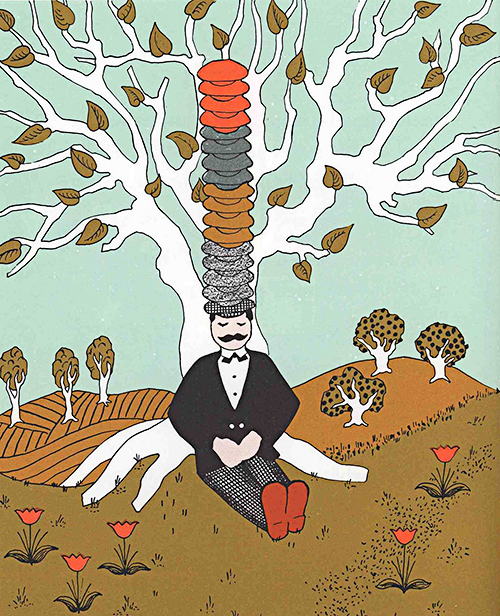
It’s kind of like trying to pour a concrete foundation in the middle of an earthquake.

Culture in the West is changing; the new realities are that 50% of the congregation attend 50% of the time, 25% attend 25% of the time, and a faithful 25% attend 75% of the time or more. The culture in the Kansas City Metro Area is no different, and it’s a challenge for our community. AsBaby Boomers transition into a new era of taking care of aging parents, as Gen-Xers are confronted with the increasing demands of sports for their kids on Sunday, and as college-aged and young adults migrate away from the Church in droves, we can’t help but notice that the earthquake is not being kind. Given that our entire pastoral staff has changed in the last five years, and given our rather large building, you’d think the deck was stacked against us.

Think again.

The people of Community Covenant Church of Lenexa, KS, are learning how to be cultural architects in these new realities. As the missional conversation has taken ahold of us, we have been well-positioned to become missionaries to our local contexts because we already think of ourselves as a big family: our (rather talented) choir is the biggest small group in our church; our pastoral team, while all new to the Covenant (and all in orientation at the same time this last year), have become good friends with a deep respect for the diverse gifts the others bring to the table; most of our volunteer base is, while busy, very dedicated to each other and the community they serve.

It’s a good place in which to be.

While there are the inevitable cultural conflicts, we recognize that these are what come in the midst of such a diverse community. Ethnically we are fairly homogenous (though this does tend to reflect our context), but in so many other ways we reflect a wide variety of ages, socioeconomic statuses, political affiliations, family backgrounds, and of course, artistic preferences.

We hold two different worship gatherings on Sunday morning that sandwich a Christian Formation hour (the new fancy term for “Sunday School”). The traditional gathering at 8:45 incorporates hymnody (led by voice, choir, organ and piano), liturgy, and tends towards a more conservative, reserved, formal flavor. Many of the regular attenders here reflect the heritage of our church family, families (now grandparents, parents, and children) who have been attending since the very beginning of our charter. The modern gathering at 11:00 is in many ways opposite in flavor; the music is generally upbeat, led by a band (that changes weekly; sometimes by a single guitar and voice, but more often by a full team with electric, acoustic, bass, multiple keyboards, drums, violin, and flute).

The sanctuary itself was built eight years ago with the traditional gathering in mind, incorporating stained glass, pews, and a full choir loft. Modular lighting is very valuable to us, as it gives us the ability to create a more colorful environment for our modern gathering, but maintain the traditional look of the sanctuary for the early gathering. It also gives us more flexibility when the space is used by many outside groups, but also by the preschool we run and by the College Prep school that utilizes our building all five days of the work week.

Through all of this, what has been most valuable has been our processing through Reggie Joiner’s book Think Orange with our staff and many in our council. To sum it up, when the light of the gospel in the Church (yellow) is combined with the loving hearts of families (red) we get an orange partnership. This has led us to retask one of our pastors to Family Ministry, to renovate our children’s wing to better reflect the culture and needs of the children themselves, and to regularly incorporate the full family of Jesus into our worship gatherings (“Orange Sundays”  or “Family Sundays” ) and into events throughout the year such as our “Illuminate” event at Christmas, our “Fall Light Festival” at Halloween, and our Tenebrae and Easter Gatherings. Both incorporate all generations – the full family – in diverse ways, such as fellowship, worship through song, games, artistic presentations, and of course, food.

Lots and lots of food.

We are still learning. Our pastors have weekly meetings to discuss the ongoing project of casting (and re-casting) the compelling vision God is slowly revealing to us; we’re experimenting with meeting schedules, new ministry formats, and church leadership models; we’re reading – a lot – and we’ve joined a cohort of other pastors in the KC Metro area who are in the same boat as we are. I’m often overwhelmed thinking about the enormity of the task before us.

But as I’ve written before, God is doing a mighty work among us.

And I, for one, am thrilled to be a part of it.


Our Churches: Crossroads Church – Loveland, Colorado

2 comments Written on October 23rd, 2012     
Filed under: Better Together, Local Church, Our Churches, Vocation and Call

We have started a new series of posts here on the Worship Connect blog. In addition to our normal Friday posts, on occasional Tuesdays we’ll be profiling one of our Covenant churches. Our purpose is to celebrate God’s work in and through us, to demonstrate the diversity of approaches to worship in the ECC, and to prompt prayer for one another. We are better together.

Our latest post comes to us from Jessica Perez, Worship and Creative Arts Directer at Crossroads Church in Loveland, CO.

This wall is on our main floor atrium; we have the same wall, in Spanish, upstairs.

Crossroads Church is a vibrant and creative church, and has been since our first service in January, 1996. My father, John Smith, founded Crossroads 16 years ago; he remains the senior pastor. As a youth pastor at Evangelical Covenant Church (now LifeSpring Covenant church) in Loveland, Colorado, my dad was called to plant a church that was unlike any church in the area at that time. Crossroads met in schools for the first 9 years; at one point, we were meeting in 11 different facilities in any given week. We have had an exciting run. Although it hasn’t always been easy or free from pain, storms or transitions, our journey has been exciting and full of God’s grace. We tackle big, real topics, always pushing to be better than the week before.

Crossroads is located in Loveland, Colorado (pop. 68,000). An hour north of Denver—and just a few miles south of Fort Collins—we are at the foot of the Rocky Mountains. Camping, hiking, fishing, cycling and mountain biking are just a few of the outdoor activities within a 30 minute drive; skiing and other winter activities are nearby as well.  The arts, including sculpture, theater, music, dance and more, are highly valued in Loveland and the northern Colorado community.

We live in an active community, and we are an active church. We often talk about these activities being Crossroads’ biggest competitors for people’s weekend church attendance.

Our auditorium seats 1,100, with a majority of the seating in chairs on the floor and additional seating in bleachers. Along with the weekend band (a rock band with multiple worship leaders and a worship choir), we use creative elements, staging, lighting and video to communicate the message of Jesus.

On our second floor, we have a small room we call our “Chapel,” which seats around 150. We utilize the Chapel for smaller funerals, weddings and overflow services on holidays, as well as choir rehearsals, large classes, Bible studies, special events and more.

We have three identical weekend services: Saturdays at 4:30, and Sundays at 9 and 11. Kids programs for ages birth – 5th grade take place during all of the weekend services; a middle school program is offered during the 11am service.

Our weekend planning team creatively shapes our services in themed series, determining the music, videos, “my stories” (testimonies), message (sermon), service order, and more. This team is made up of the teaching team (pastors), tech, worship and other creative arts staff. We are intentional about exhibiting the weekend series artwork throughout the building through posters and a 6 foot tall “lightbox” (a custom backlit display), in the weekend program (bulletin), on our website, through Facebook, via our weekly e-newsletter, and more. We utilize social media to continue sharing the experience throughout the weekend and beyond; our Celebrate Recovery leader writes a Monday morning blog post, and we post the whole service online on Tuesdays.

The music is current, always moving and changing. A talented band, multiple worship co-leaders, and a seasonal worship choir lead the worship music. We introduce new music often, and continually rotate new and familiar music. We cover many radio hits, Christian and secular—music our team has historically performed with excellence.

Crossroads has baptized over 1,000 people in 16 years; for the past 5 years, 500+ people (per year) have volunteered for Project One, a day of service in the community. We are a creative, rockin’ church, passionate about social justice and committed to sharing the Gospel on a weekly basis. We draw not only believers, but we also have become a safe place for many unchurched and dechurched in the community to experience Jesus. There are former pastors serving and leading ministries at Crossroads. We seek to create a church home for all.

This past February, we added a Spanish ministry, Pacto de Amor. Pacto de Amor  worships in our Chapel on Sundays at 1pm, and has a full children’s program meeting simultaneously. Having Pacto de Amor at Crossroads has added a wonderful and exciting ministry to our church—we have successfully experimented with incorporating Pacto de Amor and Spanish-language elements into a few of our weekend services, including Good Friday.

At Crossroads, we have FUN! Currently, we’re in a series called “The Family Series.” We’ve set up a “Photo Booth” every weekend of the series—families and friends incorporate silly props into group photos. We have an online photo gallery where people can view the photos, and download their own. It’s been a blast! Part of the idea is to continue the whole weekend experience outside our auditorium doors, and to encourage connections.

Crossroads is a church that seeks to better our community. As we plan, prepare, and wrap up each week’s events, we ask ourselves: if Crossroads wasn’t around, would the community feel the loss? Our goal is for that answer to always be a resounding “YES!”


Our Churches: Artisan Church – Rochester, New York

1 Comment » Written on October 16th, 2012     
Filed under: Better Together, Local Church, Our Churches, Vocation and Call

We have started a new series of posts here on the Worship Connect blog. In addition to our normal Friday posts, on occasional Tuesdays we’ll be profiling one of our Covenant churches. Our purpose is to celebrate God’s work in and through us, to demonstrate the diversity of approaches to worship in the ECC, and to prompt prayer for one another. We are better together.

Our sixth post comes to us from Scott Austin, Pastor of Artisan Church in Rochester, NY.

Artisan Church is only about eight years old, but we worship together in a space that housed another Covenant church for decades before we inherited it. I guess that’s fitting, since one of our key values is roots: we embrace history and tradition even as we strive to engage a postmodern culture. We follow a very traditional fourfold pattern of liturgy—Gathering, Word, Table, and Sending Forth—complete with corporate confessions and weekly Communion. But the worship elements that fill that pattern are quite modern.

We’ve made a number of changes to the former worship space of Trinity Covenant Church since we started using it: we’ve installed carpeting, theater lights, a video projector, who-knows-how-many-thousand watts of sound, and of course the corresponding sound treatments that were necessary to accommodate our slightly raucous worship style in a space that was designed for chamber music. (Though we were recently delighted to find out that it still accommodates chamber music pretty well!)

We hope to break ground on a sanctuary expansion in the spring so we can receive the blessings of growth without adding additional services yet. Our biggest challenge at the moment is figuring out new ways to live out our value of community; as our church grows and social dynamics change, it is ever more difficult to be hospitable and welcoming to newcomers.

I’ve mentioned our values of roots and community. We have three others: awe, which helps us remember that we worship a transcendent God, beauty, which affirms humanity’s creative impulse as part of bearing the image of a creator God, and justice, which calls us to love and work for hurting people and a suffering world.

I love Artisan. I’m fond of saying that I couldn’t imagine being a pastor anywhere else, and I’ve even been known to say that I’m not sure I could attend church anywhere else. It is a truly unique and very special place. But lately I’ve been struck by the humbling reality that being unique and special is not what’s important. What’s important is knowing, loving, and serving Jesus together.

So while the former members of Trinity Covenant Church might not recognize their sanctuary anymore, I’m confident they would recognize our Lord Jesus the same way the Emmaus Road disciples did: in the breaking of the bread. As we partake of the body and blood of Christ, we are “joined and knitted together” for his service: not only with all those who came before us, but with all those who will come after us. Even though they may end up taking apart our fancy sound system.


Our Churches: Paradise Valley Community Church – Phoenix, Arizona

3 comments Written on October 2nd, 2012     
Filed under: Better Together, Local Church, Our Churches, Vocation and Call

We have started a new series of posts here on the Worship Connect blog. In addition to our normal Friday posts, on occasional Tuesdays we’ll be profiling one of our Covenant churches. Our purpose is to celebrate God’s work in and through us, to demonstrate the diversity of approaches to worship in the ECC, and to prompt prayer for one another. We are better together.

Our fifth post comes to us from Mike Delster, Interim Worship and Creative Arts Director at Paradise Valley Community Church in Phoenix, AZ.

“Our church is not perfect.” There could be no greater understatement, because the fact of the matter is, people make up the body of the church.

People can be messy.

Sin has a nasty way of digging into wounds we thought were already healed. It brings about insecurities, poor conflict resolution, pride, selfishness, and anything else that would be a distraction. Sin has a way of taking something beautiful, designed to glorify our God, and makes us believe that it is our god.

Church is messy, not because the youth group stained the sanctuary carpet with Jello again, but because people are messy by nature. They are the leaders, the musicians, the youth, and the elders. They all have stories, some have baggage, and some have yet to experience healing.

And so it is; our church is imperfect…  but the fact of the matter is, I have never seen another church embrace their imperfection so well. The more we realize our fallibility, the more we recognize our need for God’s grace in our lives. God’s love actually appears to be even greater through the lens of our imperfection.

The Church as the Body of Christ will never fail. On our worst days, we have to own the fact that we are a hypocritical organization with a vision statement built on good intentions. But on our very best days, we recognize that we are part of something bigger than ourselves. We are part of God’s mission in this world, His ever-expanding Kingdom, the proclamation of the Gospel in word and deed. On our best days, we are brightly reflecting God’s light in the darkness. And on our best days, we are empowered with the Holy Spirit! This is not because we are special or more qualified, but because we are blessed and honored to be a part of what God is doing in our local community and throughout the world.

The hour we gather together on Sunday mornings is our flawed community’s best attempt at worshiping our perfect Lord. We recognize in our meeting that we need something greater than ourselves; not merely because we are inadequate, but because we don’t want to settle for a life of mediocrity. We need grace. We need resurrection, in this life and the next. We need Christ. We need each other.

This expression of worship stems from our community as a response to who God is and what He is doing here. As a result, the worship is a reflection of the gifts and talents of our community, using whichever stylistic choices bring about life within us. Our services generally include music, preaching, testimony, communion, and some form of reflection time. While we will never claim to be perfect, we have a commitment to bring God our excellence, our first fruits, in everything we do.

We are a community that seeks to love God above all else, especially in the midst of our imperfection. We count ourselves blessed and so very grateful to be a part of God’s mysterious and wonderful plan of salvation for this world.


Dangerous

3 comments Written on September 28th, 2012     
Filed under: Core Values, Culture, Dangerous Worship, Missional, Music, Vocation and Call

Today’s post is written by Chris Logan, Pastor of Worship Arts at Community Covenant Church in Lenexa, KS.
Let me tell you a little bit about myself.

I am a third-culture child, born to the daughter of Swiss immigrants and a Californian. In high school I was the one most expected to end up doing research in a biology lab somewhere, despite my second aptitude for music. In college, I changed my major about six times before landing on a degree focusing on the psychology of religious music in the postmodern paradigm (a fancy title for “I like music but don’t want to be a performance major”). Then I got all disillusioned with that dream, but excited about missions, and moved to Australia to help plant a church, where I also started work in the FORGE missions program. Then I went to seminary in Kentucky and got my MA in missiology. I have done mission work in Switzerland, Haiti, Australia, India, and Mexico. I’m an Aquarius.

And I became a worship pastor.

… why?

I get this question a lot, especially when people find out I didn’t do my MA in worship ministry. Why put myself through all that work to study missions and discipleship to then end up planning music sets and service orders? Music and missiology, after all, doesn’t really go together. Right?

This weekend, here in Kansas City, is the second annual FORGE: America national conference called “Sentralized.” In the very first session, Michael Frost, a founding member of FORGE: Australia and author of numerous missional textbooks, talked about being the church in a post-Christian culture. There were four things that he says ought to help us maintain our identity: 1. (re)telling our dangerous story, 2. making dangerous promises to bless our host culture, 3. making dangerous critiques of culture and suggesting the way of Jesus as a solution, and 4. singing dangerous songs.

I am a worship pastor because, as Mike put it, “every revolution was sung into existence.”

As I’ve said before, we are what we sing. And if we sing dangerous songs, songs of freedom, songs of a world in which Jesus reigns, where justice is won, where captives and prisoners are set free, where communities serve each other, where God – not government – gets the last word … songs about the Kingdom of God. As we sing those songs, people catch the vision that is already percolating in the cracks of the pavement. To sing dangerous stories of the Kingdom is to countermand our culture’s drive to stay safe, to take care of themselves only. I am a pastor of worship because it is my honor and responsibility to cast that vision through the medium that gets stuck in your head better than spoken word.

But I have to choose songs that say something worth singing.

So today, be encouraged: you are here for more than just arguments over acoustic panels, drum cages, hymn arrangements, and volume levels. You are here to usher in a revolution through song, to fan into flame the Imago Dei that is already at work in our nation and our communities.

Sing of the world for which we yearn.


Our Churches: Peninsula Covenant Church – Redwood City, California

Post a Comment » Written on September 18th, 2012     
Filed under: Better Together, Local Church, Our Churches, Vocation and Call

We have started a new series of posts here on the Worship Connect blog. In addition to our normal Friday posts, on occasional Tuesdays we’ll be profiling one of our Covenant churches. Our purpose is to celebrate God’s work in and through us, to demonstrate the diversity of approaches to worship in the ECC, and to prompt prayer for one another. We are better together.

Our fourth post comes to us from Tabatha Mason, Worship Director at Peninsula Covenant Church in Redwood City, CA.

Peninsula Covenant Church (PCC) is such a special place. I will start by saying one of the most incredible things I’ve experienced here is that this is a place of belonging. A strong and beautiful drawing of the Holy Spirit pervades all that happens here, and though we work hard to bring something of worth to offer God in worship, His movement in and through His people always amazes us. And that is my favorite part of this “job.”

This is PCC’s 60th year of serving the San Francisco Peninsula which is the area from San Francisco to the Silicon Valley. Pastor Gary Gaddini strongly leads us in being a missional, intergenerational community from infants to 80+. The church sits on an incredible campus of 14 acres which includes a community center that it acquired many years ago. The Center allows us to serve its members (a majority of whom do not worship at any church on Sundays) as well as serve the larger community by running a PE program for 5 of the elementary schools in our city.

Our Sunday gatherings include Traditions at 8.55am, Contemporary at 10.30am, and Sunday Night at 5pm. The liturgy is pretty tight at the Traditions gathering. We aim for a 55 minute gathering that is rich in the heritage of recent Traditions – meaning within the last 75 years or so. This gathering is led by a choir, an organ, and usually has more performance pieces and classical instruments than the others. The Contemporary gathering is 75 minutes with less expectation of tradition and is led by a rock band. The Sunday Night gathering is 90 minutes which includes a little more music (also led by a rock band and usually louder than the morning) and some time to talk in small groups around the sermon text or other questions about the sermon topic. We are currently in the 9th month of an 18 month series on the life of Jesus through the book of Luke. We do our best to find ideas for responses to the Word that have inherent hooks for deeper impact and memory, and we try to incorporate those appropriately into the different gatherings. Sometimes they are a bit elaborate to create and pull off – like our very own “wailing wall”, and at other times we put a simple twist on communion. One of my personal favorites was a communion response after the Luke 7 text of the sinful woman who washed Jesus’ feet with her tears and anointed them with her perfume. We had many stations for communion that Sunday and each was staffed with a man or woman who looked into the eyes of each person that came to receive the elements and said, “Your sins are forgiven. Your faith has saved you. Go in peace.”

I am privileged to not only serve in a rich and beautiful community of believers at PCC, but also to call it my home.