Formation

Silence

Post a Comment » Written on April 26th, 2013     
Filed under: Dangerous Worship, Formation

Today’s post is written by Chris Logan, Pastor of Worship Arts at Community Covenant Church in Lenexa, KS.
Silence

The gift of God to the introvert, and from the introvert to his or her community, is the gift of silence.

In 1 Kings 19, Elijah goes up on a mountain to hear from God, and in the midst of a powerful wind, an earthquake, and fire, God’s voice was not present. But then, a whisper, still and small, emerged from the silence that followed and asked Elijah, “what are you doing here?”

To me, that sounds wonderful.

Enjoy_the_Silence_by_WickedNox11I am an introvert, a fact that has taken me a long time to embrace. But as a new dad for the third time, I’m once again learning the value of silence. I’m discovering how much I long for it in its absence – and these days, it’s absent a lot.

Silence is not just the absence of noise, and I’m finding that silence itself can be active, dynamic … dare I say it, alive, teeming with the presence of God. In silence, we are given a chance to simply be. We are able to rest, to recharge. When we sleep, our bodies repair themselves faster; so too our minds and emotions repair when we take sabbath. Silence is, in a way, the act of growing. In silence, we engage our Creator. Silence is communion, where we eat the bread of presence and drink the life-giving cup of rest.

But silence takes work.

Our world is in the throes of a massive shift; places ever-distant are now connected through the digital world. Media bombards our eyes, ears, and an increasing number of senses with consumer-driven messages. Sleep has become harder and so we depend on caffeine and other stimulants more than ever before. For many of us, our phones and other mediums pull us in a thousand directions at once; we are always awake, always thinking, always working, always productive. Combined with urbanization and the influx of western culture on the world, we’ve created a metaculture of movement, of busy

… of noise.

silence-speaks-79426-500-550

Now more than ever, we need silence.

The great irony is that, in a global world, I believe that silence will ultimately prove to connect us more than anything else we’ve done. See, silence is counterintuitive, paradoxical; it is entirely necessary, but it is the antithesis of productivity. In silence, we cannot produce more, and yet we cannot produce without it. It takes silence to have a conversation; in silence, we cannot talk, but we cannot talk without drawing a breath, without silence. Nor can we listen without silencing our own voices. We cannot have the beauty of music without the rest of silence in between the notes.

And isn’t it interesting that the only time we all truly sound the same is in the silence?


Connect

8 comments Written on February 22nd, 2013     
Filed under: Culture, Dangerous Worship, Formation, Liturgy

Today’s post is written by Chris Logan, Pastor of Worship Arts at Community Covenant Church in Lenexa, KS.
Have you ever considered how worship gatherings fit into the context of discipleship?

The connection is actually quite strong. To be honest, I had never really thought about it much until I was at a conference a few months ago, and Mindy Caliguire spent a great deal of time talking about discipleship (it turns out that’s what she does at Willow Creek). One of the things she mentioned was that discipleship, while it’s often looked at as a small group or one-on-one sort of responsibility, can be a large group practice. We learn and grow together not only as we read or have conversations, but also as we engage corporately, as the combined voices and minds and hearts of many.

It’s a perspective that should change the way we approach crafting worship gatherings.

For one, the music takes on a new significance; it’s a part of the process of forming all of us into the image of Jesus. These are not a random assortment of songs we enjoy singing; they must be carefully chosen and rehearsed. Furthermore, every part of the music – not just the words – must be carefully thought through; lyrics incorrectly paired with style or flavor changes the way we tell the story. The order of music – and of the whole gathering, from music to liturgy to message, even to the announcements – matters because in the environment that we choose to create people will have a better chance (or not) of connecting with the Creator.

Connections.

What we are doing is helping people make connections, because that’s what a good story does. In the process of crafting a worship gathering as story, we can help our congregations connect what they learned last week to the next week; we can help them connect to creation and to each other; we can help them connect to their Maker and Redeemer.

The thing about connections is that they don’t happen to us; we have to participate in them. Nobody can connect me to God without my permission and conscious engagement – nor to my neighbor. Connections – true, meaningful, lasting, deep connections – happen in the midst of discovery. On some fundamental level, we do not own those connections unless we discover them for ourselves.

Which begs a question: what story are we telling?

Does the story we are telling in and with our gatherings help make those connections, that discovery? To help others to make discoveries, should we be giving answers, or asking more questions? Is it possible that by providing simple answers (how complex could those answers possibly be with only an hour or less to give them?) we’re robbing those in our care of the joy of discovery?

More to the point, what is the nature of the content? If the gospel we preach is so revolutionary and could change the world, it’s a dangerous story to tell. Do we tell dangerous stories or sing dangerous songs? Since God is always advancing towards us – the gospel is always advancing – our gatherings are one of the places that heaven and earth can intersect, overlap, collide.

Connect …

… if we let them.


Reorient and Engage: More Like Worshippers, Less Like Critics

3 comments Written on November 30th, 2012     
Filed under: Arts, Church History, Church Year, Culture, Formation, Leadership, Music, Style of Worship, Visual Arts

Today’s post is written by Jeff Olson, Pastor of Worship Arts at Christ Church in East Greenwich, RI, where he has served for over six years.

In Advent a strong theme of waiting exists, but here is why you should almost never wait to engage in the arts in your church.

“Next to the Word of God, music deserves the highest praise. The gift of language combined with the gift of song was given to man that he should proclaim the Word of God through Music.” Martin Luther penned this bold assertion nearly half a millennium ago but I would argue these words of wisdom from this reformer should still be taken seriously today.

In Luther’s day, many were illiterate, and until the invention of the printing press, seeing, holding and touching a Bible was about as common as my Minnesota Vikings putting together a quality Super Bowl caliber team. In fact, a whole town would be fortunate if they owned and had access to one copy of the Word of God, let alone if most of them could even read it. Scripture was, therefore, almost exclusively read in the presence of others. If you could not take your Bible home and study it, how did brothers and sisters of the faith grow and remember particular stories and teachings from the Word of God?

This is where the Arts come in. Many of the great paintings of antiquity, plays and poems, and the great time-tested hymns of the faith were often used in the absence of a Bible (or iPad app) as a tool to teach about faith, tell the great stories of the Bible and to teach solid theology. Think about it: All of the best art was Church art. Michelangelo’s greatest gig was painting the inside of a church (the Sistine Chapel); Bach was one of the prominent worship leaders/pastors of his day. Great art and Church were almost synonymous for much of the last 2000 years of European history. Art often played a pivotal role in educating the Church about who God was and in the role of participation with one another in faith.

Fast forward a few centuries and we are in a different world in some respects. One of the greatest inventions to promote art in a variety of forms may also, if we are not careful, help to destroy it. For nearly all of human history it was a big deal to hear live music or see a painting, even if it was so-so in terms of quality. Why? Because we had no device to capture a recording and we had no digital camera to make Van Gogh’s Starry Night our latest screen saver. In some ways, this proliferation of art has meant that we now have exposure to so many great works of art, which is a wonderful thing. However, the sometimes sinister shadow of this blessing is that perhaps we have become so over saturated with the ability to see and hear whatever we want when we want, that we have become more like critics and less like worshippers.

What do I mean by this bold claim? Well, when we come across a song that is not exactly what we are in the mood for or a painting that is in a style we do not like, rather than just being thankful for the gift that the art is or seek to see what we can learn about God or hear from Him, we evaluate it and often determine if we will or will not engage based, not on its truth or how it can help us grow, but whether we “like it” or “not” according to our tastes.

Now let me say this directly: It’s OK to have preferences, but when our preferences become our gauge of whether or not to engage in worshipping God or joining with our brothers and sisters, that does present a problem. Think for a moment. If we knowingly applied this same hermeneutic to reading the Bible, we would likely not have much left to read!

So how do we go about moving more towards worshippers and less toward critics? Two words, reorient and engage.

What is the purpose of art? Asking this question reorients us in the right direction. Good art in our churches, like scripture, is not necessarily about being happy (though joy is a major factor in the Christian faith), but about helping us become holy. Good art is not necessarily always supposed to please or even entertain you but rather to move you closer to God and His mission. In fact, like the Word of God, art should at times be “hard to swallow” because it should not only encourage, uplift and educate, but also convict, shed light on dark areas of our lives and help to painstakingly and beautifully develop our faith walk just as it was used in Luther’s day.

But it will only help us grow if we choose to engage. I have mentioned in worship services that singing (or any art for that matter) is sacred work for both the artist and observer alike. Like any other action or discipline, we cannot grow without intentionally engaging and participating (work). Now engagement looks different for different people, but what engagement does not look like is treating any art as we treat our screen saver background or a song on the radio. Good art, if made with care and attention, is speaking about God and to God and prompting us to engage with God and others; and this is not something we should ever miss the opportunity to engage in. A bold question I often ask myself is if I am not in a period of mourning and I know the words of a song and they are true, does not engaging seem like a viable option? Engagement does not mean we ourselves have to be world-class painters or soloists, but rather we are engaged with one another in using this tool to grow and connect together with God and his mission.

Are we using art to engage in worship or as an item to be critiqued? Perhaps for all of us, regardless of the quality of the art, the better question is: How can I not sing and engage in praising God and reminding those around me who He is at any and every opportunity I can get?

Art can often make us happy, and that can be a beautiful thing, but good art can also be more than that – it can help in making us holy.

So this Advent, as we again revisit the texts of the promised Messiah and that holy idea of waiting, let us never wait or hold back in engaging in our worship of Him in any and every form, circumstance and style (including art) that is humanly possible.


Silence; golden, but not useful.

Post a Comment » Written on September 14th, 2012     
Filed under: Arts, Formation, Liturgy, Visual Arts
Tags: , , ,

Today’s post is written by Geoff Twigg, Adjunct Professor at North Park University in Chicago. Geoff is a pastor, singer/songwriter, worship leader and ministry consultant, and serves the ECC as a member of the denomination’s Commission on Worship.

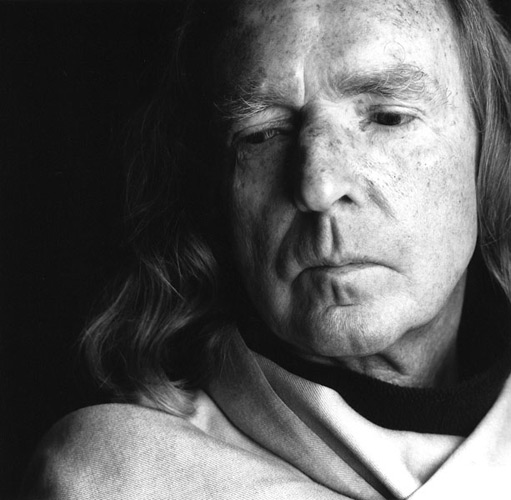
Last week, some of us celebrated a centenary. September the fifth was the birthdate of John Cage, a composer of music and a considerable influence on art in general during his long life. He died in 1992 but his reputation has grown, if anything, and he continues to be talked about and considered by the world of “art music”.

Cage was often bold in creating music that made one think. He took the lead in creating musical processes, and the systems which ran inside his music were quite audible and predictable. Some of it is very beautiful, and some quite obscure. One of the pieces Cage ‘wrote’, probably his best known, is a silent piece (for any instrument or group) called 4’33″ (pronounced “Four Minutes, Thirty Three Seconds”). I won’t bore you with the details, but it’s part of a musical philosophy called automaticism, heavily influenced by Zen Buddhism, and the ‘piece’ really consists of the ambient sounds you hear while the instruments are not playing.

I’m quite sure that 4’33″ will not become a popular choice for Special Music in our worship services. Of course, there are many reasons for this, but the one I want to point out today is that we need to find the art in our services useful, or we can’t really justify it.

We use music to accompany singing, or to cover ‘gaps’ which would otherwise be silent. Or to mask the sound of people walking among us with collection baskets and communion trays. We use pictorial art for bulletin covers and sermon illustrations. We use drama to reinforce our teaching or make people think about a moral dilemma. We use sculpture mostly in memorials or to mark graves. We use architecture to make the building more flexible and useful as a banqueting hall or sports environment, because these days we can’t seem to justify spending money on sacred space.

Looking back on many years in the Evangelical tradition, I can think of very few examples of art, of any form, that was employed for its own value. Of course (back in the day) we had Warner Sallman’s art which I personally enjoy. Walking through churches I often see pictures and statuettes that remain, remembered but hardly ever featured, because they were a gift from a member or a favorite of a previous incumbent.

And so we come to silence. Calculated and scored, like Cage’s work, or announced (maybe even justified?) “because we’re thinking about Psalm 46″. Silence may be golden, but it’s not useful.

Thinking just a little more about this, I’d love for us to revisit Exodus chapters 35 through 39. While the objects that were created were undoubtedly useful and justifiable, there seems to be an extraordinary amount of sheer art going on. God seems to have required it of his people, and encouraged them to employ the artists to create art, to train up younger artisans and generally beautify the whole place. What does this mean? Can God really value art for its own sake?

Then of course, there are those moments – highlights – high and holy moments, throughout the Bible where the presence of God is tangibly felt; in silence. Not Cage’s timed, framed silence, but the eternal silence of the ages, of true stillness.

Not useful, but golden nevertheless.


Responsibility

3 comments Written on August 24th, 2012     
Filed under: Culture, Formation, Leadership

Today’s post was written by Chris Logan, Pastor of Worship Arts at Community Covenant Church in Lenexa, KS.


There is no such thing as a distraction-free environment.

Doesn’t exist.

And yet, as curators of environments for corporate worship, we are responsible for creating just such a space: one that enables our congregations to focus on hearing from and responding to God. We hear complaints all the time:


“It’s too loud!”

“It’s too quiet!”

“I can’t hear the preacher!”

“The little kids in the room make too much noise!”

“Do we HAVE to sing THAT song again?”


And that’s just  from the senior pastors.


So what gives?

I’ve been rereading a book called Scream-Free Parenting and I think that it might contain the answer. In a nutshell, the premise of the book is that, to raise healthy, well-adjusted kids to become healthy, well-adjusted adults, we have to focus on ourselves.

I know, right? It’s counterintuitive. The theory is that we are only able to directly control our own reactions to a given situation, and so if we’re to parent well, we must provide the best example possible, recognizing that we are not responsible FOR our children (who are human beings and who therefore make choices of their own agency), but that we are responsible TO our children to provide the best possible example and environment that we can for them to become who they were created to be. And so to do this, we must focus on ourselves becoming the best examples we can be. He says it like this:

If we want to produce self-directed adults, first we each have to become one ourselves. Especially in relationship to our children. This means creating space for them to make decisions and calming our anxiety about those decisions.

Leading is the same.

On the one hand, we’re supposed to be pointing people towards God, but in order to do that, we must be aware that we are not responsible FOR them worshipping, but we are responsible TO them by providing the best environment we are able in which they can engage with God, and by providing the best example we can of what worshipping looks like. Not a perfect environment, just the best we can;


There is no such thing as distraction-free.


"Influence"

We can’t control the outcome, we can only influence it. People will still find things to complain about – kids will still make noise (because it makes so much sense to make them sit still like tiny adults), feedback will still happen, and songs will still be chosen that aren’t everybody’s favorite. But it is THEIR choice to engage; our responsibility TO them is to keep the end in mind – transformed worshippers – and to remember that the transformation must first happen within ourselves.


Questions for you today:

1. How do you take care of yourself within the midst of the demands of work and family so that you can lead well?

2. How do you stay focused on the mission and vision, keeping the end in mind?


Just

3 comments Written on July 27th, 2012     
Filed under: Core Values, Leadership, Spiritual Direction, Vocation and Call

Today’s post was written by Chris Logan, Pastor of Worship Arts at Community Covenant Church in Lenexa, KS.

Before you read this post, please click over to Vimeo and watch this video. It’s worth your 2:45. TYPOGRAPHY

You are not “just” a forgiven sinner. To call yourself that cheapens the mercy extended you and the broad strokes of the story that led to such sacrifice. To continue to call yourself a sinner after you’ve been forgiven places no confidence in the One who forgives, does it? It is not “just” a gift; to say such a thing cheapens the gift and insults the giver, does it not? You are not “just” a leader; to call yourself that places no confidence in the One who called you in the first place, does it? You are not “just” a volunteer; to say this puts down the tasks you have taken on yourself – without pay – and the ones who desperately need your help but can’t afford to pay you, does it not? You are not “just” an artist or musician or writer; if you were, beauty would mean very little in the grand scheme of things, art would be of little worth, and if it were true, everything could be expressed in a bullet point anyway.

You are not “just” anything.

You are a leader, a child of the most High; you have been called a friend.

Stop talking or thinking or acting as though this is “just” anything.

If you aren’t confident in the One who called you, it will show in the way you speak, because the rest of us can learn a lot about you by the language you choose to use. You must speak and act with intention, purpose, with the conviction of one who has been grafted into a story as bold as ours. A story that claims, not only did the Creator enact reconciliation with His creation, not only did He take on its very nature, not only are sins forgiven, but that our God has the audacity to regularly transform sinners into leaders whom people can trust and even follow.

It is a false humility to say “just” about this sort of calling. You are called to serve where you have been placed and to say “just” is to try to pass off the responsibility entrusted to you; “I’m just called” is to say “blame God when I fail and you don’t like it.” It is an attempt to pass the buck in advance, to avoid owning your part. As the old saying goes, humility isn’t thinking less of yourself, it’s thinking and speaking of yourself less. But when you do, don’t cheapen or downplay the gift and dishonor the giver; speak honestly, and if possible, modestly.

Because that is part of what it means to be a partner in the economy of God, or, if you like, an heir of His Kingdom: responsibility for your own actions and choices. Yes, you will make mistakes, and yes, people will not always like your choices or style or even petty things like the way you look, talk, or even smell. They might not like where or who you came from. But you needn’t apologize for these things; you are still called. You were still chosen. You still have an important role to play that cannot and should not be done by anybody else. Own your mistakes, but also own your successes! And praise God for both, because in both you’ve learned something and God has been glorified, one way or another!

What will you do?

You can – and should – always live in the confidence of your calling. God does not call you to a place or circumstances He does not think you can handle. More than likely, you will require His aid (those who have come before you can attest to the truth of this), but this should not be unexpected or even inconvenient because His aid is always available and offered.

God is ahead of you, preparing the way.

God is behind you, guarding your back.

Speak intentionally.

Live boldly.


Redeeming Performance or Performing Redemption?

3 comments Written on May 6th, 2012     
Filed under: Formation, Leadership, Resources for Worship, Style of Worship, Theology

Today’s post comes to us from Zanne Dailey, a credentialed Covenant pastor, attending Marin Covenant Church in San Rafael, California. She’s also the founder of Triunity Worship Consulting.

How often have you heard or been involved in this  discussion?

“Worship isn’t about performance, it’s about participation. We need to craft a service where our people can actively participate, not one where they passively sit and watch our leaders up front perform.” Continue Reading »


Essential

2 comments Written on April 27th, 2012     
Filed under: Better Together, Formation, Leadership, Vocation and Call

[Bucket]Today’s post was written by Chris Logan, Pastor of Worship Arts at Community Covenant Church in Lenexa, KS.

So in the last few weeks I’ve had two weekends where I was sick on Sunday. Now, the first weekend was, in fact, Easter. I woke up Easter morning feeling absolutely AWFUL; dizzy, nauseous, cramped stomach, and a few other things I won’t mention. But it was Easter – EASTER – the one sunday (aside from perhaps Christmas) when a pastor of worship absolutely HAS to be at work, no compromises, a you’d-better-be-dead-or-at-least-severely-wounded-and-maybe-bleeding-out-to-not-show-up sort of situation (at least, that’s how it works in my head). And it was a really rough Sunday for me; with only a banana for breakfast (nothing else would stay down), I managed (by the grace of God) to lead all three gatherings and even convince most people there that nothing was wrong (except for my worship team, who kept a pretty close eye on me through our second and third gatherings; there’s no fooling them). I went home and slept, and two days later felt well enough to play with my kids again. Continue Reading »


A Possible Next Step?

5 comments Written on September 9th, 2011     
Filed under: Arts, Better Together, Formation, Leadership, NPTS, Resources for Worship

Today’s post was written by Geoff Twigg, a pastor, singer/songwriter, worship leader and ministry consultant in Bedford, New Hampshire. Geoff serves the ECC as a member of the denomination’s Commission on Worship.

This blog entry should have a preface: “The opinions promoted here do not reflect the current policies of the denomination.”

That’s because I’m reporting and commenting, as usual, on the conversations that center on the “Better Together” page… but in particular, I’m going to focus on a discussion that occurred over a couple of weeks in August, started by this question: “Will the Covenant ever create a “department of worship ministries? Does it even need anything like that?” which prompted a strong correspondence over the next week or so.

The original contributor went on later: “A Department of Christian Worship… ideally would oversee the development of worship leaders – both those currently called to churches and those who are looking to a future call. It would strengthen the entire denomination to have worship leaders trained in how to plan and lead worship, recruit and equip volunteers, gain exposure and expertise in diverse worship styles and languages, and to have an understanding of what the Covenant is all about – especially as it related to our worship life.” Continue Reading »


Postures of Confession

Post a Comment » Written on August 26th, 2011     
Filed under: Arts, Formation

Today’s post is written by Chris Logan, Worship Pastor at Community Covenant Church in Lenexa, KS.

Did you know that your posture changes the way you think?

It’s true that your body shows the rest of us what’s really going through your head at any given moment, but the reverse is true as well: the way that you carry your body will change the way you think, the way you feel. A quick example: on a day you’re not feeling so great, take a pencil and hold it in your mouth, forcing the corners upwards in an approximation of a smile. See how long it takes before you start feeling better.

The simple fact is that we behave because of what we believe, but we also believe because of how we behave. The two are a cycle, influencing one another in our lives, egging the other onward. This is the reason why actors often become uncomfortably close to a character they work on particularly closely; Heath Ledger became chronically depressed after he spent so much time on his character the Joker, and the world is now lesser because his exceptional talent is gone, lost to a drug reaction. Continue Reading »