Visual Arts

Posture

Post a Comment » Written on March 22nd, 2013     
Filed under: Culture, Missional, Visual Arts

Today’s post is written by Chris Logan, Pastor of Worship Arts at Community Covenant Church in Lenexa, KS and originally appeared as companion reading material for C3′s current sermon series.

Divorce. Lust. Politics.

Some things are just really, really hard to talk about. In part, it’s because they affect so many people in so many different ways, and lots of those people are very dear to us and we don’t want to hurt our relationship with them by saying something that could be misinterpreted. But really, when we get right down to it, some things are just not as cut-and-dry as we wish they were. We try to make them black and white and easy to digest, but the discussion goes round and around and around again, one answer feeling trite or shallow, another answer feeling like it’ll require too much from me, still another feeling like it’ll offend too many people. Our culture has a tendency to make certain things awkward to discuss because of unspoken taboos; don’t mess with our individuality, for example, it’ll go very badly for you if you do.

So given that we probably shouldn’t passive-aggressively avoid them, how ought we discuss these difficult issues?

Over the last few weeks, we’ve heard the phrase “acting our way into a new way of thinking” in the sermons at C3. In case you have no idea what this means, I discovered a TED talk by Dr. Amy Cuddy that illustrates this really well. The principle behind what Dr. Cuddy and her colleagues describe has a HUGE range of possibilities for application in all areas of life. But for our purposes, I want to draw your attention to something we did this past week in our worship gatherings because it illustrates so well the answer to this question. For those of you who couldn’t join us, during our prayer time before the sermon, we asked that each half of the sanctuary turned to face each other while standing. We then asked that you raise a hand with open palm towards each other across the room, a posture we called “blessing each other.” In social psychology, this is called an “open posture.”

We wanted to begin our conversation with a posture of grace.

Remember this? This is what I’m talking about

By physically opening ourselves in a posture of vulnerability and openness, we allow the reality of the other to become more tangible to us; we begin to act our way to a new way of thinking. Truth without tears is a dangerous thing; people have been deeply wounded by discussions about divorce, sexuality, and politics. We are to enter discussions of difficulty with hospitality, because hospitality is the act of advocating for the other. We wanted to posture ourselves first and foremost in a way that helps us to care about those around us, to show them – and ourselves – that those with different experiences or those who had made different, often difficult choices are no less human than we. We did not place ourselves in a posture of power, but in a posture of confident humility.

And nobody can cast the first stone.

Question for discussion: what other postures can (or do) you take in your workplace, school, or home to advocate for the other?


Following the Star

4 comments Written on December 24th, 2012     
Filed under: Advent, Arts, Better Together, Visual Arts
Tags: , ,

Star-Cross Nativity, by Allison t Régnier – www.allisontregnier.com

Last Friday, Allison Régnier gave permission to show her artwork on this blog. She gives a beautiful explanation of her piece, “Star-Cross Nativity,” which we share with you today, as you prepare for the coming of The Light of the World. Blessed Christmas to you!

Ron & Allison Régnier have been Artist/Missionaries in France for 15 years and are members of Newport Covenant Church in Bellevue, WA. They serve under the organization Artists in Christian Testimony (ACT) Intl. (Rick Lindholtz, also in the Covenant, serves under ACT Intl. as well.

Check out Allison’s website and her Facebook page.

Allison writes, “This is what I usually share when I present the piece:

“While I paint, I try to meditate on the meaning of my subject in order to visually transmit what it represents. So while painting the nativity, I was thinking about verses that describe God as light. I chose to represent the star as a star/cross. For before the creation of the earth God provided the means by which we can be saved. While I was painting, an onlooker at the French community center exclaimed, ‘Let there be light!’ Genesis. 1:3 is not a text that we often associate with Christmas and Christ’s birth — but The Creator’s act of sending the God of Light into the darkness of the world was just like ‘in the beginning.’ When we find ourselves in total darkness, doesn’t even the smallest glimmer of light begin to restore our hope? This restoration is even more profound when an individual welcomes the redemptive Light of Christ and becomes spiritually enLIGHTened. This is why the prophet Isaiah proclaimed ‘For the people walking in darkness have seen a great light, on those living in the land of deep darkness a light has dawned!’ (Isaiah 9:2). Where the light of Christ is not shining bright enough, this world is still like “the land of deep darkness.” Christmas announces the dawning of The Bright and Morning Star. The first beams of the dawning of the day all things will be made new have begun to shine. Can you see the light on the horizon?”


Reorient and Engage: More Like Worshippers, Less Like Critics

3 comments Written on November 30th, 2012     
Filed under: Arts, Church History, Church Year, Culture, Formation, Leadership, Music, Style of Worship, Visual Arts

Today’s post is written by Jeff Olson, Pastor of Worship Arts at Christ Church in East Greenwich, RI, where he has served for over six years.

In Advent a strong theme of waiting exists, but here is why you should almost never wait to engage in the arts in your church.

“Next to the Word of God, music deserves the highest praise. The gift of language combined with the gift of song was given to man that he should proclaim the Word of God through Music.” Martin Luther penned this bold assertion nearly half a millennium ago but I would argue these words of wisdom from this reformer should still be taken seriously today.

In Luther’s day, many were illiterate, and until the invention of the printing press, seeing, holding and touching a Bible was about as common as my Minnesota Vikings putting together a quality Super Bowl caliber team. In fact, a whole town would be fortunate if they owned and had access to one copy of the Word of God, let alone if most of them could even read it. Scripture was, therefore, almost exclusively read in the presence of others. If you could not take your Bible home and study it, how did brothers and sisters of the faith grow and remember particular stories and teachings from the Word of God?

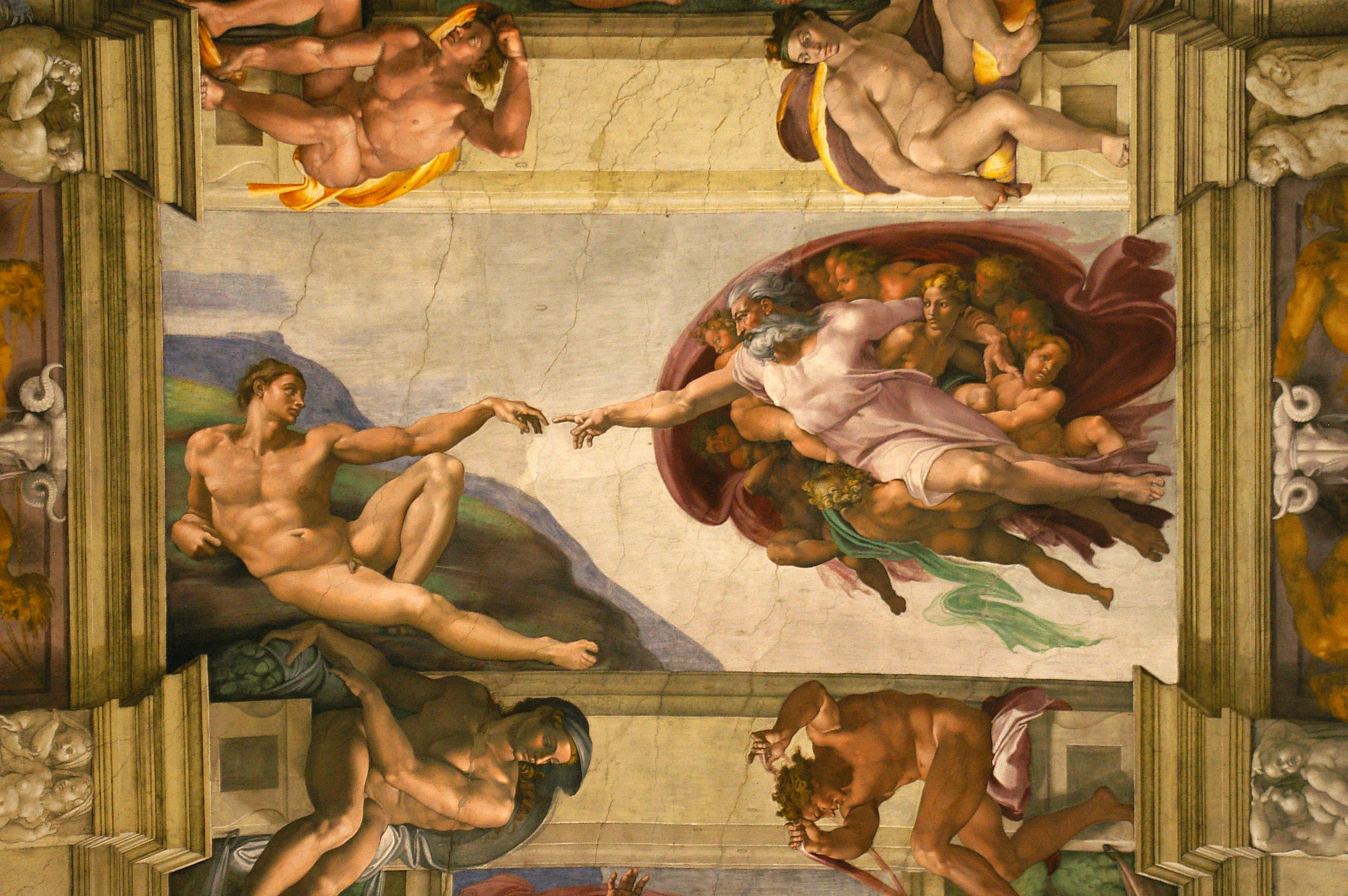
This is where the Arts come in. Many of the great paintings of antiquity, plays and poems, and the great time-tested hymns of the faith were often used in the absence of a Bible (or iPad app) as a tool to teach about faith, tell the great stories of the Bible and to teach solid theology. Think about it: All of the best art was Church art. Michelangelo’s greatest gig was painting the inside of a church (the Sistine Chapel); Bach was one of the prominent worship leaders/pastors of his day. Great art and Church were almost synonymous for much of the last 2000 years of European history. Art often played a pivotal role in educating the Church about who God was and in the role of participation with one another in faith.

Fast forward a few centuries and we are in a different world in some respects. One of the greatest inventions to promote art in a variety of forms may also, if we are not careful, help to destroy it. For nearly all of human history it was a big deal to hear live music or see a painting, even if it was so-so in terms of quality. Why? Because we had no device to capture a recording and we had no digital camera to make Van Gogh’s Starry Night our latest screen saver. In some ways, this proliferation of art has meant that we now have exposure to so many great works of art, which is a wonderful thing. However, the sometimes sinister shadow of this blessing is that perhaps we have become so over saturated with the ability to see and hear whatever we want when we want, that we have become more like critics and less like worshippers.

What do I mean by this bold claim? Well, when we come across a song that is not exactly what we are in the mood for or a painting that is in a style we do not like, rather than just being thankful for the gift that the art is or seek to see what we can learn about God or hear from Him, we evaluate it and often determine if we will or will not engage based, not on its truth or how it can help us grow, but whether we “like it” or “not” according to our tastes.

Now let me say this directly: It’s OK to have preferences, but when our preferences become our gauge of whether or not to engage in worshipping God or joining with our brothers and sisters, that does present a problem. Think for a moment. If we knowingly applied this same hermeneutic to reading the Bible, we would likely not have much left to read!

So how do we go about moving more towards worshippers and less toward critics? Two words, reorient and engage.

What is the purpose of art? Asking this question reorients us in the right direction. Good art in our churches, like scripture, is not necessarily about being happy (though joy is a major factor in the Christian faith), but about helping us become holy. Good art is not necessarily always supposed to please or even entertain you but rather to move you closer to God and His mission. In fact, like the Word of God, art should at times be “hard to swallow” because it should not only encourage, uplift and educate, but also convict, shed light on dark areas of our lives and help to painstakingly and beautifully develop our faith walk just as it was used in Luther’s day.

But it will only help us grow if we choose to engage. I have mentioned in worship services that singing (or any art for that matter) is sacred work for both the artist and observer alike. Like any other action or discipline, we cannot grow without intentionally engaging and participating (work). Now engagement looks different for different people, but what engagement does not look like is treating any art as we treat our screen saver background or a song on the radio. Good art, if made with care and attention, is speaking about God and to God and prompting us to engage with God and others; and this is not something we should ever miss the opportunity to engage in. A bold question I often ask myself is if I am not in a period of mourning and I know the words of a song and they are true, does not engaging seem like a viable option? Engagement does not mean we ourselves have to be world-class painters or soloists, but rather we are engaged with one another in using this tool to grow and connect together with God and his mission.

Are we using art to engage in worship or as an item to be critiqued? Perhaps for all of us, regardless of the quality of the art, the better question is: How can I not sing and engage in praising God and reminding those around me who He is at any and every opportunity I can get?

Art can often make us happy, and that can be a beautiful thing, but good art can also be more than that – it can help in making us holy.

So this Advent, as we again revisit the texts of the promised Messiah and that holy idea of waiting, let us never wait or hold back in engaging in our worship of Him in any and every form, circumstance and style (including art) that is humanly possible.


Silence; golden, but not useful.

Post a Comment » Written on September 14th, 2012     
Filed under: Arts, Formation, Liturgy, Visual Arts
Tags: , , ,

Today’s post is written by Geoff Twigg, Adjunct Professor at North Park University in Chicago. Geoff is a pastor, singer/songwriter, worship leader and ministry consultant, and serves the ECC as a member of the denomination’s Commission on Worship.

Last week, some of us celebrated a centenary. September the fifth was the birthdate of John Cage, a composer of music and a considerable influence on art in general during his long life. He died in 1992 but his reputation has grown, if anything, and he continues to be talked about and considered by the world of “art music”.

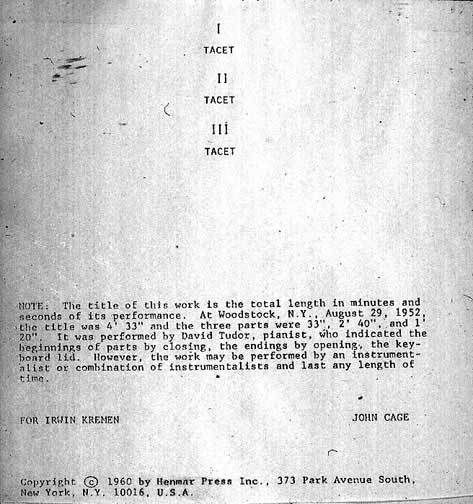
Cage was often bold in creating music that made one think. He took the lead in creating musical processes, and the systems which ran inside his music were quite audible and predictable. Some of it is very beautiful, and some quite obscure. One of the pieces Cage ‘wrote’, probably his best known, is a silent piece (for any instrument or group) called 4’33″ (pronounced “Four Minutes, Thirty Three Seconds”). I won’t bore you with the details, but it’s part of a musical philosophy called automaticism, heavily influenced by Zen Buddhism, and the ‘piece’ really consists of the ambient sounds you hear while the instruments are not playing.

I’m quite sure that 4’33″ will not become a popular choice for Special Music in our worship services. Of course, there are many reasons for this, but the one I want to point out today is that we need to find the art in our services useful, or we can’t really justify it.

We use music to accompany singing, or to cover ‘gaps’ which would otherwise be silent. Or to mask the sound of people walking among us with collection baskets and communion trays. We use pictorial art for bulletin covers and sermon illustrations. We use drama to reinforce our teaching or make people think about a moral dilemma. We use sculpture mostly in memorials or to mark graves. We use architecture to make the building more flexible and useful as a banqueting hall or sports environment, because these days we can’t seem to justify spending money on sacred space.

Looking back on many years in the Evangelical tradition, I can think of very few examples of art, of any form, that was employed for its own value. Of course (back in the day) we had Warner Sallman’s art which I personally enjoy. Walking through churches I often see pictures and statuettes that remain, remembered but hardly ever featured, because they were a gift from a member or a favorite of a previous incumbent.

And so we come to silence. Calculated and scored, like Cage’s work, or announced (maybe even justified?) “because we’re thinking about Psalm 46″. Silence may be golden, but it’s not useful.

Thinking just a little more about this, I’d love for us to revisit Exodus chapters 35 through 39. While the objects that were created were undoubtedly useful and justifiable, there seems to be an extraordinary amount of sheer art going on. God seems to have required it of his people, and encouraged them to employ the artists to create art, to train up younger artisans and generally beautify the whole place. What does this mean? Can God really value art for its own sake?

Then of course, there are those moments – highlights – high and holy moments, throughout the Bible where the presence of God is tangibly felt; in silence. Not Cage’s timed, framed silence, but the eternal silence of the ages, of true stillness.

Not useful, but golden nevertheless.


If a Picture’s Worth a Thousand Words…

Post a Comment » Written on March 2nd, 2012     
Filed under: Arts, Better Together, Church Year, Lent, Liturgy, Visual Arts

Today’s post is written by Matt Nightingale, Director of Worship Ministries at Redeemer Covenant Church in Tulsa, OK.
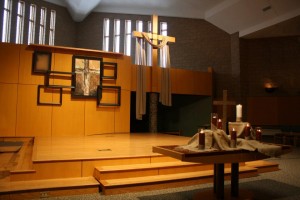
Today, as we continue to walk through this season of Lent, I’m thinking more expansively about the art of leading worship. Our worship planning is so often dominated by conversations about music and preaching, as if those were the only things that really matter.

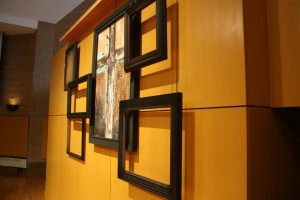
This week, in our Better Together forum, Matthew Anderson (Pastor of Worship Arts at Thornapple Covenant Church in Grand Rapids, MI) posted some photos of Thornapple’s worship space. I was really moved by these images, and I thought I’d post them for you. What do these images evoke for you? How does your church utilize the visual arts in worship? What are we missing?


sundry things…

It’s been a busy week over on the Better Together Facebook page for lead worshippers and those who think about worship in the Covenant. Many things were discussed; I used the word ‘sundry’ above, but now realize that can mean ‘trivial’ or ‘unimportant’. I’ll leave it up to you, dear reader, to make up your own mind how trivial these are.  A brief survey of the topics includes:

Heritage Hymns (“how did you get to be a worship pastor when you don’t know………..?” fill in the title of your favorite Swedish hymn or song)

“when will the HymnBook/Book of Worship be available/searchable online?” Continue Reading »


Visual Arts in Bellingham, WA

2 comments Written on February 11th, 2009     
Filed under: Local Church, News, Visual Arts

BELLINGHAM, WA (February 9, 2009) – Bellingham Covenant Church wanted to give members of the congregation a chance to display their artistic talents. So, in October 2008 they launched their first Visual Art Show in the church foyer. 

Read the rest of this Cov News story.


Photo Exhibit at NPU

Post a Comment » Written on January 22nd, 2009     
Filed under: News, Visual Arts

CHICAGO, IL (January 20, 2009) – Living in Chicago has given photographers Eric Staswick and Lucas Larson, both of whom grew up in Evangelical Covenant Church congregations, a unique opportunity to work on an upcoming exhibit that highlights the community “where the world intersects.”

Read the rest of this Cov News story.


Arts Event Connects

Post a Comment » Written on January 17th, 2009     
Filed under: Local Church, Multicultural, Visual Arts

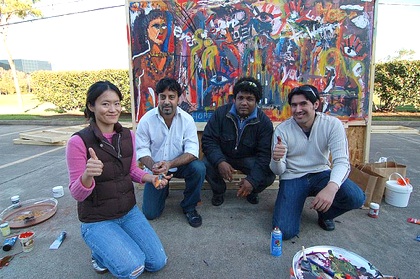
HOUSTON, TX (January 15, 2009) – Access Covenant Church’s first two-day arts event appropriately named “Vox Populi” or “Voice of the People” celebrated the work of local artists and musicians while also raising money for a local charity.

Read the rest of this Covenant news story.

Our friend Matt Nightingale is the worship pastor at Access Covenant Church. Matt’s also one of the worship leaders for the Midwinter Conference– up and coming February 2-5 in Chicago.


Artists Struggle with Evangelicalism

2 comments Written on January 13th, 2009     
Filed under: Culture, Visual Arts

Why do you think artists may struggle more with the evangelical faith than even scientists?

Scott McKnight is discussing this question on Jesus Creed, today.