Dangerous Worship

Silence

Post a Comment » Written on April 26th, 2013     
Filed under: Dangerous Worship, Formation

Today’s post is written by Chris Logan, Pastor of Worship Arts at Community Covenant Church in Lenexa, KS.
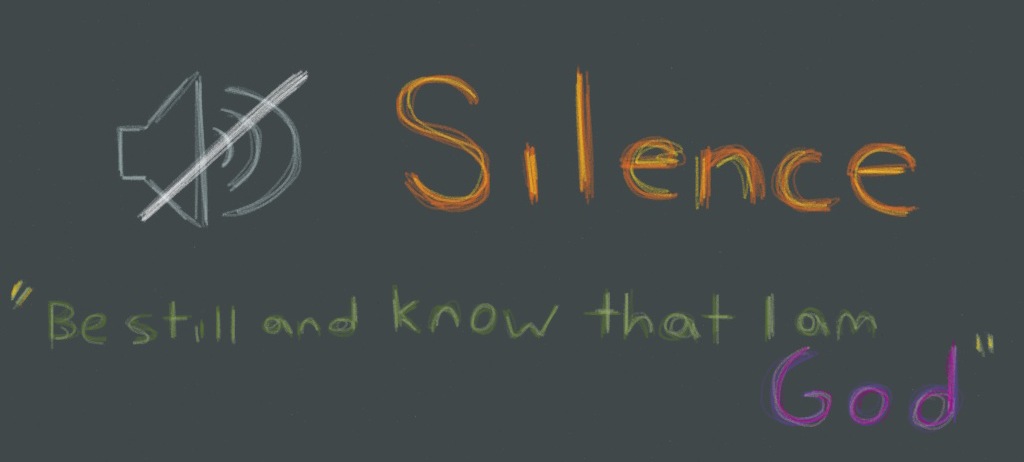
Silence

The gift of God to the introvert, and from the introvert to his or her community, is the gift of silence.

In 1 Kings 19, Elijah goes up on a mountain to hear from God, and in the midst of a powerful wind, an earthquake, and fire, God’s voice was not present. But then, a whisper, still and small, emerged from the silence that followed and asked Elijah, “what are you doing here?”

To me, that sounds wonderful.

Enjoy_the_Silence_by_WickedNox11I am an introvert, a fact that has taken me a long time to embrace. But as a new dad for the third time, I’m once again learning the value of silence. I’m discovering how much I long for it in its absence – and these days, it’s absent a lot.

Silence is not just the absence of noise, and I’m finding that silence itself can be active, dynamic … dare I say it, alive, teeming with the presence of God. In silence, we are given a chance to simply be. We are able to rest, to recharge. When we sleep, our bodies repair themselves faster; so too our minds and emotions repair when we take sabbath. Silence is, in a way, the act of growing. In silence, we engage our Creator. Silence is communion, where we eat the bread of presence and drink the life-giving cup of rest.

But silence takes work.

Our world is in the throes of a massive shift; places ever-distant are now connected through the digital world. Media bombards our eyes, ears, and an increasing number of senses with consumer-driven messages. Sleep has become harder and so we depend on caffeine and other stimulants more than ever before. For many of us, our phones and other mediums pull us in a thousand directions at once; we are always awake, always thinking, always working, always productive. Combined with urbanization and the influx of western culture on the world, we’ve created a metaculture of movement, of busy

… of noise.

silence-speaks-79426-500-550

Now more than ever, we need silence.

The great irony is that, in a global world, I believe that silence will ultimately prove to connect us more than anything else we’ve done. See, silence is counterintuitive, paradoxical; it is entirely necessary, but it is the antithesis of productivity. In silence, we cannot produce more, and yet we cannot produce without it. It takes silence to have a conversation; in silence, we cannot talk, but we cannot talk without drawing a breath, without silence. Nor can we listen without silencing our own voices. We cannot have the beauty of music without the rest of silence in between the notes.

And isn’t it interesting that the only time we all truly sound the same is in the silence?


Connect

8 comments Written on February 22nd, 2013     
Filed under: Culture, Dangerous Worship, Formation, Liturgy

Today’s post is written by Chris Logan, Pastor of Worship Arts at Community Covenant Church in Lenexa, KS.

Have you ever considered how worship gatherings fit into the context of discipleship?

The connection is actually quite strong. To be honest, I had never really thought about it much until I was at a conference a few months ago, and Mindy Caliguire spent a great deal of time talking about discipleship (it turns out that’s what she does at Willow Creek). One of the things she mentioned was that discipleship, while it’s often looked at as a small group or one-on-one sort of responsibility, can be a large group practice. We learn and grow together not only as we read or have conversations, but also as we engage corporately, as the combined voices and minds and hearts of many.

It’s a perspective that should change the way we approach crafting worship gatherings.

For one, the music takes on a new significance; it’s a part of the process of forming all of us into the image of Jesus. These are not a random assortment of songs we enjoy singing; they must be carefully chosen and rehearsed. Furthermore, every part of the music – not just the words – must be carefully thought through; lyrics incorrectly paired with style or flavor changes the way we tell the story. The order of music – and of the whole gathering, from music to liturgy to message, even to the announcements – matters because in the environment that we choose to create people will have a better chance (or not) of connecting with the Creator.

Connections.

What we are doing is helping people make connections, because that’s what a good story does. In the process of crafting a worship gathering as story, we can help our congregations connect what they learned last week to the next week; we can help them connect to creation and to each other; we can help them connect to their Maker and Redeemer.

The thing about connections is that they don’t happen to us; we have to participate in them. Nobody can connect me to God without my permission and conscious engagement – nor to my neighbor. Connections – true, meaningful, lasting, deep connections – happen in the midst of discovery. On some fundamental level, we do not own those connections unless we discover them for ourselves.

Which begs a question: what story are we telling?

Does the story we are telling in and with our gatherings help make those connections, that discovery? To help others to make discoveries, should we be giving answers, or asking more questions? Is it possible that by providing simple answers (how complex could those answers possibly be with only an hour or less to give them?) we’re robbing those in our care of the joy of discovery?

More to the point, what is the nature of the content? If the gospel we preach is so revolutionary and could change the world, it’s a dangerous story to tell. Do we tell dangerous stories or sing dangerous songs? Since God is always advancing towards us – the gospel is always advancing – our gatherings are one of the places that heaven and earth can intersect, overlap, collide.

Connect …

… if we let them.


Restore

3 comments Written on October 27th, 2012     
Filed under: Dangerous Worship, Local Church, Prayer

Today’s post is written by Chris Logan, Pastor of Worship Arts at Community Covenant Church in Lenexa, KS.

There has been a lot going on lately. Criticism. Changes in staffing. Mixed signals. Failures in leadership. Untimely equipment failures. Writer’s block. Sickness. Uncertainties. Overwhelming noise. Overwhelming silence. Great needs. Deep needs.

God is doing a mighty work among us.

It’s the little things; they add up so quickly. And then big things come and overwhelm our minds, our emotions, our bodies.

God is doing a mighty work among us.

Our church community, in the last two months, has had no less than fifteen families lose immediate family members. Parents. Grandparents. Daughters. Sons. It affected me so strongly, so unexpectedly that I wrote a lament for our church family. I’ve never written a lament.

God is doing a mighty work among us.

In her wisdom, a good friend recently wrote this refrain and we would do well to keep it in mind. The challenges always come, and it can seem so cliche to talk of persecution, of some mysterious negative force that moves against us. Only children think that when things go wrong it must be the fault of another. Right?

God is doing a mighty work among us.

We must not see demons behind every door; sometimes things just happen in our own negligence or our own mistakes. But we mustn’t blind ourselves to those that are present, either.

God is doing a mighty work among us.

The truth of the matter is that we cannot redeem the world. We cannot make it all better, we cannot re-create, we cannot fully heal, we cannot fully restore.

But.

God is doing a mighty work among us.

It’s not up to us. But it includes us.

God is doing a mighty work among us.

It’s wholly other, it’s beautiful, it’s majestic. But it’s slow.

God is doing a mighty work among us.

Christ has died. Christ is Risen. Christ will come again.

God is doing a mighty work among us.

God is doing a mighty work among us.

God is doing a mighty work among us.


Dangerous

3 comments Written on September 28th, 2012     
Filed under: Core Values, Culture, Dangerous Worship, Missional, Music, Vocation and Call

Today’s post is written by Chris Logan, Pastor of Worship Arts at Community Covenant Church in Lenexa, KS.

Let me tell you a little bit about myself.

I am a third-culture child, born to the daughter of Swiss immigrants and a Californian. In high school I was the one most expected to end up doing research in a biology lab somewhere, despite my second aptitude for music. In college, I changed my major about six times before landing on a degree focusing on the psychology of religious music in the postmodern paradigm (a fancy title for “I like music but don’t want to be a performance major”). Then I got all disillusioned with that dream, but excited about missions, and moved to Australia to help plant a church, where I also started work in the FORGE missions program. Then I went to seminary in Kentucky and got my MA in missiology. I have done mission work in Switzerland, Haiti, Australia, India, and Mexico. I’m an Aquarius.

And I became a worship pastor.

… why?

I get this question a lot, especially when people find out I didn’t do my MA in worship ministry. Why put myself through all that work to study missions and discipleship to then end up planning music sets and service orders? Music and missiology, after all, doesn’t really go together. Right?

This weekend, here in Kansas City, is the second annual FORGE: America national conference called “Sentralized.” In the very first session, Michael Frost, a founding member of FORGE: Australia and author of numerous missional textbooks, talked about being the church in a post-Christian culture. There were four things that he says ought to help us maintain our identity: 1. (re)telling our dangerous story, 2. making dangerous promises to bless our host culture, 3. making dangerous critiques of culture and suggesting the way of Jesus as a solution, and 4. singing dangerous songs.

I am a worship pastor because, as Mike put it, “every revolution was sung into existence.”

As I’ve said before, we are what we sing. And if we sing dangerous songs, songs of freedom, songs of a world in which Jesus reigns, where justice is won, where captives and prisoners are set free, where communities serve each other, where God – not government – gets the last word … songs about the Kingdom of God. As we sing those songs, people catch the vision that is already percolating in the cracks of the pavement. To sing dangerous stories of the Kingdom is to countermand our culture’s drive to stay safe, to take care of themselves only. I am a pastor of worship because it is my honor and responsibility to cast that vision through the medium that gets stuck in your head better than spoken word.

But I have to choose songs that say something worth singing.

So today, be encouraged: you are here for more than just arguments over acoustic panels, drum cages, hymn arrangements, and volume levels. You are here to usher in a revolution through song, to fan into flame the Imago Dei that is already at work in our nation and our communities.

Sing of the world for which we yearn.


Missio Dei

Post a Comment » Written on June 24th, 2012     
Filed under: Better Together, Dangerous Worship, Missional, Vocation and Call

[A Hunter]Today’s post was written by Chris Logan, Pastor of Worship Arts at Community Covenant Church in Lenexa, KS.

Once upon a time, a group of men left their village and went out to hunt. They were good at it, and used their gift of hunting to provide lavishly for their families. Each day was spent combing the forest trails for game, and as they were able to fell deer, elk, rabbits, and the like, they treated the meat so it would not spoil on the journey back to their village. Each night after the hunt was spent around a campfire telling stories, enjoying each other’s company, caring for their weapons and tools, and enjoying the fruits of their labors. It was a good life.

One day, one of the hunters fell ill, and stayed behind in camp to get well again. Several weeks went by, and while the other hunters swore he looked fit enough to hunt again, he insisted he was still unable to handle the strain of hunting. Another week, and while he felt better, he insisted he must now hone his tools again, as they had become worn. Another hunter began to stay behind with him, hoping to convince him to hunt again. But after so many weeks out of practice, the one convinced the other it might be best just to let him tend the camp. The second agreed, and decided it might be best that two stayed there, as a camp can easily fall into disrepair.

One by one, the hunters began to find excuses to stay back in camp. After all, they had quite a bit of game already, and decided to live off of what they had already obtained.

Months passed, and one day, a woman stumbled into camp, looking weary and famished. The hunters welcomed her in, and offered her venison, but she refused.

“I come on behalf of the families you left behind,” she said, “while you sit here and enjoy your meat, we sit in our village starving. Why have you not come home with the food you promised to provide?”

The hunters began to give her their reasoning, but after a while, she held up her hand to silence them.

“You do not deserve to be called hunters,” she said, “you say you hunt, but all you do is sit around telling stories of past hunts. You are quite right, a good camp is a necessary thing. But what good is a camp if you do not use it as a place to rest after the hunt? What good is it if you do not prepare to hunt again? And what good is it if you do not leave it each day to do the very thing with which you were tasked?”

*  *  *

Three questions for you all today:

1. What does it mean for the church to be a people of the missio dei?

2. What does it look like to be a community that has a good rhythm of mission and sanctuary, of gathering and sending?

3. What does this mean for those of us that curate worship gatherings in such a community?


Angry

2 comments Written on March 26th, 2012     
Filed under: Arts, Dangerous Worship, Missional

Today’s post was written by Chris Logan, Pastor of Worship Arts at Community Covenant Church in Lenexa, KS.

I think all right-thinking people in this country are sick and tired of being told that ordinary decent people are fed up in this country with being sick and tired. I’m certainly not; and I’m sick and tired of being told that I am.” [Monty Python]

You can’t rush a miracle, you get rotten miracles.” [The Princess Bride]

[injustice]Wars. Rumors of wars. Tornadoes. Earthquake. Failing economies. Greed. Selfishness. Politicians. Apostasy. Narcicissm. Vanity. Pride. Pedophilia. Infighting. Uganda. Divorce. Cancer. Gang violence. Japan. Global climate change. Football (apparently). Communism. Capitalism. Sweatshops. Murder. Haiti. Factory pollution. Tsunamis. Rape. Plagues. Hunger. Adultery. Thirst. Kony. Sudan. Juarez. Rights. Greece. Apathy. Jihad. Empire. Injustice. Starving children. Sex slaves. Post-Christianity. Poverty.

There are a lot of things to feel angry about. Continue Reading »


Singing and Praying Justice

Post a Comment » Written on September 11th, 2009     
Filed under: Articles, Dangerous Worship

Check out this article on worship and justice, recommended by our Covenant Resource Center.


Singing and Praying Justice

A powerful reminder that the words we sing matter. As worship leaders we can either promote justice and a multidimensional view of God or myopic materialism – or often something somewhere in between. So much of it is in the words we sing.

http://www.urbanfaith.com/2009/08/singing-and-praying-justice.html

Thanks to Millie Lundgren for the link.

Rooting for you,

Andrew


We Are What We Eat (But We Become What We Sing)

Last Sunday one of the members of our worship team, a 15 year old girl, lead the worship band and the congregation in singing the song “Whatever You’re Doing” written by the band Sanctus Real. Lead by her, it was so authentic, and sung with such passion, that across all ages and musical background/tastes, everyone was able to relate and enter into the experience of the song. It was a reflection of the story of her faith and the remarkable “awakening” that has taken place in her life over the past two year as her faith has come alive, a journey that many in the congregation have been able to share with her. There were few dry eyes.

I would not be surprised if this song continues to be a regular in our worship vocabulary, because it touched the congregation so deeply.

This also got me thinking. This is how songs shape us. A moving song reflects God’s work in our midst, and then lives on to shape the language by which we relate to God in the future. In  the future, people in our church will relate to God with the metaphor of peace in the midst of “chaos,” in part because they related to this girl’s experience as expressed in song – and the way they experienced God in the musical retelling of the story.

This song, and the way we experienced it, will influence our theology.

If you tell me the song themes your church sings the most right now, I’ll tell you what your church’s core theology will be in the future. We become what we sing.

What do you think? Do you disagree with this idea? Why?

What songs were present in significant spiritual moments in your life? How did those ideas shape the Christian you became?

Or the big picture questions: What songs are your church singing the most right now? How will those songs shape the future core theology of the Covenant church?

And the flip side question: what core theological ideas we hold as priorities now will lose influence in the future because we do not sing about them?

Rooting for you,

Andrew


Silly Things We Sing to God in Worship Songs

4 comments Written on May 26th, 2009     
Filed under: Core Values, Dangerous Worship, Songwriting, Theology, Uncategorized, Writing and blogging

Do you ever wonder if God chuckles at some of the silly things we say to him in our worship songs? From his perspective, I wonder if he thinks we say some weird stuff.

For example: Things we don’t really mean.

“I surrender all!” (Really? – Everything? – You have money to buy a new car, and you tithe how much?)

“Draw me close to you.” (You’re interested in having a near death experience? I think you’re actually hoping I will do the “moving” closer.)

“I’m desperate for you. “ (That’s funny… you’ve been acting pretty self-reliant all week long.)

Things that contradict themselves.

“O to grace how great a debtor, daily I’m constrained to be. Let thy goodness like a fetter bind my wondering heart to thee. “ (But grace is NEITHER about being a debtor NOR being bound.)

I don’t mean to be harsh to any song, or songwriter, but I think it’s appropriate to laugh at our own weirdness. What do you think? What are some of the silly things you have heard yourself say to God in worship? Or do you disagree that we (and you) are wierd?

Rooting for you,

Andrew