01Sep

India Flood Relief

General

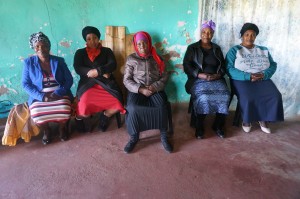
A recent email from our partner, the Hindustani Covenant Church (HCC) and their relief and development ministry called Covenant Social Services (CSS), with an update on the flood relief.


Dear Brother’s Sisters in Christ,
Firs of all we are grateful and thankful to you all for your prayers and financial support towards the flood victims in Leh.  Remember all this flood victims in your prayers the situation is very bad.

Although this is a mountainous areas and  it is called snowfall desert, there are no trees, lack of oxygen.  People from this areas has to travel distance to get their household required material.

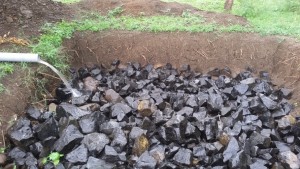
HCC/CSS is continuously working to help the victims .  Till now the  food distribution program is over.  Now Medical Camps , distribution of relief kits sets, water tanks counseling is going on, by tomorrow onwards we will distribute fire wood, traditional heating machine and disaster management training will start.

Please remember all this work of HCC/CSS in your prayers and if you extend your help and support for this noble cause we will be most grateful and thankful to you.

Thanking you
With kind regards,

STEVEN DAVID, moderator
HINDUSTANI COVENANT CHURCH

You can read an earlier story about the relief work in India here.

No comments | read more »
31Aug

Pediatric Ponderings

General, Haiti Relief

A blog from Covenant Missionary Dr. Cindy Hoover from Haiti–you can read more from her time in Haiti on her blog.

Some random things from seeing kids in the clinic today…

It is really hard to put on powderless gloves when your hands are hot and sweaty. After laughing at my attempts, the nurse finally showed me the trick of shaking it out, holding wide the wrist and blowing into it, and squeezing air down into the fingers (don’t try this if the gloves need to be sterile ). It was still a bit of a challenge, but at least my fingers were starting to get in the right slots…

Much of pediatrics is the same wherever you are – kids get colds and ear infections and mothers worry about kids. The main difference here is that the moms aren’t all asking for the most expensive newest antibiotic and amoxicillin still seems to work.

Some things aren’t the same though. I have been surprised to find that most of the mothers don’t know the birth weight of their babies (even when born in the hospital) and that the clinic workers also aren’t very tuned in to what babies weigh. They had one 2 month old weighing 28 pounds. Most weights are rounded to the nearest kg (2.2 pounds)!

Power outages, while inconvenient to me while seeing patients must really be annoying to the US surgeon here this week. There is no back up generator at the hospital.

Unneeded suffering is disturbing wherever it happens. I saw what was probably the saddest case of my career in pediatrics today. A totally cachectic 2 year old girl was brought in by mom, who has one other at home and one on the way. The child was normal till 6 months ago according to mom, when she started to waste away. She was just a skeleton with pale flesh (really noticeable in a Haitian child) and horrible scaling rashes and a pitiful pleading look in her eyes. In taking the history, I was asking mom about HIV history. She handed me a paper to show that she was HIV negative, but somehow she had never noticed and no one had ever told her that also on that slip was that she was RPR positive – indicating syphilis. This child requires more lab work and more care than could be provided here, but very likely has congenital syphilis and protein calorie malnutrition. This could have been prevented! The positive is that there still is time for mom to be treated and hopefully her current pregnancy will have a better outcome. I thought of taking a photo of Julie, to include, but then decided that she is indelibly etched in my mind, and a photo here would not be respectful and caring of her dignity. Do please pray for little Julie though.

It was a tiring day – after mainly seeing the children of the staff at the hospital, the word has gotten out that there is a pediatrician here, and many are coming who have been in need of care for a while, some in need of more care than I can provide here, and sadly at times, more care than is to be found in all of Haiti at this point. Some valuable programs disappeared with the earthquake and so a country with poor health care coverage to begin with now has even more access issues and holes in vital areas of care. Pray that the various organizations working here can start to coordinate efforts and work together to provide the needed services and care and that aid goes to those who should be receiving it. Pray also that both Haitian and expatriate professionals who see the various areas where their expertise could make a difference will be willing to view this as an opportunity for ministry and for giving back indirectly to all who have made their current situation possible.

Thanks for continuing on this journey with me.

1 comment | read more »
25Aug

Pakistan Floods

General

An update from our partner World Relief on our shared response to the Pakistan flooding…


Devastating floods have impacted as many as 20 million people in Pakistan. More than 2,000 people have died in the past month as floods have slowly impacted nearly a quarter of Pakistan’s countryside. The rains are continuing to fall.

With one set of crops already destroyed and a second planting season possibly disrupted by continuing floods, long term food shortages loom. Washed out roads and bridges make the delivery of aid difficult and will hamper reconstruction and rebuilding.

World Relief is partnering with Christian Reformed World Relief Committee and the Interfaith League Against Poverty (I-LAP), a Christian Pakistani organization with years of experience serving the poor and vulnerable in Pakistan.

I-LAP will serve 8,000 of Pakistan’s most vulnerable families—families who lost everything in the flooding and have nowhere else to turn for support. Initial outreach will include basic food provision to meet their daily needs. Emergency food kits will include lentils, flour, oil, sugar, salt and chili powder. Families will also receive tents, mosquito nets, kitchen sets and gas cooking stoves and hygiene kits.

In time, counseling services will be available to those who are experiencing trauma and post-traumatic stress symptoms.

World Relief and our partners are committed to serve the most vulnerable and meet the pressing needs.

Will you join us in supporting the people in Pakistan?

Covenant World Relief continues to collect donations for disaster response in Pakistan. Contact us for details.

No comments | read more »
25Aug

Enough is Enough!

General

Every day more than 25,000 people die from hunger and malnutrition related diseases.  That is the equivalent of sixty 747’s crashing everyday.  Two-thirds of those who die from hunger-related causes are children.

Roger Thurow and Scott Kilman, both correspondents for the Wall Street Journal, teamed up to write Enough: Why the World’s Poorest Starve in an Age of Plenty.  Thurow and Kilman point out that the causes of hunger are multiple and complex.  However, the inability to provide a sufficient food supply is not one of them.  With all of the technological advancements in agriculture over the past forty years, the capability exists to provide enough food to more than adequately nourish every person on the planet. However the reality is that the number of hungry and malnourished people is increasing.

Causes for world hunger include increased prosperity in countries like China and India which has escalated the demand for grain-fed meat and dairy products. Another cause is the increasing amount of grain that is being used for biofuel.  In the US, 30% of the nation’s corn crop goes to bio-fuel–about double that of 2006. Because of this, grain reserves have plummeted causing the price of many staple foods to double between 2006 and 2008.  Corrupt governments have also misused aid and used starvation as a weapon of war.

The aid and trade policies of western governments have sometimes served as an impediment to reducing world hunger.  In 2003, the US provided Ethiopia with more than $500 million in American grown grain to feed the hungry, but they provided only $5 million, one percent of that total, in agricultural development aid which helps prevent the people from going hungry in the first place.  Since the 1940’s Congress has mandated that the vast majority of US food aid must be food grown in the US, and three-fourths of the aid must be shipped on US flag carriers. While this has benefitted US farmers and shippers, this practice has been neither efficient nor effective. Providing aid by purchasing food locally stimulates the local economies, helps local farmers, takes less time, and is cheaper.  Highly subsidized imported food products from the west have hurt local economies and have put local farmers out of business in many developing countries, particularly in Africa. While the amount of aid has been increasing, the losses in trade incurred due to the subsidies from the West have negated the effect of much of that aid.  As an example, in the year 2001 western governments provided $52 billion in aid to the worlds’ poorest countries.  However a UN report noted that the impact of subsidies from the west in 2001 cost the poorest countries an estimated $50 billion dollars in export revenues.

Thurow and Kilman wrote Enough to stir individuals, organizations and governments to action in ways that will bring about a world where there is enough food for all.  Enough is a must read for anyone who wishes to see this dream become a reality.

4 comments | read more »
18Aug

Dr. Cindy Hoover updates from Haiti

Haiti Relief

Dr. Cindy Hoover is planning to blog from Haiti as time and technology allow. Below is part of her blog entry as she prepared to leave. You can read more here.

It’s been 7 months since the earthquake in Haiti.  Much has been done, much remains to do.  By now the “romance” of the situation is waning –  those who want to do something with quick results and great photos have gone on to something new, and the slow hard work of building infrastructure and systems while still attending to urgent needs is the day to day reality.  So why should I go to Haiti now?  Well, for those very reasons.  In many ways, this is the “exciting” time for one trained not just in acute care/curative medicine (I’m a pediatrician) but also in public health/community health development.  more…

No comments | read more »