Better Together

Our Churches: Community Covenant Church – Lenexa, Kansas

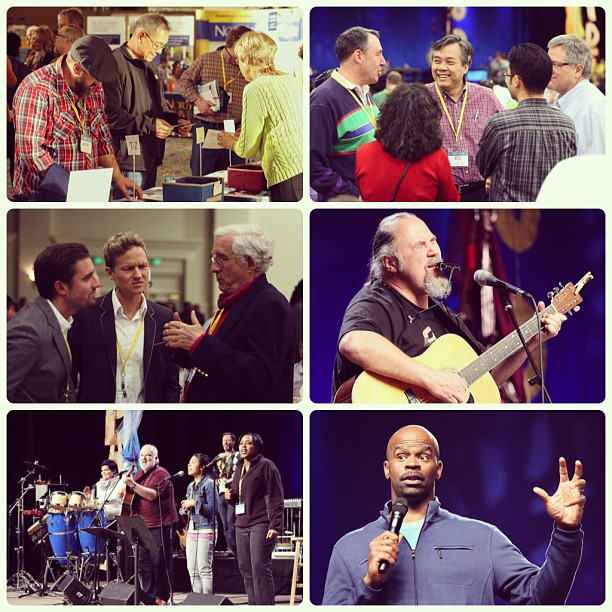
We continue our series of posts here on the Worship Connect blog profiling individual Covenant churches. Our purpose is to celebrate God’s work in and through us, to demonstrate the diversity of approaches to worship in the ECC, and to prompt prayer for one another. We are better together.

Our latest post comes to us from Chris Logan, Pastor of Worship Arts at Community Covenant Church in Lenexa, KS.

It’s kind of like trying to pour a concrete foundation in the middle of an earthquake.

Culture in the West is changing; the new realities are that 50% of the congregation attend 50% of the time, 25% attend 25% of the time, and a faithful 25% attend 75% of the time or more. The culture in the Kansas City Metro Area is no different, and it’s a challenge for our community. AsBaby Boomers transition into a new era of taking care of aging parents, as Gen-Xers are confronted with the increasing demands of sports for their kids on Sunday, and as college-aged and young adults migrate away from the Church in droves, we can’t help but notice that the earthquake is not being kind. Given that our entire pastoral staff has changed in the last five years, and given our rather large building, you’d think the deck was stacked against us.

Think again.

The people of Community Covenant Church of Lenexa, KS, are learning how to be cultural architects in these new realities. As the missional conversation has taken ahold of us, we have been well-positioned to become missionaries to our local contexts because we already think of ourselves as a big family: our (rather talented) choir is the biggest small group in our church; our pastoral team, while all new to the Covenant (and all in orientation at the same time this last year), have become good friends with a deep respect for the diverse gifts the others bring to the table; most of our volunteer base is, while busy, very dedicated to each other and the community they serve.

It’s a good place in which to be.

While there are the inevitable cultural conflicts, we recognize that these are what come in the midst of such a diverse community. Ethnically we are fairly homogenous (though this does tend to reflect our context), but in so many other ways we reflect a wide variety of ages, socioeconomic statuses, political affiliations, family backgrounds, and of course, artistic preferences.

We hold two different worship gatherings on Sunday morning that sandwich a Christian Formation hour (the new fancy term for “Sunday School”). The traditional gathering at 8:45 incorporates hymnody (led by voice, choir, organ and piano), liturgy, and tends towards a more conservative, reserved, formal flavor. Many of the regular attenders here reflect the heritage of our church family, families (now grandparents, parents, and children) who have been attending since the very beginning of our charter. The modern gathering at 11:00 is in many ways opposite in flavor; the music is generally upbeat, led by a band (that changes weekly; sometimes by a single guitar and voice, but more often by a full team with electric, acoustic, bass, multiple keyboards, drums, violin, and flute).

The sanctuary itself was built eight years ago with the traditional gathering in mind, incorporating stained glass, pews, and a full choir loft. Modular lighting is very valuable to us, as it gives us the ability to create a more colorful environment for our modern gathering, but maintain the traditional look of the sanctuary for the early gathering. It also gives us more flexibility when the space is used by many outside groups, but also by the preschool we run and by the College Prep school that utilizes our building all five days of the work week.

Through all of this, what has been most valuable has been our processing through Reggie Joiner’s book Think Orange with our staff and many in our council. To sum it up, when the light of the gospel in the Church (yellow) is combined with the loving hearts of families (red) we get an orange partnership. This has led us to retask one of our pastors to Family Ministry, to renovate our children’s wing to better reflect the culture and needs of the children themselves, and to regularly incorporate the full family of Jesus into our worship gatherings (“Orange Sundays”  or “Family Sundays” ) and into events throughout the year such as our “Illuminate” event at Christmas, our “Fall Light Festival” at Halloween, and our Tenebrae and Easter Gatherings. Both incorporate all generations – the full family – in diverse ways, such as fellowship, worship through song, games, artistic presentations, and of course, food.

Lots and lots of food.

We are still learning. Our pastors have weekly meetings to discuss the ongoing project of casting (and re-casting) the compelling vision God is slowly revealing to us; we’re experimenting with meeting schedules, new ministry formats, and church leadership models; we’re reading – a lot – and we’ve joined a cohort of other pastors in the KC Metro area who are in the same boat as we are. I’m often overwhelmed thinking about the enormity of the task before us.

But as I’ve written before, God is doing a mighty work among us.

And I, for one, am thrilled to be a part of it.


Our Churches: Crossroads Church – Loveland, Colorado

2 comments Written on October 23rd, 2012     
Filed under: Better Together, Local Church, Our Churches, Vocation and Call

We have started a new series of posts here on the Worship Connect blog. In addition to our normal Friday posts, on occasional Tuesdays we’ll be profiling one of our Covenant churches. Our purpose is to celebrate God’s work in and through us, to demonstrate the diversity of approaches to worship in the ECC, and to prompt prayer for one another. We are better together.

Our latest post comes to us from Jessica Perez, Worship and Creative Arts Directer at Crossroads Church in Loveland, CO.

This wall is on our main floor atrium; we have the same wall, in Spanish, upstairs.

Crossroads Church is a vibrant and creative church, and has been since our first service in January, 1996. My father, John Smith, founded Crossroads 16 years ago; he remains the senior pastor. As a youth pastor at Evangelical Covenant Church (now LifeSpring Covenant church) in Loveland, Colorado, my dad was called to plant a church that was unlike any church in the area at that time. Crossroads met in schools for the first 9 years; at one point, we were meeting in 11 different facilities in any given week. We have had an exciting run. Although it hasn’t always been easy or free from pain, storms or transitions, our journey has been exciting and full of God’s grace. We tackle big, real topics, always pushing to be better than the week before.

Crossroads is located in Loveland, Colorado (pop. 68,000). An hour north of Denver—and just a few miles south of Fort Collins—we are at the foot of the Rocky Mountains. Camping, hiking, fishing, cycling and mountain biking are just a few of the outdoor activities within a 30 minute drive; skiing and other winter activities are nearby as well.  The arts, including sculpture, theater, music, dance and more, are highly valued in Loveland and the northern Colorado community.

We live in an active community, and we are an active church. We often talk about these activities being Crossroads’ biggest competitors for people’s weekend church attendance.

Our auditorium seats 1,100, with a majority of the seating in chairs on the floor and additional seating in bleachers. Along with the weekend band (a rock band with multiple worship leaders and a worship choir), we use creative elements, staging, lighting and video to communicate the message of Jesus.

On our second floor, we have a small room we call our “Chapel,” which seats around 150. We utilize the Chapel for smaller funerals, weddings and overflow services on holidays, as well as choir rehearsals, large classes, Bible studies, special events and more.

We have three identical weekend services: Saturdays at 4:30, and Sundays at 9 and 11. Kids programs for ages birth – 5th grade take place during all of the weekend services; a middle school program is offered during the 11am service.

Our weekend planning team creatively shapes our services in themed series, determining the music, videos, “my stories” (testimonies), message (sermon), service order, and more. This team is made up of the teaching team (pastors), tech, worship and other creative arts staff. We are intentional about exhibiting the weekend series artwork throughout the building through posters and a 6 foot tall “lightbox” (a custom backlit display), in the weekend program (bulletin), on our website, through Facebook, via our weekly e-newsletter, and more. We utilize social media to continue sharing the experience throughout the weekend and beyond; our Celebrate Recovery leader writes a Monday morning blog post, and we post the whole service online on Tuesdays.

The music is current, always moving and changing. A talented band, multiple worship co-leaders, and a seasonal worship choir lead the worship music. We introduce new music often, and continually rotate new and familiar music. We cover many radio hits, Christian and secular—music our team has historically performed with excellence.

Crossroads has baptized over 1,000 people in 16 years; for the past 5 years, 500+ people (per year) have volunteered for Project One, a day of service in the community. We are a creative, rockin’ church, passionate about social justice and committed to sharing the Gospel on a weekly basis. We draw not only believers, but we also have become a safe place for many unchurched and dechurched in the community to experience Jesus. There are former pastors serving and leading ministries at Crossroads. We seek to create a church home for all.

This past February, we added a Spanish ministry, Pacto de Amor. Pacto de Amor  worships in our Chapel on Sundays at 1pm, and has a full children’s program meeting simultaneously. Having Pacto de Amor at Crossroads has added a wonderful and exciting ministry to our church—we have successfully experimented with incorporating Pacto de Amor and Spanish-language elements into a few of our weekend services, including Good Friday.

At Crossroads, we have FUN! Currently, we’re in a series called “The Family Series.” We’ve set up a “Photo Booth” every weekend of the series—families and friends incorporate silly props into group photos. We have an online photo gallery where people can view the photos, and download their own. It’s been a blast! Part of the idea is to continue the whole weekend experience outside our auditorium doors, and to encourage connections.

Crossroads is a church that seeks to better our community. As we plan, prepare, and wrap up each week’s events, we ask ourselves: if Crossroads wasn’t around, would the community feel the loss? Our goal is for that answer to always be a resounding “YES!”


Our Churches: Artisan Church – Rochester, New York

1 Comment » Written on October 16th, 2012     
Filed under: Better Together, Local Church, Our Churches, Vocation and Call

We have started a new series of posts here on the Worship Connect blog. In addition to our normal Friday posts, on occasional Tuesdays we’ll be profiling one of our Covenant churches. Our purpose is to celebrate God’s work in and through us, to demonstrate the diversity of approaches to worship in the ECC, and to prompt prayer for one another. We are better together.

Our sixth post comes to us from Scott Austin, Pastor of Artisan Church in Rochester, NY.

Artisan Church is only about eight years old, but we worship together in a space that housed another Covenant church for decades before we inherited it. I guess that’s fitting, since one of our key values is roots: we embrace history and tradition even as we strive to engage a postmodern culture. We follow a very traditional fourfold pattern of liturgy—Gathering, Word, Table, and Sending Forth—complete with corporate confessions and weekly Communion. But the worship elements that fill that pattern are quite modern.

We’ve made a number of changes to the former worship space of Trinity Covenant Church since we started using it: we’ve installed carpeting, theater lights, a video projector, who-knows-how-many-thousand watts of sound, and of course the corresponding sound treatments that were necessary to accommodate our slightly raucous worship style in a space that was designed for chamber music. (Though we were recently delighted to find out that it still accommodates chamber music pretty well!)

We hope to break ground on a sanctuary expansion in the spring so we can receive the blessings of growth without adding additional services yet. Our biggest challenge at the moment is figuring out new ways to live out our value of community; as our church grows and social dynamics change, it is ever more difficult to be hospitable and welcoming to newcomers.

I’ve mentioned our values of roots and community. We have three others: awe, which helps us remember that we worship a transcendent God, beauty, which affirms humanity’s creative impulse as part of bearing the image of a creator God, and justice, which calls us to love and work for hurting people and a suffering world.

I love Artisan. I’m fond of saying that I couldn’t imagine being a pastor anywhere else, and I’ve even been known to say that I’m not sure I could attend church anywhere else. It is a truly unique and very special place. But lately I’ve been struck by the humbling reality that being unique and special is not what’s important. What’s important is knowing, loving, and serving Jesus together.

So while the former members of Trinity Covenant Church might not recognize their sanctuary anymore, I’m confident they would recognize our Lord Jesus the same way the Emmaus Road disciples did: in the breaking of the bread. As we partake of the body and blood of Christ, we are “joined and knitted together” for his service: not only with all those who came before us, but with all those who will come after us. Even though they may end up taking apart our fancy sound system.


Our Churches: Paradise Valley Community Church – Phoenix, Arizona

3 comments Written on October 2nd, 2012     
Filed under: Better Together, Local Church, Our Churches, Vocation and Call

We have started a new series of posts here on the Worship Connect blog. In addition to our normal Friday posts, on occasional Tuesdays we’ll be profiling one of our Covenant churches. Our purpose is to celebrate God’s work in and through us, to demonstrate the diversity of approaches to worship in the ECC, and to prompt prayer for one another. We are better together.

Our fifth post comes to us from Mike Delster, Interim Worship and Creative Arts Director at Paradise Valley Community Church in Phoenix, AZ.

“Our church is not perfect.” There could be no greater understatement, because the fact of the matter is, people make up the body of the church.

People can be messy.

Sin has a nasty way of digging into wounds we thought were already healed. It brings about insecurities, poor conflict resolution, pride, selfishness, and anything else that would be a distraction. Sin has a way of taking something beautiful, designed to glorify our God, and makes us believe that it is our god.

Church is messy, not because the youth group stained the sanctuary carpet with Jello again, but because people are messy by nature. They are the leaders, the musicians, the youth, and the elders. They all have stories, some have baggage, and some have yet to experience healing.

And so it is; our church is imperfect…  but the fact of the matter is, I have never seen another church embrace their imperfection so well. The more we realize our fallibility, the more we recognize our need for God’s grace in our lives. God’s love actually appears to be even greater through the lens of our imperfection.

The Church as the Body of Christ will never fail. On our worst days, we have to own the fact that we are a hypocritical organization with a vision statement built on good intentions. But on our very best days, we recognize that we are part of something bigger than ourselves. We are part of God’s mission in this world, His ever-expanding Kingdom, the proclamation of the Gospel in word and deed. On our best days, we are brightly reflecting God’s light in the darkness. And on our best days, we are empowered with the Holy Spirit! This is not because we are special or more qualified, but because we are blessed and honored to be a part of what God is doing in our local community and throughout the world.

The hour we gather together on Sunday mornings is our flawed community’s best attempt at worshiping our perfect Lord. We recognize in our meeting that we need something greater than ourselves; not merely because we are inadequate, but because we don’t want to settle for a life of mediocrity. We need grace. We need resurrection, in this life and the next. We need Christ. We need each other.

This expression of worship stems from our community as a response to who God is and what He is doing here. As a result, the worship is a reflection of the gifts and talents of our community, using whichever stylistic choices bring about life within us. Our services generally include music, preaching, testimony, communion, and some form of reflection time. While we will never claim to be perfect, we have a commitment to bring God our excellence, our first fruits, in everything we do.

We are a community that seeks to love God above all else, especially in the midst of our imperfection. We count ourselves blessed and so very grateful to be a part of God’s mysterious and wonderful plan of salvation for this world.


Pray. Please.

Post a Comment » Written on September 21st, 2012     
Filed under: Better Together, Prayer

Today’s post is written by Jo Anne Taylor, Director of Music and Worship at Bethlehem Covenant Church in Minneapolis, MN.

“Please pray for my church …” the message begins. Often, this phrase introduces a struggle the writer’s congregation is facing. Maybe the Veritas process has raised awareness of some uncomfortable truths, and commitment to revitalization means facing challenges that appear insurmountable. Perhaps a church is struggling with the hard reality of dwindling membership, and must discern whether its season of ministry is nearing its end. Sometimes a church experiences rapid growth, and dealing with the growing church’s needs presents a whole new set of challenges to its leaders. Death invades. Conflicts arise. Resources dwindle.

“Please pray for my church …”

Sometimes, however, “please pray for my church” introduces another kind of challenge: stepping out into the unknown possibility of new ministry. We call on others to join us in prayer, knowing that with God, all things are possible. We assemble fellow servants of Christ around us, confident that where two or more are gathered, Christ is in our midst.  We call on others to join us in calling on God, claiming the promise that God will provide what we need.

“Please pray for my church as we embark on a new ministry….”

“Please pray for my church as we seek God’s leading in defining our mission…”

“Please pray for my church as we look for just the right leader…

or worship space…

or volunteers…

or vision…”

Please pray for my church.  How can I pray for yours?


Our Churches: Peninsula Covenant Church – Redwood City, California

Post a Comment » Written on September 18th, 2012     
Filed under: Better Together, Local Church, Our Churches, Vocation and Call

We have started a new series of posts here on the Worship Connect blog. In addition to our normal Friday posts, on occasional Tuesdays we’ll be profiling one of our Covenant churches. Our purpose is to celebrate God’s work in and through us, to demonstrate the diversity of approaches to worship in the ECC, and to prompt prayer for one another. We are better together.

Our fourth post comes to us from Tabatha Mason, Worship Director at Peninsula Covenant Church in Redwood City, CA.

Peninsula Covenant Church (PCC) is such a special place. I will start by saying one of the most incredible things I’ve experienced here is that this is a place of belonging. A strong and beautiful drawing of the Holy Spirit pervades all that happens here, and though we work hard to bring something of worth to offer God in worship, His movement in and through His people always amazes us. And that is my favorite part of this “job.”

This is PCC’s 60th year of serving the San Francisco Peninsula which is the area from San Francisco to the Silicon Valley. Pastor Gary Gaddini strongly leads us in being a missional, intergenerational community from infants to 80+. The church sits on an incredible campus of 14 acres which includes a community center that it acquired many years ago. The Center allows us to serve its members (a majority of whom do not worship at any church on Sundays) as well as serve the larger community by running a PE program for 5 of the elementary schools in our city.

Our Sunday gatherings include Traditions at 8.55am, Contemporary at 10.30am, and Sunday Night at 5pm. The liturgy is pretty tight at the Traditions gathering. We aim for a 55 minute gathering that is rich in the heritage of recent Traditions – meaning within the last 75 years or so. This gathering is led by a choir, an organ, and usually has more performance pieces and classical instruments than the others. The Contemporary gathering is 75 minutes with less expectation of tradition and is led by a rock band. The Sunday Night gathering is 90 minutes which includes a little more music (also led by a rock band and usually louder than the morning) and some time to talk in small groups around the sermon text or other questions about the sermon topic. We are currently in the 9th month of an 18 month series on the life of Jesus through the book of Luke. We do our best to find ideas for responses to the Word that have inherent hooks for deeper impact and memory, and we try to incorporate those appropriately into the different gatherings. Sometimes they are a bit elaborate to create and pull off – like our very own “wailing wall”, and at other times we put a simple twist on communion. One of my personal favorites was a communion response after the Luke 7 text of the sinful woman who washed Jesus’ feet with her tears and anointed them with her perfume. We had many stations for communion that Sunday and each was staffed with a man or woman who looked into the eyes of each person that came to receive the elements and said, “Your sins are forgiven. Your faith has saved you. Go in peace.”

I am privileged to not only serve in a rich and beautiful community of believers at PCC, but also to call it my home.


Our Churches: Naperville Evangelical Covenant Church – Naperville, Illinois

1 Comment » Written on September 11th, 2012     
Filed under: Better Together, Local Church, Our Churches, Vocation and Call

Pentecost Sunday at NECC.

We have started a new series of posts here on the Worship Connect blog. In addition to our normal Friday posts, on occasional Tuesdays we’ll be profiling one of our Covenant churches. Our purpose is to celebrate God’s work in and through us, to demonstrate the diversity of approaches to worship in the ECC, and to prompt prayer for one another. We are better together.

Our third post comes to us from Dru McLeland, Director of Worship at Naperville Evangelical Covenant Church in Naperville, IL.

Naperville Evangelical Covenant Church (NECC) started about 35 years ago as a Bible study in the home of Larry and Diann Anderson. Several “Covenanters” gathered together and some others joined them and we were “born.” I came to the church in November 2000.  The first time I walked in and saw was the worship space, it was love at first sight. Since getting to know the great people that make up the church family, I have grown to love NECC more and more. I think a word that describes our church is transition. Like many churches we have and continue to live in times that call for transitions to better serve God and His Kingdom work. When I came, the church transitioning from “traditional” to “blended” worship.  Then we transitioned to an eclectic worship style. One Sunday we had the West Suburban Ancient Music Society (a recorder band) playing something from the 1500’s, hymn with piano, organ and four part vocals, and a rock and roll band. I have to admit that Sunday was a little bit like driving without the clutch, but it worked and people seemed to enjoy the variety. We have transitioned to a whole new sound system, projection on screens, and currently lean toward “contemporary” worship style with some traditional elements during holidays – Advent, Lent, Easter.

Christmas at NECC.

We are in our second year of Varitas. Pastor Scot Gillan is patiently and carefully leading us through the process. This spring we adopted a new vision statement. “Imagine an inviting community equipping people to go make a Kingdom difference.” From our vision statement we are working out a strategic plan in three focus areas: Inviting community – focusing on our Sunday morning experience, equipping people – an intentional plan for deepening disciples, making a Kingdom difference – focusing mission locally, regionally and globally. In response to this process we are working toward more intergenerational, experiential worship. An example of this was Ash Wednesday, when we all gathered in the Fellowship Hall for dinner (pizza), had several tables with different prayer activities – Visio Lectio, prayer card collages, repentance cards, crowns to decorate.  Following the interactive prayer time, we all moved to the sanctuary. The Visio Lectio elements were set on the communion table, repentance cards were burned in a fire pit outside and the crowns were laid in front of the communion table. We sang songs in the sanctuary, a variety of people shared their prayer collages with us, Pastor Diana Shiflett gave an Ash Wednesday meditation and invited people to come up for ashes. There was positive feedback from all generations about this service and the we enjoyed worshiping God all together.

Looking from the foyer into the sanctuary during VBS.

One of the wonderful, unique things about our Sunday mornings is the team of people who lead Sunday worship service at Alden Nursing Home. They have been serving the residents and staff in this way for about 15 years. We have seen several people come to Christ through that service.

As with any church, we have had our ups and downs but we continue to courageously make transitions together toward a preferred future as a continually healthy, missional church. I am looking forward to the great things God will do through us as we live into the vision He has given us.


Our Churches: Valley Covenant Church – Stillman Valley, IL

Post a Comment » Written on August 14th, 2012     
Filed under: Better Together, Local Church, Our Churches, Vocation and Call

We have started a new series of posts here on the Worship Connect blog. In addition to our normal Friday posts, on occasional Tuesdays we’ll be profiling one of our Covenant churches. Our purpose is to celebrate God’s work in and through us, to demonstrate the diversity of approaches to worship in the ECC, and to prompt prayer for one another. We are better together.

Our second post comes to us from Rick Lindholtz, Lead Pastor at Valley Covenant Church in Stillman Valley, IL.

Valley Covenant Church, in Stillman Valley, IL, is a ministry that began in 1885, the same year as our denominational family. But Valley started as a somewhat independent ministry of Scandinavian Christians. For a period of time, there was a Mission Covenant Church and a Free Church; eventually they merged and alternated between Covenant and Free Church pastors. It wasn’t until 1953 that they became exclusively a Covenant Church.

Stillman Valley is a small rural community (pop. 1100) about 30 minutes from Rockford and 90 minutes from Chicago. There are three churches in town: Kishwaukee Evangelical Presbyterian, known locally as “Kish”; Congregational Christian Church, known locally as “the red brick church” (that’s even their web address!); and Valley, regrettably known locally as “the white church.” (Because of our clapboard siding, not that other thing you were thinking!)

Like the Covenant itself, Valley is no longer an exclusively Scandinavian church, though we still retain descendents of the church’s founders among our membership. And like Stillman Valley, our church is a smaller church. Attendance on a typical Sunday currently runs between 70 and 100, composed of families from Stillman Valley, Byron, Davis Junction, and other small communities.

I began serving Valley Covenant as Lead Pastor in August 2011. Before coming here, I had pastored Covenant Churches in Michigan, Washington and Texas. I also spent 9 years on the ministry staff of Christ the King, a large Lutheran Church in Kingwood, Texas, as a specialist in communications, worship arts, and technical ministries. I will always, always be grateful for my sojourn with my Lutheran friends, yet I always believed that God would eventually call me to return to Lead Pastoral ministry in the Covenant.

When I was exploring the possibility of a new call, what attracted me to Valley Covenant were 4 traits:

 Bread of Life, a missional ministry of feeding the poor by means of food distribution and a soup kitchen. Bread of Life serves our communities beyond the scale you would expect for a church of this size. That impressed me. Bread of Life “distribution days” twice a month are my favorite days, because I see the Body of Christ doing mission and people being helped.

Valley Covenant PreSchool, another great ministry which has been serving the community for over 35 years. Our preschool ministry touches more people than I might’ve expected for a church of this size.

 Youth Ministry – Valley Covenant had a full time youth pastor, when most churches of this size don’t have full time youth staff. After 8 years here, our youth pastor accepted a call to another Covenant Church in his home state – just weeks after I’d accepted a call to come here. We’re now very happy to have welcomed a new youth pastor just this month, and excited to see him step into ministry partnership with us.

• Vision. Lastly, the church has just closed (with cash) on 6 acres of farmland 2 miles from here, halfway between Stillman Valley and Byron. We hope to develop a new church facility within the next 3-6 years. That spoke to me of a vision for the future – both figuratively and literally, this is a church that does not plan to stay where it has been.

Worship at Valley is blended. We honor the best, classic hymnody of the past, led by piano and occasionally, organ; and we feature the best of contemporary worship led by a small band (piano, bass, 1-2 guitars, drums (when we can find a drummer) and 2-3 vocalists. Our contemporary music is typical – in the last year we’ve sung 20 of the CCLI Top 25, as well as the occasional original song. A list of current composers whose writing generates enthusiasm and appreciation among our people would include familiar names like Baloche, Tomlin, Townend and Getty, and many others.

Like most Covenant Churches, Valley Covenant worship is grounded in sacred traditions – chief among these are celebrations of Holy Communion on the first Sunday of each month, and Holy Baptism. We value speaking God’s Words together, confessing sin, affirming forgiveness and declaring common faith.

This is a season when Valley Covenant seeks to be reaching younger families and bringing a constantly renewing freshness and vitality to a ministry that has been offered with faithfulness for many years. As we press on toward the goal, to win the prize of God’s high calling, we invite your prayers and deeply value our partnership with you, our larger Covenant family.


Our Churches: The Journey – Wichita, KS

Post a Comment » Written on August 7th, 2012     
Filed under: Better Together, Local Church, Our Churches, Vocation and Call

Today we’re starting a new series of posts here on the Worship Connect blog. In addition to our normal Friday posts, on occasional Tuesdays we’ll be profiling one of our Covenant churches. Our purpose is to celebrate God’s work in and through us, to demonstrate the diversity of approaches to worship in the ECC, and to prompt prayer for one another. We are better together.

Our first post comes to us from Heather Perkins, Worship Director at The Journey in Wichita, Kansas.

I serve at The Journey in Wichita, KS. The church is approximately 15 years old in its current form. The original Covenant church in the city experienced significant decline during the 1980′s and closed its doors in the early 1990′s. The sale of the original property allowed for the planting of a new church in another part of the city. I arrived in the city as the church plant was beginning. Unlike some new churches, announcing our arrival and opening our doors never resulted in people showing up en masse, but through the years the Lord has provided and His people have prevailed.

Currently, about 150 attend the church on a regular basis. We hold services in a room that was built about 3-1/2 ago. It was designed for worship yet with a strong nod to being multipurpose. We have chairs, not pews, so the room can be easily transformed. Our service style is contemporary and uses a band, yet we are not cutting edge. We try to embrace the new while honoring the past. Our worship set last Sunday morning was characteristic of what we typically do: Joyful (The One Who Saves), How Can I Keep from Singing, I Stand Amazed in the Presence, Follow You (Leeland), Blessed Be Your Name, and Hosanna (Praise Is Rising).

My official role is that of worship director. The basic charge is to orchestrate the Sunday worship experience. We operate with two teams of instrumentalists, all volunteers who attend the church, and vocalists who may sing on either team. I lead one of the two teams from the keyboard. As a full ministry, we have identified that using regular attenders on the weekly teams is a higher value than bringing more musically talented individuals onto the teams from outside the church. What is sacrificed in production value, we believe is counterbalanced by relationships and commitment to the whole life of the church.

This year, my hours have increased from 8-10 to an average of 15/week. This decision was made to compensate a little for the loss of our co-pastors, who left the church in February. Not only did I pick up worship tasks that one or both of them had previously assisted with, but my responsibilities were expanded to include oversight of home groups and pastoral care, as needed. In July, the church hired an interim pastor. This is a great help, yet a challenge. He is a life-long Presbyterian and I am a life-long Covenanter, so we have subtle differences in the way we approach worship. Thankfully we hold our faith in Christ in common, so we are able to work through our differences.

One component of our worship that may be somewhat unique is our coffee break. Approximately twice a month, we take ten minutes out of the middle of our worship service to stop and get coffee and have conversation with each other. Typically in our services, we have an opening song, welcome and announcements, and possibly a call to worship. This is followed by a block of 3-4 songs. At that point, we stop for coffee. This can seem very jarring to some, so we try to be diligent to explain each time that we view this as a continuation of worship, rather than an interruption. Building intentional relationship opportunities into our corporate life is of such strong value that specific time during worship is allotted for this activity because it is, in fact, an act of worship. While there are those who may consider it odd and out of place, I believe that the body as a whole places a high value on that time. At least once they get used to it.

Please join me in prayer for The Journey and my role as worship director. Pray for the pastoral search committee, the interim pastor and our transition. And please pray for me as I serve the church part time, work a full time job, and take seminary classes through North Park. My husband might like some attention at some point too.


What do you believe?

2 comments Written on July 20th, 2012     
Filed under: Better Together, Liturgy

Today’s post is written by Jo Anne Taylor, Director of Music and Worship at Bethlehem Covenant Church in Minneapolis, MN.

This week, thousands of high school students gathered for CHIC 2012. The theme was FIVE, and as the week progressed, the theme unfolded as five questions Jesus asked during his ministry. While CHIC attendees were considering the second of these questions, “Who do you say that I am?” the Better Together group was discussing a similar question: “How do we, as a ‘non-creedal’ denomination, use creeds in worship?” In other words, how do we say who Jesus is when we come together to worship our Lord?

Saying what we believe has been part of Christian worship for centuries, and the history of the Church is punctuated with heated arguments over what constitutes orthodox faith and what constitutes heresy. Two statements of faith that developed from these heated arguments are what we now call the Apostles’ Creed and the Nicene Creed. Some Covenant churches include these statements in regular worship (often as part of the Communion liturgy) and others rarely recite them. But they stand as reminders of what we say we believe, in unity with Christians throughout the world.

Jesus asks, “Who do you say that I am?”

Together, we respond, “I believe in God, the Father Almighty, Creator of heaven and earth, and in Jesus Christ, his only Son, our Lord …”

Saying who Jesus is means more than giving lip service to our Lord, however. It means living so that others see Christ in us. The Chorister’s Prayer comes to my mind as I think about how we can, as worship leaders, help our congregations continue to connect faith to practice on a daily basis:

Bless, O Lord, us Thy servants,
who minister in Thy temple.

Grant that what we sing with our lips,
we may believe in our hearts,

and what we believe in our hearts,
we may show forth in our lives.

Through Jesus Christ our Lord. Amen.

How do you use creeds in your church? Do you say the Apostles’  or Nicene Creed? Have you developed a practice that your congregation finds meaningful? How do you explain the Covenant’s “non-creedal” position and its embrace of these statements of faith? When those high school students come home from CHIC, how will you help them continue to answer Jesus?