CHICAGO, IL (October 26, 2006) – Have Protestants neglected the importance of Mary in Scripture?
That is a central question addressed in a new book by Scot McKnight, The Real Mary, which goes on sale November 1.
McKnight, the Karl A. Olsson Professor in Religious Studies professor at North Park University, is perhaps best known as the award-winning author of The Jesus Creed and Embracing Grace.
His newest book is being released at this time in anticipation of the movie, “The Nativity Story,” which will be released on December 1 and shown on 8,000 screens around the country. McKnight’s book also will be the focus of forums conducted on December 3 in various locations throughout the United States.
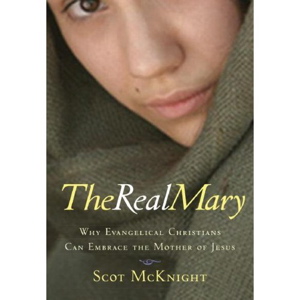 McKnight believes that Protestants have long neglected the importance of Mary to the gospels and even to other New Testament writings, such as the book by one of her other sons, James. Mary, as McKnight portrays her, is a woman whose own journey of faith and understanding was vital to the spread of the gospel, including the formation of the first Christian communities following the resurrection.
“We never hear about her again in the pages of the New Testament, but we can be sure that she continued to be the woman she had been: courageous, dangerous, faithful, assertive, and hopeful for the kingdom of God,” McKnight writes.
“What we know is that Mary partook in the prayers of that community, she participated in the gift of tongues at Pentecost, and she was surely part of the groundswell of those first apostolic church gatherings,” the book continues.
McKnight discussed his new book during a recent interview.
Why do you think this book is important for Protestants to read?
Protestants don’t know what they believe about Mary; they know what they don’t believe. And Mary is a character who opens up in the gospels how it was that Jews came to believe in Jesus. She is the paradigmatic story of a first century Galilean Jew who encountered Jesus and how they tried to make sense of Jesus as the Messiah. There’s nothing like it in the gospels. We guessed about Peter. We know that Peter struggled to believe in Jesus as the Messiah, but we don’t know what Peter believed about the Messiah. We know what Mary believed. It’s there. She is the one who clarifies what Peter was like.
It’s amazing! Mary forces us to ask how Jews dealt with Jesus. Protestants, Catholics and Orthodox have done nothing but fight about Mary. Because of that, evangelicals have made no place for Mary, except as part of the Christmas crèche.
How could this person who had an annunciation from angels later on say her son is out of his mind? Does that cast doubt, as some have said, on the truthfulness of whether angels really spoke to her?
Isn’t this the case that everyone in the Bible who has dramatic encounters with God still struggles? Peter still struggles. To the bitter end he struggled. John the Baptist struggled with Jesus.
What fascinates you about Mary?
One day I was at the blackboard teaching students and I read the Magnificat aloud with full force about the social justice vision of Mary. And I asked the students what kind of woman would say this sort of thing. It sent me on a quest. The woman who said this is unlike any other Mary image I have seen in my life. This is a wiry, tough woman.
She is a teenager when we first meet her, though, and yet she has a special maturity. While teenagers today might protest against what is happening in their country, they don’t sound anything like this.
I don’t know how to put this all together, I don’t think it would be at all unfair to say that this is what Mary felt and sensed at the time, and the words (in the Gospel of Luke) may be more crystal clear than what she said at the time.
Do you agree then with the view that Luke puts those words in her mouth?
Yes, but to me the Magnificat is the only thing that explains Mary. Everything else falls short. Why would she think Jesus was out of his mind? Why would she go to him in Canaan and say they were out of wine? How could she take it that Jesus said to her when he was 12 – “What did you think I was doing; I had to be in my father’s house.”
What did you come to appreciate about Mary as you worked on this book?
I began to contemplate how significant Mary was to the growth of the gospels. Those first two chapters of Luke probably derived from Mary somehow. She’s the only one that knew those stories. And then I got to thinking that the story tells us Mary is plopped right down in the center of the Christian community. Don’t you think people would be asking her what Jesus was like? We’re talking about a person (Luke) who relied deeply on Mary.
There’s an old tradition that many people don’t accept: that one of the earliest versions of the gospels was the memoirs from Mary. That has historical credibility with me.
You talk about Mary having to learn to give honor to her child. How can we imagine that?
Let’s take the story at face value. She learns her child is going to be called Son of the Most High God, the Son of God, but Mary is the privileged character in all of this. She knows she’s special. The angel tells her twice that she is the favored one. Mary has the chutzpah and the faith to believe that what God said to her through the angel is exactly what would happen.
And so she can wrestle with Jesus over his understanding of what he is going to do. I find this amazing, and it shows what kind of woman we are dealing with. The statue we draped in Carolina blue in people’s little gardens, a passive, pale-face, somber-faced, sober-faced woman is not what Mary was like. She was gristly like Mother Teresa or Harriet Tubman. She was ready to do battle with Herod and Caesar because she knew her son was the Messiah and was going to rule from Jerusalem.
Now I bring this up in the book, but I don’t know that everyone will catch this: I think Mary’s sister was probably Salome. Her two boys are James and John and she put them up to going to Jesus to get the two chairs next to Jesus in Jerusalem when he rules. I think the family is planning a dynasty, and that all begins with Mary. Mary talked about Jesus with her sister. How could they not talk?
Why do you think the two were sisters?
Church tradition is that Salome is Mary’s sister, and you also have Mark 15:40. We know Salome was the mother of James and John (Mt 27:56). If Salome is connected to Mary, it was a family dynasty.
But, Mary doesn’t become part of a family dynasty. She becomes part of a different kind of kingdom that she never imagined, does she not?
Just think what this was like for this woman. I believe those early Christian communities and their economic sharing was the fulfillment of the Magnificat. That was what was going to happen on planet earth. That was justice.
How can evangelical pastors preach to their congregations about Mary, given that in their churches there may be a strong sentiment against hearing about her?
If they are going to preach one sermon – and I hope they would do more – I think it’s very clearly one of hope, frustration and resolution. It is the hope of the Magnificat and the annunciation; the frustration with Jesus when he is 12, at the wedding and with his public ministry; and then somehow a sudden resolution in the cross, the resurrection and in the midst of that fantastic community.
If you are going to preach more than one sermon, it’s pretty easy to preach one on hope, a week on the frustration with Jesus – that he is not the person we think he should be, and then the resolution.
The other thing I think is that evangelical pastors ought to teach what the Roman Catholic and Orthodox churches believe about Mary because we all know Catholics. Many Catholics don’t know what their church teaches about Mary. So it’s important for us to know so that we can dialogue with each other. I see my book less as criticism of the Catholic Church and more a robust building of the character of Mary. Let’s believe what we have.
When you discuss what Catholics believe, why do you share the information, but not make a statement of your belief?
I wrote those chapters that way on purpose. I want those two chapters to create the opportunity for evangelical Christians to read this and respond themselves. If you believe the first 10 chapters, then when you get to chapters 11 and 12, you’ll be able to respond according to what the Bible says. I avoided the polemics because I constructed a Mary that is inconsistent with the Roman Catholic tradition, if you believe the first 10 chapters.
How long did you spend on this?
I’ve been reading on Mary for at least 10 years. As I teach it, I am continually learning. I’m writing a commentary on James and I’m seeing things connected with the Magnificat that I’ve never seen before. James’ concern is that religion pure and undefiled is to look after the widows and orphans. When you study the word orphan, you realize orphan doesn’t mean parentless in Judaism, it means without one parent. So Jesus and James were probably orphans. James is talking about people who were kind to them as a family.
Jesus had four brothers and two sisters (Mark 6:3) – that was a big family! That left Jesus to look after his family. Pure and undefiled religion is being like Jesus.
James is as strong as Jesus and Mary about the rich. So I’ve been exploring the influence of Mary on the rest of the New Testament.
How do you hope the book and the movie will interrelate?
It’s not connected to the movie at all – it’s not a response to the movie. But people are going to be talking about Mary, and I want people to know more. This is a time when people are going to ask questions about Mary again. I want people to talk about Mary. I want people to talk with Catholics and Orthodox about Mary, but I don’t think people know what to say. They haven’t studied the gospels on Mary, so I wanted to put it together so a conversation can take place. Right now it’s just about the perpetual virginity of Mary and whether Mary was sinless. The same old debates.
