“We show love, and then we can tell people,” she says.
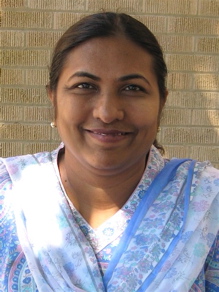
David (accompanying photo) recently was visiting Chicago, where her daughter, Prajakta, is a freshman at North Park University. Her husband has been moderator of the denomination for 20 years. The moderator is a title similar to that of president.
Missionaries from the Mission Covenant Church in Sweden arrived in India in 1940, and the denomination was formed in 1963. Since then, it has grown to more than 13,000 members in more than 100 churches.
 The Evangelical Covenant Church (ECC) has been developing ties with the India church over the past two years, partnering on relief and development efforts following the 2005 tsunami that destroyed much of the Andaman Islands, and the 2006 earthquake that devastated parts of Pakistan.
Hindus and Muslims persecute Christians in some parts of India, but not in the region in which the HCC operates, David says. Still, many people in the region oppose Christian evangelism.
The HCC is spreading its message in much the same way the ECC has done from the beginning – through ministries of benevolence and justice, David says. Health, education and job training program all are integral to the denomination’s work.
The denomination is providing meals and medical aid in some of India’s tribal areas. In another area, the denomination runs a library with many different types of books, but also features Bibles, tracts, and other religious material.
Promoting economic and educational development is essential to sharing the gospel, David says. As part of one project, church members teach sewing classes to women who also come with their children. Over time, the workers are able to tell the family stories from the Bible.
Covenant World Relief recently awarded a grant to develop a micro-enterprise project in one of India’s tribal areas. Even though those areas are strongly Hindu or Muslim, they have eagerly received the Christians and their witness when the church helps the people with their physical needs, David says.
A major ministry undertaken by the church is educating children who collect, sort and sell garbage from the street or work long hours in factories just to survive. Children have the opportunity to live on the campus of a school, where they are safe and can get an education.
Jim Sundholm, CWR director, said earlier this year that he had rarely been moved emotionally more than he had when he met a young girl in India to whom the church was ministering. The 11-year-old orphan and three siblings were able to attend the school.
The church can’t afford to take all the children off the streets, but the ministry is “empowering the kids to take control of their hard lives,” Sundholm says. “The church is trying to embrace the kids in their reality.” For more on the project, see School Project. http://www.covchurch.org/cov/news/item5397
The church also is trying to communicate concepts that are hard for Hindus to embrace, David says. The belief in reincarnation, karma and the cyclical nature of time are contrary to the Christian thinking about grace and that history is moving towards an end.
To learn more about the HCC, please see Hindustani Church.
