CHICAGO, IL (November 10, 2006) – On June 23, 2006, U.S. Army Chaplain Assistant Tim Dunkin emailed this message home about Operation Helping Hands:
On early Wednesday morning, myself and about 65 other soldiers rallied up for a 6.5-hour convoy out to the northern-most point in Iraq. The purpose of this mission, was to bring 7,500 Beanie Babies, 81 soccer balls, and 101 soccer uniforms to the children of Iraq. We went to three villages, two schools, and an orphanage on the mission. The entire mission lasted about 20.5 hours and was a very fun, exciting and tiring day. The people of Northern Iraq (Kurdistan) are very good people and are the closest thing to an ally that we have out here; it only makes sense that we help them as best as possible.
Within months, the 25-year-old emailed this:
I have spent the last day coming to grasps with the fact that I am a changed
man. Since I knew I was deploying, I fought internally, not believing that this
environment, this place of death could make me different. The words “change”
and “different” speak only of betrayal and is very painful for me to come to
grips with. But, I know this has happened. I remember coming here and feeling
empathy, remorse, sorrow, sadness and compassion. I remember the first soldier
I saw dead from combat, the first person to die in front of me, and the first
time I saw death knocking on my own door. What scares me most is that I do not
remember when I lost myself . . . when I betrayed my heart for my fellow man, for
emotional silence – a silence I fear will be permanently etched into my soul. I
saw myself before this change yesterday in SPC Bentley, a new chaplain assistant
who for his first time witnessed a man take his last breath. For me, it was
nothing as I’ve seen this before, but for him it was a life-altering event. I want to feel his pain and sorrow. I’m tired of watching my life through dead eyes and seeing my friends here as if they, too, were unborn. I want the smell of blood wiped from my memory. I know it’s not around me, but that is what I smell. I don’t smell the trees or
cigarette smoke or even food, just blood. I see no living, just people biding
their time until they too are gone, and this brings me no discomfort. I believe
this war has cost me my humanity.
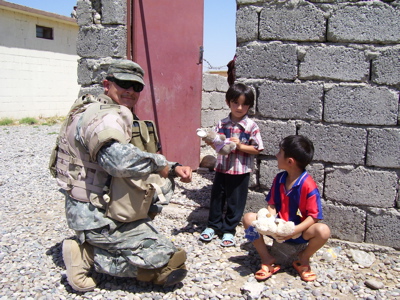 Dunkin, who has attended Kent Covenant Church in Kent, Washington, arrived in Iraq on Nov. 7, 2005. He served at a first-stop hospital in Mosul, one of the deadliest areas in the country.
Chaplain assistants carry weapons and protect the chaplains, who do not carry firearms. Where chaplains go, chaplain assistants go. They do so much more, though.
“I helped clean the bodies so they could be viewed by their fellow soldiers, talk with their friends who were there when they got injured.” Dunkin says. “I prayed and talked with the soldiers that came in. I’d also be there for the staff of the hospital.”
The staff was in frequent need. “A lot of time kids were injured or killed. That would weigh heavily on their hearts. I would just be their listening ear.”
Combat, he says, can either “vastly strengthen someone’s faith or cause it to degenerate,” contrary to the cliché, “There are a lot of atheists in foxholes.”
Dunkin now is working to deal with what he experienced in Iraq. “The first two or three days, I was on a real adrenaline rush,” Dunkin says. That was followed by “a funk,” which he adds he is now over.
He says the Army has been doing a good job to help with the process. Two weeks before leaving Iraq, the soldiers go through about two weeks of classes that deal mostly with the family issues that are sure to arise as well as suicide awareness. “Then you go to Kuwait and do the same thing.” A 10-day re-integration process follows at Ft. Lewis that includes classes for half a day and the rest of the time spent with family.
Dunkin joined the military because “I wanted to be patriotic” and desired to be a chaplain’s assistant because he believed that would help him with his plans to be a family counselor.
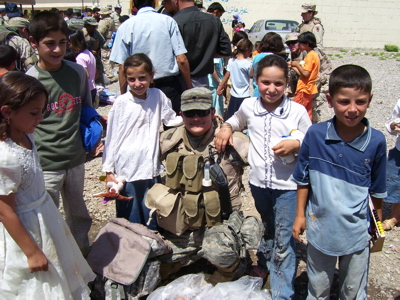 Dunkin says he still holds to his faith to help him even if it has been shaken. The biggest struggle he faces is wondering why he is back, while others will never make it home. “I’m not even a real good person compared to people I know (who died).”
Learning to feel again also is part of the process, he says. “I sit here and know I’m supposed to love my family, my girlfriend, and it’s like I don’t know what it’s supposed to feel like.”
Civilians can best help returning troops “by being a listening ear,” Dunkin says. “Don’t ask a lot of questions. The normal things are what we want to talk about. We’ve been living in Iraq for a year. We don’t always want to be talking about Iraq.”
He doesn’t want to answer the “stupid questions” he already has been asked several times: “Have you ever killed anybody? Have you ever seen anyone dead?” He adds, “That gets old and gets annoying and I’m not tactful about it.”
