“Based on conversations I’ve had with male students, I’ve come to realize that adolescent females can be terrifying creatures if you don’t know much about them,” says Olson, who serves as co-director of the Center for Youth Ministry Studies at North Park University. Most male youth workers have “only a vague idea of how girls are wired.”
Olson deals with a breadth of issues facing teenage girls, ranging from eating disorders and self-image issues to concerns about emotional well being, sexuality, spirituality, family, and relationships. She draws from her own experience as a youth worker and professor, as well as that of therapists, youth pastors, and focus groups of young women.
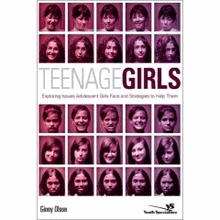 When discussing important issues, youth pastors need to understand that teenage girls of varying ethnic groups approach areas of their lives in significantly different ways, Olson says. “Much of what has been written about adolescent females comes from research based on Caucasian girls,” she explains. “Fortunately we’re seeing a rise in research being done with girls of color.”
That research has revealed differences in areas such as body image as well as changes in self esteem as girls get older. “For example, when it comes to body image, African American girls are usually much more confident than Latinas or Caucasian girls,” Olson says. “African American girls are also less likely to diet or have eating disorders – unless they are surrounded by peers who are focused on their weight and dieting.”
Reasons for attempting suicides also differ among racial and ethnic groups. “Caucasian girls who think they’re overweight are more likely to attempt suicide,” Olson says. “The opposite is true for African American and Latina girls. They’re more likely to attempt suicide if they believe they’re extremely underweight.”
Race and ethnicity also impact girls’ self esteem, Olson says. “Typically, African American girls are more confident than Caucasian girls. However, they also discovered that while Latinas begin school with the highest level of self-esteem, they also show the most drastic change; by the end of school, they had plunged to the lowest level.”
Increased struggles with self-esteem also have led to an increasing number of girls who injure themselves through cutting or mutilation, or suffer depression and eating disorders, Olson says. Research has found that girls as young as five have serious struggles with their body image.
Despite her years in youth ministry, Olson was surprised by some of the findings, especially the rise in aggressive behavior among girls. “I was aware of the relational aggression that goes on – excluding girls from a clique, spreading rumors – but I didn’t realize that 25 percent of all teenagers between the ages of 13 and 15 who are arrested for aggravated assault are female,” she says. “One survey found that eight percent of the girls who responded said that they had been in a physical fight in the past year.”
Girls also are becoming more aggressive in their relationships with boys, Olson says. “When I talked about this recently at CHIC, I had a number of boys tell me that they had been stalked by girls after they had tried to break up the relationship.”
Adolescent girls also are increasingly the initiators of sex in relationships, Olson adds. She quotes a counselor who states in a New York Times article that “The teenage boys I see often say the girls push them for sex and expect them to ask them for sex, and will bring it up if the boys don’t ask. There has been a shift where girls now see themselves as sexualized and approach men with pretty much the attitude – ‘This is all I have to offer.’ ”
Although her book was writing primarily for young male youth pastors, her book has been finding an audience with fathers who are trying to understand their daughters, Olson says.
The book is published by Youth Specialties/Zondervan, which is considering a parental version of the release as well as a book to help female youth workers understand teenage girls that will be written by a different author.
To purchase the teenage girls book, please visit the online Covenant Bookstore.
